
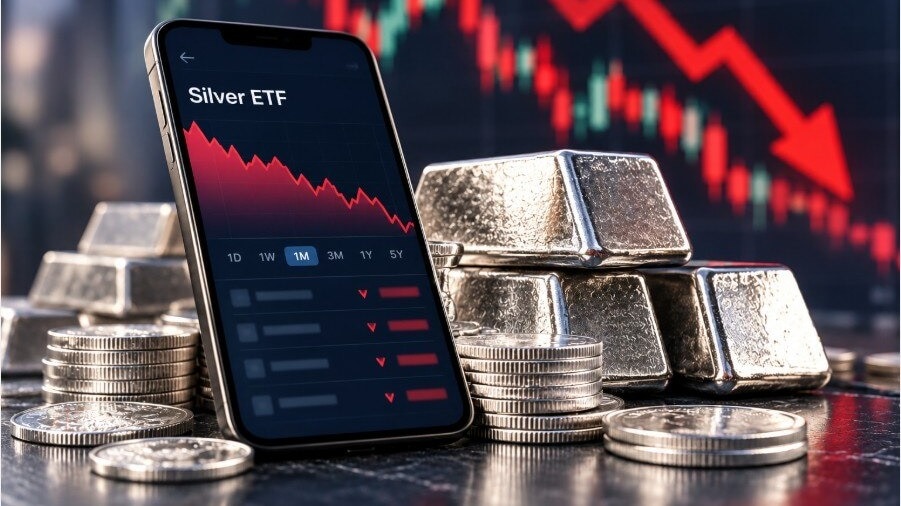
Silver prices crashed 55 per cent from their peak, hitting Rs 1.95 lakh per kg domestically. "Silver prices have declined amid a broader equity-market sell-off," said analyst Pinky Yadav. While global tensions and rate hikes caused this fall, many households still look to buy the metal for the upcoming Diwali.
Precious metals such as gold and silver have been in free fall lately, driven by soaring energy prices, the crisis in West Asia and inflation concerns that have fuelled expectations of further interest rate hikes. Both metals have lost their sheen, but silver has witnessed a particularly sharp sell-off, crashing nearly 55 per cent from its peak.
Silver prices in the international market have nosedived to $53 an ounce, while domestic prices have plunged from Rs 4.2 lakh per kg to Rs 1.95 lakh per kg. The sharp correction has dampened hopes of a near-term recovery amid weak global cues. However, Indian households traditionally prefer buying silver during Diwali.
Silver prices have declined amid a broader equity-market sell-off as investors liquidated precious metals to cover losses in technology stocks, said Pinky Yadav, Commodity Fundamental Analyst at Choice Broking. A stronger dollar, rising bond yields and Middle East tensions have fuelled inflation concerns, pushing silver towards $54 an ounce, its lowest level since November 2025, she said.
Echoing a similar view, Manav Modi, Commodities Analyst at Motilal Oswal Financial Services, said silver had fallen below Rs 2 lakh per kg, partly due to volatility in the USD-INR exchange rate. Shifting interest rate expectations and speculative selling have deepened the correction. Markets are pricing in a rate hike by the US Federal Reserve in December and two more hikes in 2027, while the Fed's September projections pointed to only one additional hike this year.
Market participants believe that if the sell-off in precious metals deepens, silver prices could correct further ahead of Diwali. This could create an opportunity for traders to buy the white metal during the festive season. However, supply constraints remain a key factor supporting the precious metal amid escalating global conflicts.
Despite near-term volatility, silver's long-term outlook remains positive, supported by a projected global supply deficit of 46.3 million ounces in 2026 and rising industrial demand from artificial intelligence infrastructure, data centres, electric vehicles and electronics. Potential Chinese export restrictions could further tighten supply. Investors may consider a buy-on-dips strategy for the long term, with appropriate risk management, Yadav said.
For investors and traders seeking quick gains from silver, the correction could create opportunities, but risks remain amid uncertainty over global developments. Crude oil prices, US inflation data and signals on Federal Reserve interest rate policy will be key drivers for the precious metal.
The US midterm elections on November 3 may also influence market sentiment and direction. With silver trading near important support levels, consumers may consider gradual accumulation but should avoid aggressive buying before the election results clarify the outlook. Investors should reassess their positions after the event, Modi said.
A resumption of tariff concerns could trigger further rallies. We view prices as close to fundamentally justifiable levels but are mildly positive. Industrial and jewelry demand will continue to weaken. Large bar demand should rise based on institutional purchases, much of this from China and India, said James Steel, Chief Precious Metals Analyst at HSBC Global Investment Research.
"Coin & small bar demand may also recover but at a moderate pace as still-high prices curb demand. ETFs liquidated this year but are rebuilding. The likelihood of a firm USD, as forecast by HSBC FX Research, and high yields can limit rallies. If anticipated rate hikes do not materialize, silver may recalibrate higher. Fiscal profligacy and geopolitical risks are price supportive," he added.