
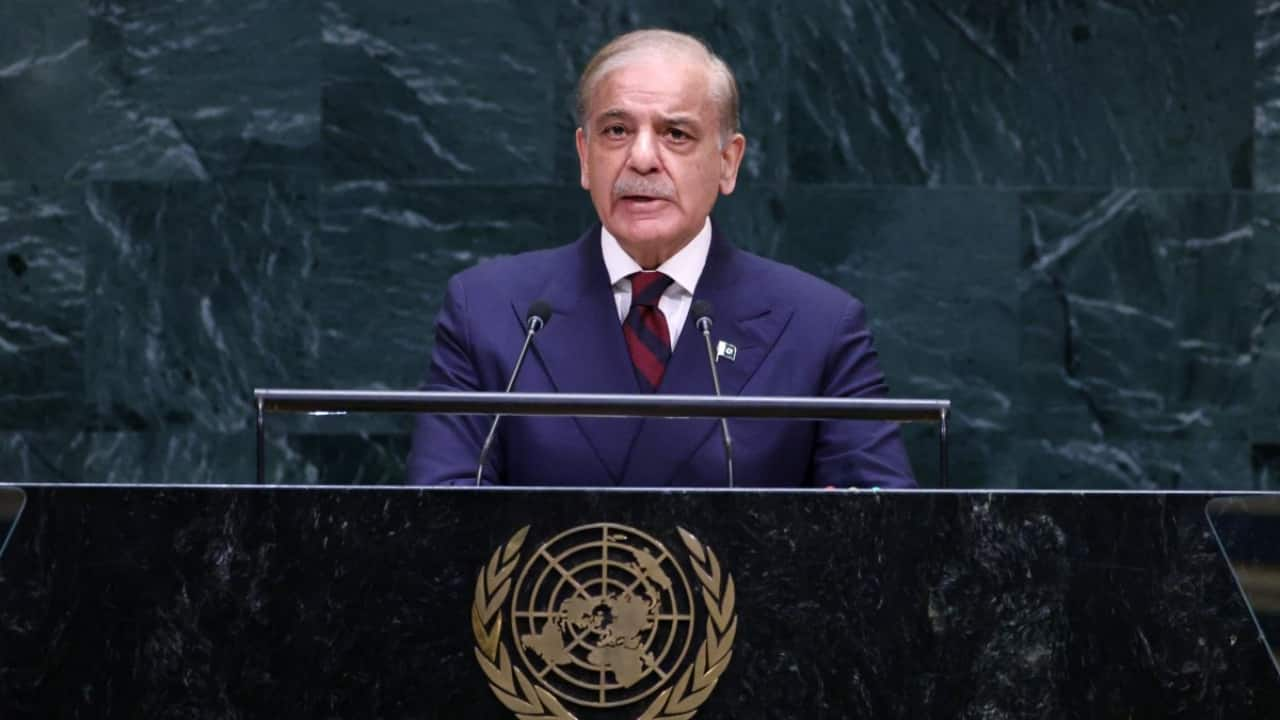
Pakistan Prime Minister Shehbaz Sharif said the country could become the world's sixth-largest economy before 2050. Addressing the Pakistan Minerals Investment Forum on November 13, he said, "Instead of 2075, it will be, Inshallah, earlier than 2050." He hopes to boost growth by attracting international investment into the mining sector.
Pakistan Prime Minister Shehbaz Sharif has expressed confidence that the country could become the world's sixth-largest economy before 2050, advancing by at least 25 years a timeline projected by Goldman Sachs in its long-term economic assessment. Addressing the Pakistan Minerals Investment Forum 2026 in Islamabad on November 13, Sharif referred to a Goldman Sachs report which projected that Pakistan could emerge as the world's sixth-largest economy by 2075. "By Goldman Sachs' assessment, by 2075, Pakistan will be the sixth-largest economy in the world. I would like to make a small amendment here.
Instead of 2075, it will be, Inshallah, earlier than 2050," said the Prime Minister. His remarks came as Pakistan sought to attract international investment into its mining and minerals sector, pitching the country's untapped reserves of copper, gold and other minerals as potential drivers of economic growth. Pakistan's PM Shehbaz Sharif: By Goldman Sachs' assessment, by 2075, Pakistan will be the sixth-largest economy in the world. Instead of 2075, it will be, Inshallah, earlier than 2050. https://t.co/jVZ2M7PWa6 -- Clash Report (@clashreport) November 14, 2026 The Goldman Sachs assessment he referred to is a December 2022 research paper titled The Path to 2075: Slower Global Growth, But Convergence Remains Intact, authored by economists Kevin Daly and Tadas Gedminas.
The report expanded Goldman Sachs' long-term economic projections to cover 104 countries, extending its forecasting horizon from 2050 to 2075. It examined how demographic trends, productivity, labour-force growth and economic convergence could reshape the global economic order over the coming decades. What does the Goldman Sachs report say about Pakistan? Goldman Sachs projects a significant shift in the global economic hierarchy by 2075, with emerging economies gaining a larger share of global GDP. According to the report, Pakistan could become the world's sixth-largest economy by 2075, behind Indonesia and Nigeria, provided it achieves the necessary population growth, economic development and, crucially, puts appropriate policies and institutions in place.
The report identifies rapid population growth in Pakistan, Nigeria and Egypt as an important factor that could help these countries become major global economies. However, Goldman Sachs makes an important qualification: demographic expansion alone will not be sufficient. Sustained economic growth will depend on productivity improvements, institutional development and the ability to translate a growing workforce into economic output. Goldman Sachs' December 2022 report provides the following projected ranking, based on GDP measured in US dollars: Rank Country 1 China 2 India 3 United States 4 Indonesia 5 Nigeria 6 Pakistan 7 Egypt 8 Brazil 9 Germany 10 United Kingdom Source: Goldman Sachs Global Economics Paper, The Path to 2075, Exhibit 15.
What does the report say about India? India features prominently in Goldman Sachs' projections, with the country expected to become the world's second-largest economy by 2075, narrowly overtaking the United States. The report identifies India as one of the major emerging-market economies expected to benefit from economic convergence, with its growth potential supported by demographics and productivity. Goldman Sachs expects China to overtake the US as the world's largest economy around 2035. The report estimates that by 2075, China's GDP could reach approximately $57 trillion, India's $52 trillion and the US economy around $51 trillion, measured in real 2021 US dollars.