
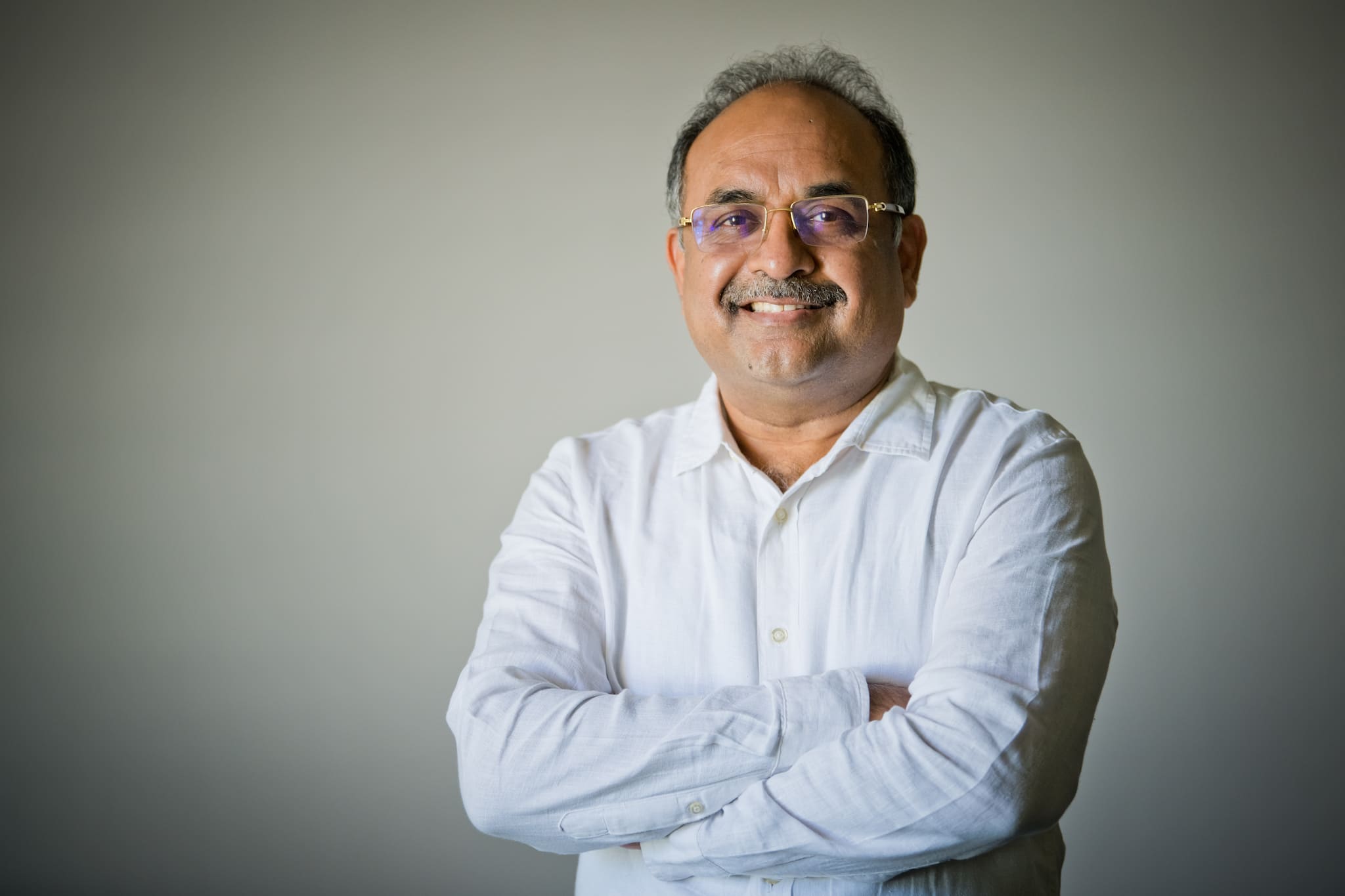
Sahamati CEO BG Mahesh defended the new account aggregator pricing framework starting December 1. Small-ticket lenders fear these charges will hurt their thin margins. Mahesh said, "Do you think any digital public infrastructure can survive being free?" Lenders must now adjust their business models to cover these new standard costs.
Sahamati CEO BG Mahesh has defended the account aggregator (AA) ecosystem's new pricing framework amid concerns from small-ticket lenders that a uniform charge for accessing customer financial data could erode their margins, particularly for loans in the Rs 10,000-50,000 range. The new pricing takes effect from December 1. Mahesh said lenders would have to adjust their business models to accommodate the charges, adding that the infrastructure supporting the AA ecosystem could not be expected to remain free indefinitely. "I cannot get into their business model. We work on the foundational layer and the infrastructure.
Do you think any digital public infrastructure (DPI) can survive being free?" Mahesh told Moneycontrol. Sahamati is the industry alliance and self-regulatory organisation for India's AA ecosystem, bringing together financial institutions and technology players on a single platform for a consent-based financial data-sharing framework. Financial information users (FIUs), including lenders, will pay the charges to account aggregators, which will retain their share and distribute the rest among financial information providers (FIPs), mostly banks, and Sahamati. Although lenders already pay technology service providers (TSPs) separately for financial data, the updated rate card brings standardised fees for accessing data through the AA network.
Importantly, these standardised charges do not replace the existing fees that lenders pay to TSPs for integration and technology services. Increasing cost for small-ticket loans Small-ticket lenders have raised concerns that the uniform pricing structure does not adequately account for differences in loan sizes and business models. Unlike larger lenders, which can absorb the additional underwriting expense across bigger loan amounts, lenders focusing on smaller loans operate with relatively thinner margins and shorter repayment tenures. The cost could become relatively high when lenders access statements from multiple bank accounts to assess a borrower's financial position.
For a 13-month statement, the total charge ranges from Rs 8.64 to Rs 9.60 per account, while the seven-month statement attracts Rs 5.88-6.55, excluding GST. In India, most customers have more than one bank account, and a lender accessing data from two or three accounts could therefore charge around Rs 23-34, including GST, for a single applicant. Most lenders evaluate multiple customers before lending to one customer. Jatinder Handoo, CEO of industry body Unified Fintech Forum, said the increased per-fetch cost could have a bearing on lenders' acquisition and underwriting economics, particularly in smaller-ticket lending.
"Lenders may evaluate 8-10 applications to disburse one loan, making data-fetch costs a meaningful component of acquisition and underwriting economics," Handoo said. He said a wider stakeholder consultation, including lenders across ticket sizes, could have helped arrive at a more balanced pricing structure, while taking into account the distribution of fees among AAs, banks and ecosystem infrastructure. "Sustainability and affordability must go hand in hand," Handoo said. The additional underwriting cost could eventually be passed on to borrowers through higher interest rates, especially in the small-ticket segment, a few lenders told Moneycontrol.
Long consultation process, says Sahamati Mahesh, however, said the pricing framework was the outcome of a three-year consultation process and was not a unilateral decision by Sahamati. An Economic Model Committee was constituted in October 2023 under the organisation's governing council to bring a sustainable commercial structure for the ecosystem, he added. Banks and other FIPs had initially agreed to provide financial data without charges at the beginning, allowing the network to gain traction. Mahesh said that there wasn't any promise to keep the ecosystem free forever. "Everybody knows that the FIPs are also actually incurring costs in delivering data," he added.
According to him, the pricing structure could be reviewed after six months as the committee would examine industry feedback and consider changes based on the experience of the initial rollout. "There is no way any solution will be perfect in the beginning. We have said once it is launched, in six months, again the committee will meet and they will analyse the feedback and look into the pricing mechanism once again," Mahesh said. The pricing mechanism The new model has three components: a fee for the AA's digital public infrastructure, a fee for the FIP providing the data, and an ecosystem management fee for Sahamati.
Nandan Nilekani, a vocal proponent of expanding the country's digital public infrastructure programmes such as Aadhaar and UPI, had earlier said that for AA to expand to 500 million users from around 207 million, it needs a sustainable economic model. He added that a wider use of AA, with data from GST, EPFO, SHG and other datasets, would bring informal workers and small businesses into formal finance Technology service provider Finarkein said the standardised framework would provide a predictable revenue stream for banks, which have historically maintained data-sharing infrastructure without direct compensation.
It also said the model would change the commercial dynamics for TSPs, which will no longer receive a share of the standard data-fetch fee. Their revenue will now depend on technology integration, data routing, consent conversion and analytics. AA is more than lending Mahesh said the AA framework was not restricted to lending and that banking data formed the foundation for several financial services, including insurance, investments and pension-related use cases, some of which are more remunerative for end-user financial institutions. He added that Sahamati needs to have a sustainable revenue model as it becomes an SRO with responsibilities spanning policy, governance, technology and central services.
Until recently, Sahamati relied on grants and donations to fund its operations. Earlier this year, it raised Rs 50 crore in April 2026 from more than 30 financial institutions, including banks, NBFCs, asset managers, stockbrokers and fintechs, which came on board as shareholders, giving the AA ecosystem a broader ownership base. According to Mahesh, Sahamati is one of the rare instances where an SRO spans multiple regulatory frameworks such as those of the RBI, SEBI, IRDAI and PFRDA. Mahesh said the new model followed a pay-as-you-go approach and that Sahamati's share of the charges would have to come down if the organisation became highly profitable.
"If we become highly profitable from this, then what we take can be reduced," he said, adding that the commitment had been given in writing to the regulator.