
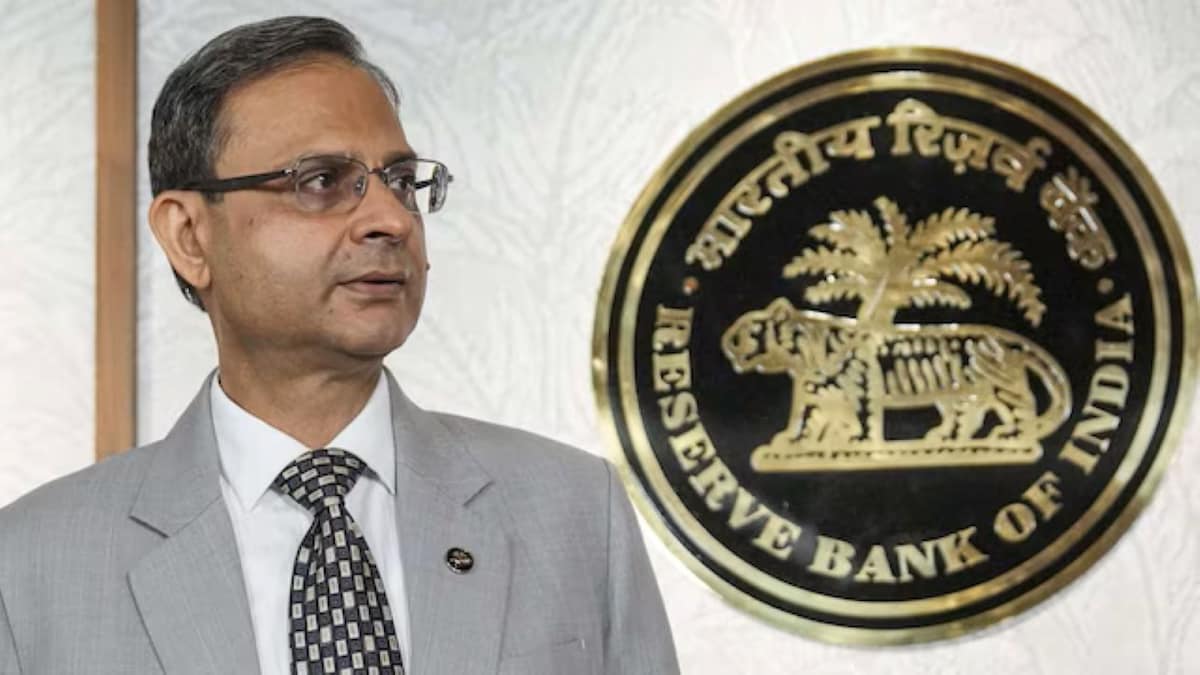
RBI Governor Sanjay Malhotra will meet executives from NBFCs and microfinance institutions on Monday, November 23. The meeting allows lenders to discuss emerging challenges and rural stress with the regulator. "There is nothing specific on the agenda, but it gives an opportunity to all of us to speak up."
Reserve Bank of India (RBI) Governor Sanjay Malhotra is scheduled to meet top executives and CEOs of non-banking financial companies (NBFCs) and microfinance institutions (MFIs) on Monday, November 23. The interaction is part of the central bank's regular engagement with the financial services industry and is expected to provide an opportunity for lenders to raise concerns and discuss emerging challenges with the regulator.
The meeting is also expected to be attended by all RBI deputy governors, according to industry executives.
RBI meeting with NBFCs and MFIs: What is on the agenda?
The interaction will include senior executives from NBFCs, housing finance companies and microfinance institutions, industry executives said.
These meetings generally do not follow a fixed agenda. They allow industry representatives to share developments, flag concerns and discuss emerging challenges with the regulator.
"There is nothing specific on the agenda, but it gives an opportunity to all of us to speak up and share insights and concerns," an industry executive told Business Today.
Rural stress a concern for NBFCs and microfinance lenders
While financial services companies have reported strong earnings and maintained healthy balance sheets, concerns remain over the outlook for the rural economy.
Below-normal rainfall this year has raised concerns about rural demand and borrowers' repayment capacity. This could affect microfinance institutions and NBFCs with significant exposure to rural borrowers.
Several microfinance companies flagged concerns in drought-hit areas of Maharashtra while announcing their second-quarter results. They said they were monitoring the situation over the coming months, particularly the impact of the post-monsoon season on agriculture and related economic activity in other states.
Microfinance lenders seek changes to RBI's lending rules
The industry could also raise its demand for changes to the RBI's microfinance lending framework.
According to a report in a financial daily, some microfinance institutions want the existing annual household income limit of Rs 3 lakh to be replaced with thresholds linked to income levels in individual states.
Under the current framework, households with an annual income of up to ₹3 lakh are eligible for microfinance loans. The rules also cap a household's monthly loan repayment obligations at 50% of its monthly income to prevent borrowers from taking on excessive debt.
"There are multiple suggestions around the income front made by the industry," the industry executive said.
Speaking at a microfinance industry event earlier this month, RBI Deputy Governor Shirish Chandra Murmu said the sector had sought changes to both the household income threshold and the repayment-to-income ratio.
Among the suggestions was to make the repayment limit more flexible by including only the interest component of certain loans and excluding the principal component from the calculation.
Murmu said the RBI would review the household income threshold based on its assessment of the need for a revision and developments in the sector.
However, he cautioned that excluding certain loan components from the repayment calculation could undermine the purpose of the 50% limit, which is intended to prevent borrowers from becoming over-indebted.
Cybersecurity risks and AI adoption in focus
Cybersecurity is another growing concern for the financial services industry.
At least two large banks have reported data leaks in recent months, while some smaller NBFCs have also faced cybersecurity incidents in the past.
With financial institutions increasingly adopting artificial intelligence (AI), the RBI may seek to understand the steps lenders are taking to strengthen their technology systems and protect themselves against cyberattacks.
The growing use of AI across financial services has also increased the need for lenders to review their security systems and preparedness for emerging digital threats.
Gold loan companies face scrutiny amid price volatility
The strong growth recorded by gold loan companies could also come up for discussion, particularly following the recent fall in gold prices.
Some companies have flagged early signs of stress after the decline in gold prices. Since gold serves as collateral for these loans, sharp price movements can affect the value of the security held by lenders and increase their exposure to risk.
The RBI's interaction with NBFC and MFI executives comes at a time when the sector is dealing with emerging concerns across rural lending, microfinance, cybersecurity and secured credit.