
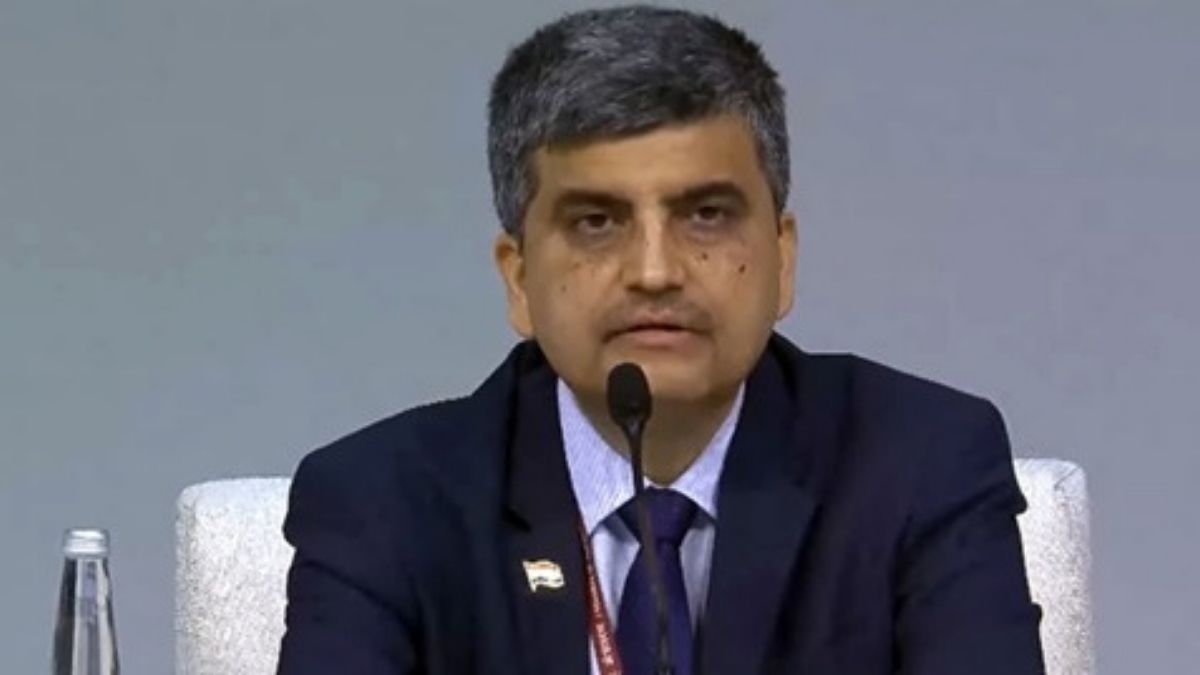
Irdai Chairman Debasish Panda said the regulator will release a consultation paper on health insurance claims and billing practices. Speaking at the FE Modern BFSI Summit 2026 in Mumbai, he noted that middle-income families lack suitable products. He urged insurers to focus on value and address rising healthcare costs.
"On the claims side, we need to understand treatment costs, utilisation, fraud and provider practices. We aim to come out with another consultation paper on that," Seth said while delivering a special address at the FE Modern BFSI Summit 2026 in Mumbai.
Seth identified five areas requiring attention: insurance economics, product suitability, claims and health insurance, reinsurance and market conduct, and digital public infrastructure.
He flagged gaps in health insurance products for middle-income households, despite their ability to afford premiums. "Even for a family earning ₹50,000 a month or Rs 1 lakh a month, there are no suitable products. For Rs 2 lakh and above, there are enough products in the market," he said, noting that healthcare needs vary across income segments.
Seth acknowledged the progress made by the Confederation of Indian Industry (CII) and urged insurers and healthcare providers to work together to address healthcare costs and claims-related issues.
He said health insurance complaints offered valuable insights into market conduct and product performance. Rather than focusing solely on complaint volumes, insurers must examine root causes, resolution timelines, reopened cases, escalations and recurring grievances to improve outcomes.
On distribution economics, Seth said premiums must adequately cover expected risks, operating expenses and distribution costs. Rising acquisition and servicing costs, without corresponding improvements in coverage or service, erode policyholder value and put pressure on premiums or insurer margins. "Affordability means both price and value," he said.
Seth stressed that distribution should not be viewed merely as a sales function, as it also involves risk assessment, product explanation, documentation, servicing and customer relationships.
Distributor remuneration, therefore, should reflect product complexity, channel, effort, service quality and customer outcomes, he said.
Last month, Irdai issued a consultation paper proposing tighter product- and channel-specific commission caps across life, health and general insurance. The proposals seek to align commissions more closely with the effort and costs involved in distributing insurance products.
"High commissions are not automatically unjustified," Seth said, noting that complex risks may require substantial effort in assessment, documentation and underwriting. Conversely, low-cost distribution channels do not necessarily guarantee better service.
He said the proposed distribution reforms have four objectives: improving policyholder value, strengthening competition, widening and enhancing distribution efficiency, and ensuring greater accountability.
During a fireside chat later, Seth said he had met representatives of more than 40 insurers and 10 distributors since the consultation paper was released.
"Everybody is saying the direction is right and the strategy is right," he said.
However, he acknowledged that insurers and distributors operate across different segments, business models and capacities to improve efficiency. These differences, he said, must be considered while determining the transition to a more efficient operating model.
Seth did not specify whether Irdai would provide a glide path for implementing the proposed changes.
He said the consultation paper, issued ahead of draft regulations, was intended to give stakeholders another opportunity to provide feedback and facilitate an orderly transition.
"Everybody is saying to take care of or facilitate an orderly transition to an efficient frontier, which is our aim to begin with," Seth said.