
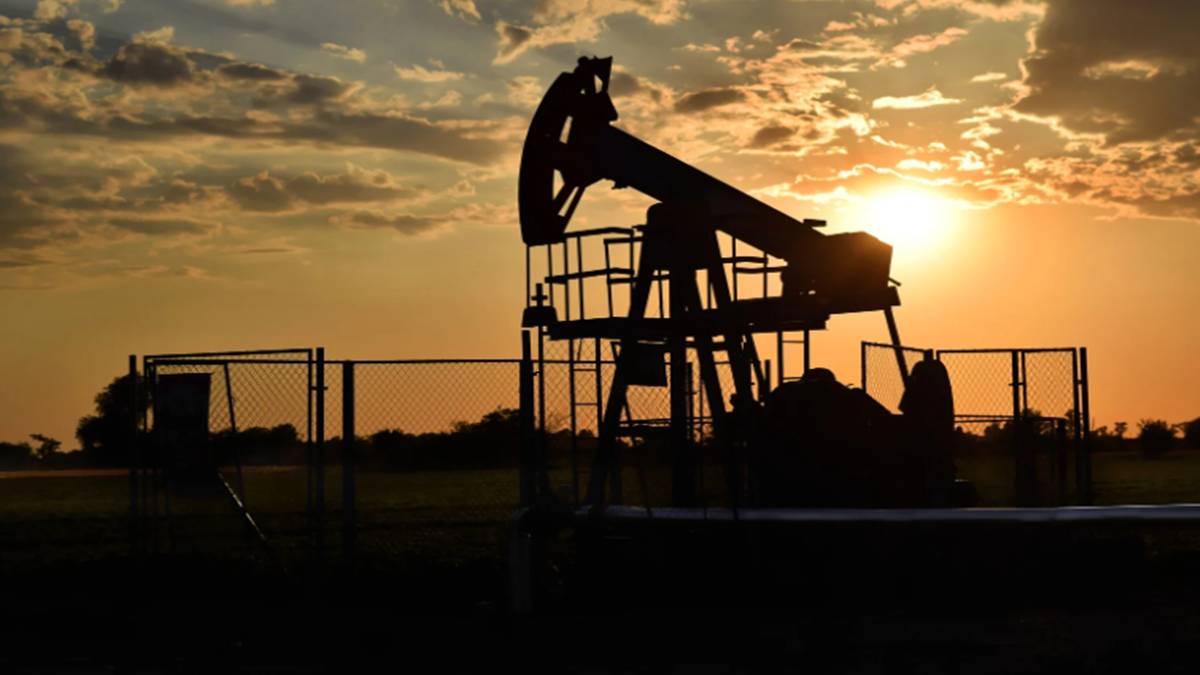
Brent crude hit $109.86 a barrel on Friday, marking its highest level since May 19. Rising supply fears and attacks on Russian infrastructure drove prices higher. Analysts said, “WTI and Brent reversed earlier losses as escalation fears resurfaced.” These high costs now spark fresh concerns over US inflation and rates.
Uncertainty over Russian fuel supplies also drove prices higher. Ukrainian attacks on Russia’s oil infrastructure raised questions about how much diesel the country could supply to global markets.
For investors, the concern extends beyond fuel costs. Higher oil prices could keep inflation elevated and leave the Federal Reserve with less room to cut interest rates, keeping borrowing expensive.
That prospect added to unease over the debt financing of the AI spending boom. Shares of companies including CoreWeave and Broadcom fell as investors questioned whether heavy investment in data centres and computing capacity would generate sufficient returns.
Brent crude high, supply fears higher
Brent crude futures settled $3.94, or 3.7%, higher at $109.86 a barrel on Friday, their highest closing level since May 19. US West Texas Intermediate (WTI) crude futures rose $3.44, or 3.5%, to settle at $101.41 a barrel, their highest close since September 17, Reuters reported.
For the week, Brent gained 4.9%, while WTI rose 10.4%. Oil prices had fallen earlier in the session but reversed course as fears of a further escalation in the Middle East returned.
“WTI and Brent reversed earlier losses as escalation fears resurfaced amid rumours of attacks on Saudi energy infrastructure,” research and consultancy firm Energy Aspects said in a note to Reuters.
The firm added that Israeli reports suggested Iran could be preparing a pre-emptive strike following secret military movements detected by Western intelligence. It cautioned that these reports had not been verified but said the developments supported its view that continuing tensions would keep oil prices elevated.
Strait of Hormuz attacks threaten global oil supplies
Supply concerns have grown as attacks around the Strait of Hormuz have increased over the past 10 days. Iran has said it is stepping up strikes in response to a US blockade of its ports and tougher sanctions introduced last month.
“Intensified Iranian attacks drove Gulf crude flows sharply lower,” analysts at commodities data firm Kpler said in a report on Thursday. They added that oil flows through the Strait of Hormuz could recover more slowly and unevenly without a comprehensive political agreement.
The risk of further disruptions has added to concerns about the amount of oil available in the global market, supporting prices even as governments and energy agencies look for ways to increase supply.
Russia’s oil refinery attack
Ukraine struck a Russian oil refinery on Thursday after President Volodymyr Zelenskiy announced that Kyiv was abandoning a ceasefire covering energy infrastructure. US President Donald Trump had announced the ceasefire, but Zelenskiy criticised Trump’s willingness to strike deals with Moscow.
Russia’s Ryazan oil refinery suspended operations at a primary crude distillation unit after a drone attack in the region on Thursday, two industry sources told Reuters.
The disruption has raised questions about how much diesel Russia will be able to supply to international markets.
IEA to release more fuel as US seeks to increase oil supply
The International Energy Agency (IEA) agreed on Thursday to release more than 20 million barrels of fuel to help boost supply. The US Department of Energy said on Friday that it had issued a request for proposals for an exchange involving up to 17 million barrels of crude oil from the country’s Strategic Petroleum Reserve (SPR).
The move comes after Washington agreed to lend 172 million barrels of oil from its reserves as part of a wider arrangement involving around 30 countries in the IEA. The countries agreed to release a total of 400 million barrels from their reserves.
Wall Street falls as oil prices rise and AI stocks come under pressure
Higher oil prices added to the pressure on US stocks on Friday, with investors worried that rising energy costs could worsen inflation and make it harder for the Federal Reserve to lower interest rates.
The S&P 500 fell 1.22% to 7,649.71 points. The Nasdaq Composite dropped 2.19% to 26,128.13, while the Dow Jones Industrial Average lost 0.55% to close at 51,891.77.
The Nasdaq was heading for a weekly loss of more than 4%, while the S&P 500 was on course for its steepest weekly decline since January. The Nasdaq was also heading for its sharpest weekly fall since June.
AI-related technology stocks faced renewed selling as investors questioned whether companies investing heavily in data centres and computing infrastructure would generate enough profits to cover their costs.
Nvidia-backed CoreWeave fell 12% on Friday, taking its losses over the past five sessions to around 25%. The company’s bonds also sold off during the week, pushing their yields above 15%.
Broadcom shares fell 3.6%, while the Philadelphia Semiconductor Index dropped 2.5%. The chip index was on course for its eighth consecutive session of declines.
Concerns over AI company valuations have also spread to the private market.
Reuters reported on Thursday that some existing investors in Anthropic and potential new investors were considering a lower valuation for the AI company ahead of its planned initial public offering (IPO).
Inflation data and Fed outlook add to market uncertainty
Consumer and producer inflation reports released this week came in hotter than expected, suggesting that price pressures were spreading beyond energy commodities.
Higher oil prices can push up transport, manufacturing and other business costs, potentially keeping inflation elevated. If inflation remains high, the Federal Reserve may have less room to cut interest rates.
Federal Reserve Chair Kevin Warsh expressed optimism about the strength of the US economy on Friday. He also said he was surprised by how well economies around the world had been “hanging in there.”
Markets expect the Fed to leave interest rates unchanged this month. Barclays, however, now expects the central bank to raise rates by 25 basis points in December and another 25 basis points in January. A basis point is one-hundredth of a percentage point.