
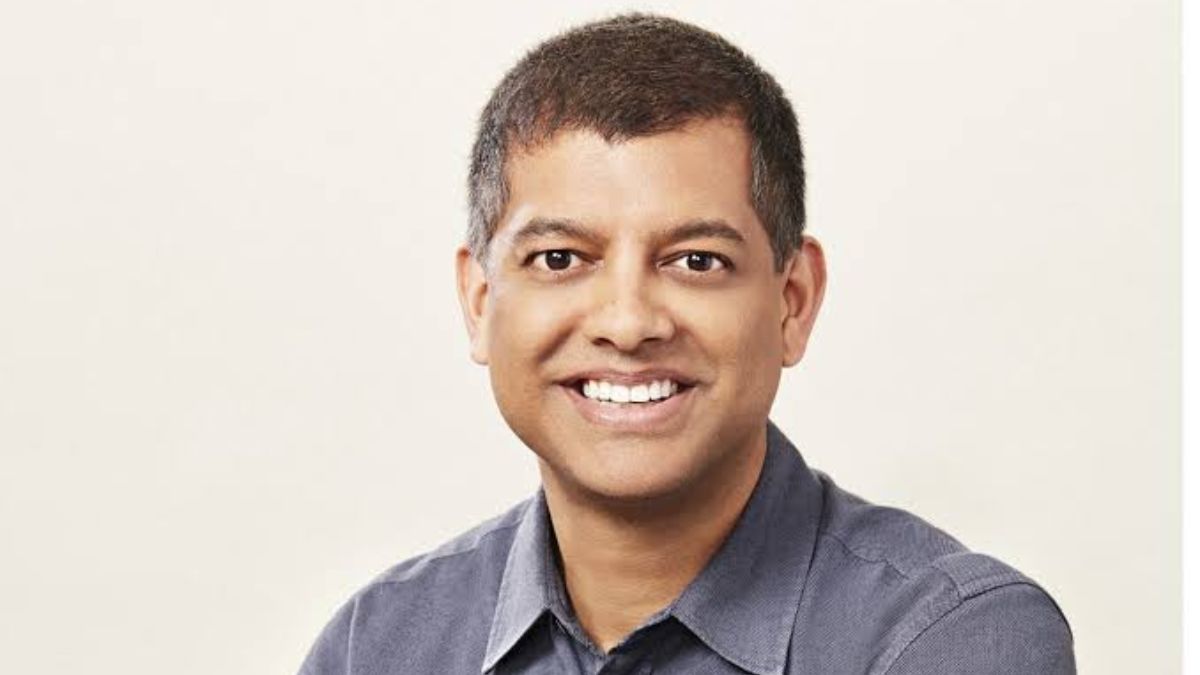
Anthropic CFO Krishna Rao is leading the company’s upcoming stock market debut. On October 26, 2026, Rao signed the firm’s S-1 registration statement. He previously worked at Airbnb and Blackstone. Regarding his career shift, Rao said, “I wanted to be part of making and being held accountable for key decisions.”
CEO Dario Amodei and President Daniela Amodei lead the company, Rao is managing the financial decisions behind its rapid expansion. As Anthropic prepares to enter the stock market, its CFO is once again taking on a challenge he has faced before, helping a major technology company go public.
On October 26, 2026, Anthropic publicly filed its registration statement, known as an S-1, with the US Securities and Exchange Commission. Rao, 43, signed the filing as Anthropic’s CFO. His career, however, did not begin in artificial intelligence. It took him through consulting, law school, private equity and senior finance roles at Airbnb, Cedar and Fanatics Commerce before he joined Anthropic in 2024.
From consulting to private equity
Rao began his career at Bain & Company, working as a strategy consultant between 2005 and 2008. He was based in San Francisco and New Delhi, focusing on growth strategies and private equity deals. Before joining Bain, he studied economics at Harvard College, graduating summa cum laude. In an interview with Yale Law School, Rao explained that consulting gave him a strong foundation but he wanted to be involved in making business decisions.
“I started my career in management consulting, which was a good training ground, but ultimately, I wanted to be part of making and being held accountable for key decisions,” he said.He went on to earn a Juris Doctor degree from Yale Law School during the Great Recession. Rao said the experience helped him develop problem-solving skills, understand different viewpoints and learn about leadership.
From 2011 to 2015, he worked at Blackstone in New York as a private equity investor, eventually becoming a principal. He handled investments across consumer goods, retail, business services and financial technology.In his Yale interview, Rao said the experience taught him to develop independent opinions and support them with data, even when they differed from the general consensus.
The move to Airbnb and two CFO roles
In October 2015, Rao joined Airbnb as director of financial planning and analysis. He later became the company’s global head of corporate and business development, leading teams responsible for acquisitions, investments and strategic partnerships.
According to Anthropic’s announcement of his appointment, Rao helped Airbnb navigate the COVID-19 pandemic and raise more than $10 billion through equity and debt, including its December 2020 IPO.
In his Yale interview, Rao admitted that moving from private equity to an operating role was difficult. He initially struggled with cross-team coordination because he had never worked in such an environment before.
He credited colleagues and mentors with helping him adapt. The experience also shaped his approach to management. He believes leaders must understand how different parts of a business work before making decisions.
Rao left Airbnb in 2021 to become the first CFO of Cedar, a healthcare payments and patient engagement platform. He oversaw its finance and legal functions. In 2023, he moved to Fanatics Commerce, the online sports merchandise business, as CFO.
Joining Anthropic
Rao signed his offer letter with Anthropic on March 2, 2024, and became CFO in April. The company announced his appointment on May 21, 2024.
In its announcement, Anthropic said he would help shape its financial strategy and operations as it expanded its enterprise business and international presence.
Co-founder and President Daniela Amodei called him as an experienced financial leader with expertise in financial strategy, capital allocation and scaling high-growth companies.
Since his appointment, Anthropic has raised billions of dollars. CNBC reported that a funding round in May 2026 valued the company at $965 billion. Anthropic also said its annualised revenue run rate had crossed $47 billion.
Why computing power is a financial decision
One of Rao’s biggest responsibilities is deciding how much computing capacity Anthropic needs and where to procure it. In a May 2026 appearance on the Invest Like the Best podcast, he explained that Anthropic uses chips from Amazon, including Trainium, Google’s Tensor Processing Units and Nvidia’s GPUs.
He described computing capacity as the foundation of the company’s business. “The compute that we procure is the lifeblood of our business. It is the most important thing in the company,” he said.
Getting the balance right is critical. Buying too much computing capacity can put the company’s finances at risk, while buying too little can affect its ability to serve customers and develop advanced AI models.
“If you buy too much compute, you go out of business. If you buy too little compute, you can’t serve your customers and you’re not at the frontier,” Rao said in Yale interview.
He also explained that computing capacity often has to be booked years in advance. This makes it difficult to predict future requirements, a challenge he describes as a “cone of uncertainty”.
Leading Anthropic towards an IPO
Rao has been through the IPO process before. He was part of the team that helped Airbnb go public in 2020. In August 2026, CNBC reported that he was leading Anthropic’s preliminary meetings with potential investors to assess interest in a possible IPO. These meetings, known as “test the waters” discussions, did not involve valuation talks, according to the report. The S-1 filing now puts him at the centre of another major stock market listing.
What the S-1 reveals about his pay
Anthropic’s S-1 also provides details about how much the company pays its CFO. According to the filing, Rao received total compensation of $720,250 in 2025. This included a salary of $706,250 and a 401(k) retirement contribution of $14,000.
His annual salary was raised from $700,000 to $850,000 in December 2025 and then to $1.25 million on February 1, 2026.
When he joined Anthropic, he received options for 14 million shares at an exercise price of $1.30 each, vesting over four years. In February 2026, he received another 1,122,840 options at $17.66 per share and 1,862,140 restricted stock units.
As of September 30, 2026, the filing says he beneficially owned 9,497,900 shares. This included 153,960 shares held directly, with the remaining holdings largely comprising stock options.
The filing also shows his severance package. If he is dismissed without cause, he is entitled to 12 months of salary, health coverage and additional stock vesting. His equity would fully vest if he loses his job as part of a sale of the company.