
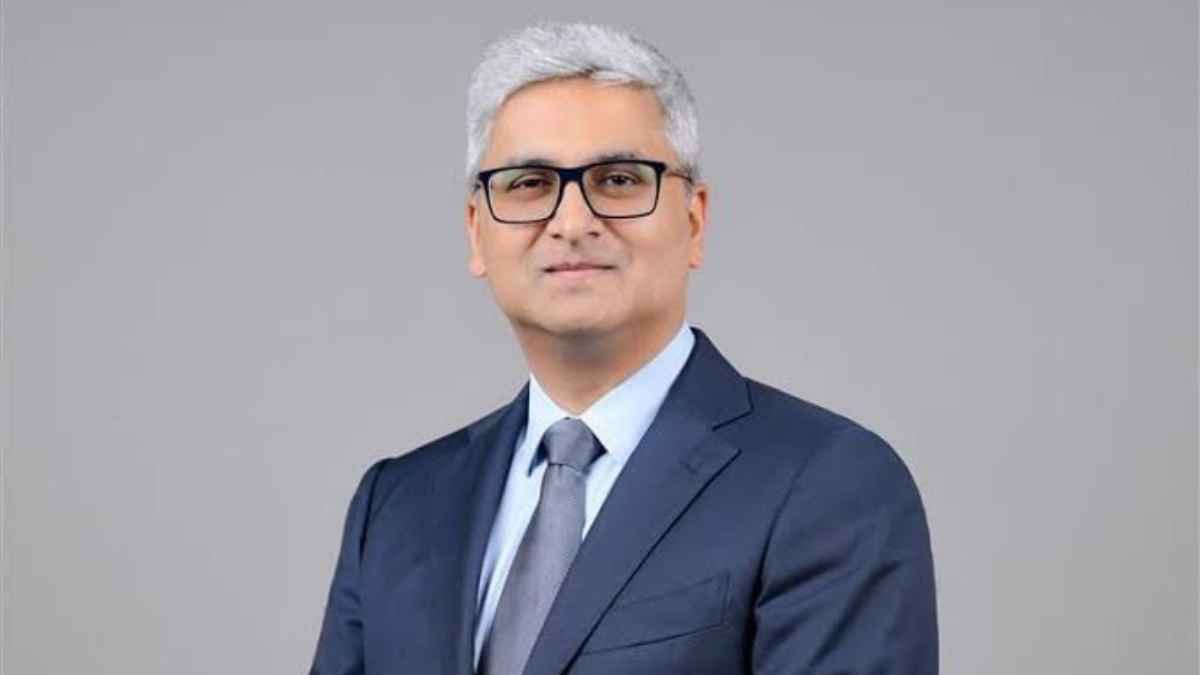
Anand Roy, MD and CEO of Star Health, said mandatory co-payment will discourage hospitals from admitting patients for small procedures. He noted that "many small-value claims will be discouraged" if such rules are introduced. Standard treatment protocols could also help speed up insurance approvals and reduce extra out-of-pocket medical expenses.
Standard treatment protocols will make insurance approvals faster and will reduce out-of-pocket expenses. Anand Roy, MD & CEO, Star Health tells Narayanan V that mandatory co-payment will discourage hospitals from admitting patients for small procedures. Excerpts:
What is your view on the proposed mandatory co-payment on all health insurance policies?
The average insurance settlement is around 85-90% and the rest is paid by the policyholder. If a co-payment is introduced, many small-value claims will be discouraged. Customers will be encouraged to opt for telemedicine or homecare-based treatment. Hospitals will also be discouraged from admitting patients for small procedures, knowing that customers will have to bear part of the out-of-pocket expense. Risk-sharing is always a good practice.
In any line of general insurance, there is some deductible and an element of co-payment built in so that small-value claims are discouraged. Many products currently have co-payments or deductibles on an optional basis. There is a discussion on whether these can be made mandatory, and whether the level should be 5% or 10%. Even Arogya Sanjeevani, the standard health insurance policy introduced by Insurance Regulatory and Development Authority of India (Irdai), has a 5% co-payment. We are only saying that the same logic should be applied to all products.
How can standard treatment protocols bring predictability to healthcare costs?
This is very important, in my view. In fact, when the Irdai chairman took charge, one of the first projects he initiated was an industry-level discussion through the CII, bringing healthcare providers and healthcare payers onto the same platform to solve many of these problems. Five joint working groups have been created, co-chaired by insurers and healthcare providers.
One of the working groups is looking at standard treatment protocols and various other aspects. These protocols are well defined by the Indian Council of Medical Research under the Ministry of Health. The biggest beneficiary will be the policyholder. First, insurance approvals will happen faster because the procedures are laid out and agreed upon. Second, out-of-pocket expenses may be much lower because, under a defined protocol, hospitals tend to conduct multiple investigations and raise multiple bills every time there is an insurance claim. All that will get reduced.
How can the National Health Claims Exchange improve the customer experience?
All insurance companies are fully on board to make it live as soon as possible. I think hospitals are also slowly coming around. The biggest beneficiary will be the customer. Today, we are talking about settlement times of one to three hours. With this, it can all happen in seconds. Hospitals currently have to integrate with 25 different insurance companies and third-party administrators. This will provide a single platform through which information can flow to all insurance companies. It has been successfully implemented under the PMJJBY scheme. There are probably small hospitals that feel the cost may not be viable for them.
Why are preventive care and outpatient department cover becoming increasingly important in health insurance?
We have seen a quantum jump, especially on the preventive health side. There has been almost a fivefold increase in the utilisation of these benefits by our customers. They are going for annual health check-ups, and our OPD plans are also seeing good uptake. But this still needs to be promoted more and more. Prevention and wellness are areas we started focusing on over the last 10 years. We have seen good adoption, be it telemedicine, doctor consultations, or condition management programmes.
How does Young Star Neo incentivise early entry through premium protection?
The problem we face is that youngsters do not see health insurance as an important investment. It needs a lot of convincing. We thought of addressing this through Young Star Neo. On the pricing side, we are giving a commitment that if a person joins at a young age, say 25, we will assure them of a fixed premium forever, until they make a claim. But even when they make a claim, say after 10 years, the following year's premium will be reset only from the age of 26 and not their actual age.
While their biological age will be 35 after 10 years, their insurance premium age will be 26. We call this feature 'Time Travel'. I think this benefit will typically save at least Rs 50,000 over a 10-year period. In addition to that, we are also offering a rewards programme called Star THRIVE. Most youngsters are anyway going to the gym and taking care of their health. We are saying that they should report all of that through our mobile app and can earn up to 100% of their premium back.
Every financial journey has a turning point. What's yours?
Financial Express is launching a new series highlighting real experiences with money, investments, and the taxman. Did a sudden tax rule catch you off guard? Did a piece of financial advice change your life? Your story could provide invaluable, practical lessons for thousands of fellow taxpayers. Share your experience with us. We respect your privacy: no stories will be featured without a direct conversation and your full consent. Thank you.