
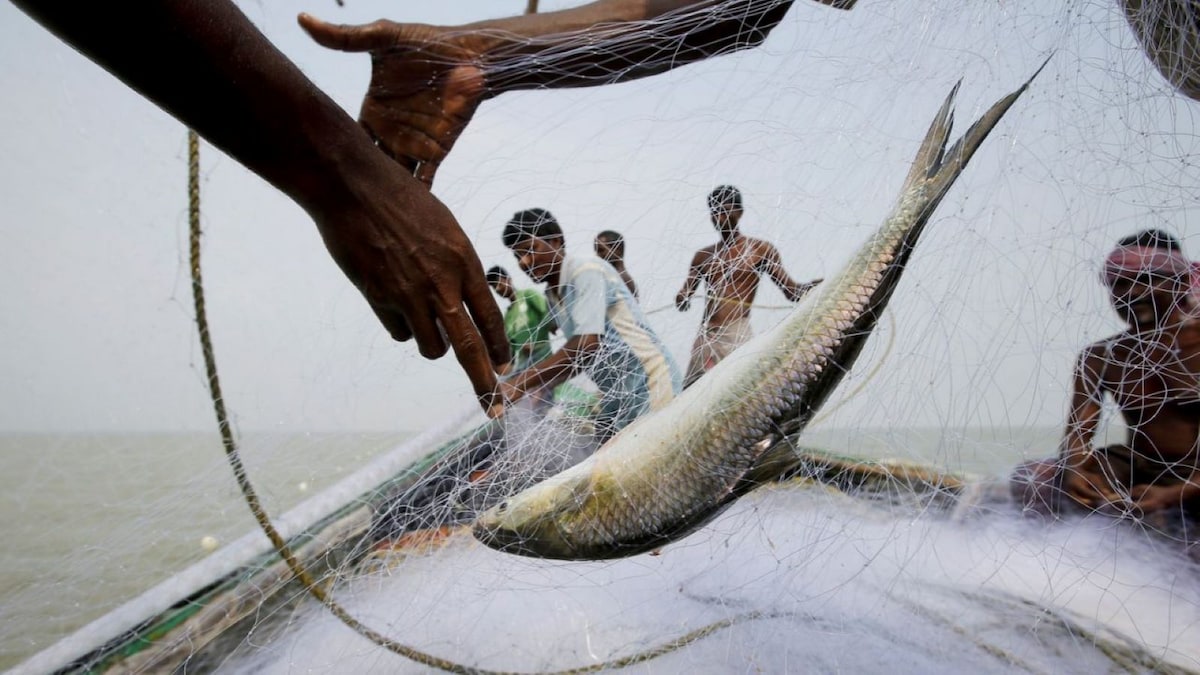
India’s inland waters produce far less fish than they could, says a report by Jaljeevika and Change Engine. Improving productivity could double output to 30 million tonnes by 2035. This shift has the potential to create 1.8 crore jobs, as many states currently use their water resources far below capacity.
Water-rich states like Tamil Nadu and Bihar are severely lagging in inland fish yields despite vast resources, while Andhra Pradesh sets the benchmark through intensive aquaculture. Overcoming seed and infrastructure bottlenecks could unlock billions in economic gains and millions of jobs. Discover what policy shifts are needed to protect small fishers.
India's ponds, tanks, lakes and reservoirs produce about three-quarters of the country's fish, but much of this vast inland water resource remains underused. Raising productivity could double inland fish output to 30 million tonnes by 2035 and create an estimated 1.8 crore jobs, according to a report by Jaljeevika and Change Engine.
The report, India's Aquatic Economy: The Untapped Potential of Inland Water Bodies, estimates that inland fish production could rise from about 15.2 million tonnes to 30 million tonnes over the next decade, adding $40 billion to the economy. These are projections based on improvements in productivity and the prices farmers receive for their catch, rather than assured gains.
The scale of the opportunity is particularly evident in states with large inland water resources but low fish yields. Bihar, Odisha, Karnataka, Tamil Nadu and Madhya Pradesh together account for about 40% of India's inland water area, but contribute only around a fifth of inland fish production, the report's analysis of government data shows.
Average productivity across inland water bodies is 1.86 tonnes per hectare, against a government benchmark of 5 tonnes. Tamil Nadu records just 0.39 tonnes per hectare, while Karnataka's yield is 0.59 tonnes. Bihar and Odisha, despite having some of the country's largest inland water areas, record yields of 0.90 tonnes and 0.97 tonnes, respectively.
Andhra Pradesh is the only state to have crossed the 5-tonne benchmark, with productivity of 6.03 tonnes per hectare. Its inland fish output rose from 1.58 million tonnes in 2013-14 to 4.88 million tonnes in 2024-25, driven in part by investment in intensive aquaculture, particularly shrimp farming.
India produced 19.78 million tonnes of fish in 2024-25, of which inland fisheries accounted for 15.17 million tonnes. Their share of total production has risen to 75% from 63% in 2013-14. The inland fisheries market is valued at about $22 billion, roughly half the estimated value of India's overall fisheries sector.
The report estimates that doubling inland fish production could generate 1.8 crore additional jobs. Its calculations suggest that a 10% increase in inland fish output is associated with an 8.2% rise in employment, compared with 4% in agriculture.
The sector already provides livelihoods to about 2.3 crore people, many of whom fish part-time alongside farming, livestock rearing or wage work. A typical inland fishing household earns between ₹60,000 and ₹1.2 lakh a year, according to the report.
There are examples of how better access to water bodies and technical support can improve incomes. In Bihar, training provided to small farmers raised annual fish income from ₹30,000 to ₹1 lakh. In Odisha, about 4,000 women's self-help groups were supported to take up fish farming in unused village tanks, generating an additional ₹10,600 a year per woman on average.
However, raising output will require more than simply putting existing ponds and reservoirs to use. The report identifies poor access to quality fish seed, inadequate infrastructure and limited technical support as major constraints. It estimates that developing hatcheries and nurseries, along with cold storage, collection centres and processing facilities, would require investment of about ₹7,000 crore over 10 years. The estimated cost to the government, after accounting for private contributions and bank loans, would be around ₹3,600 crore.
The report also argues that local communities need more secure and longer-term rights to manage village water bodies. Short-term leases and auctions can favour contractors with greater financial resources, leaving small fishers and traditional fishing communities with little control over the resources they depend on.
Among its recommendations are state-level missions bringing fisheries, rural development, water resources and panchayats together; leases of at least five years for local self-help groups and fishing cooperatives; and a network of trained local agents to advise farmers on fish stocking, feeding, water quality and disease management.
The report argues that these measures could help ensure that higher fish production translates into better incomes for rural households, rather than benefits being captured mainly by larger operators.