
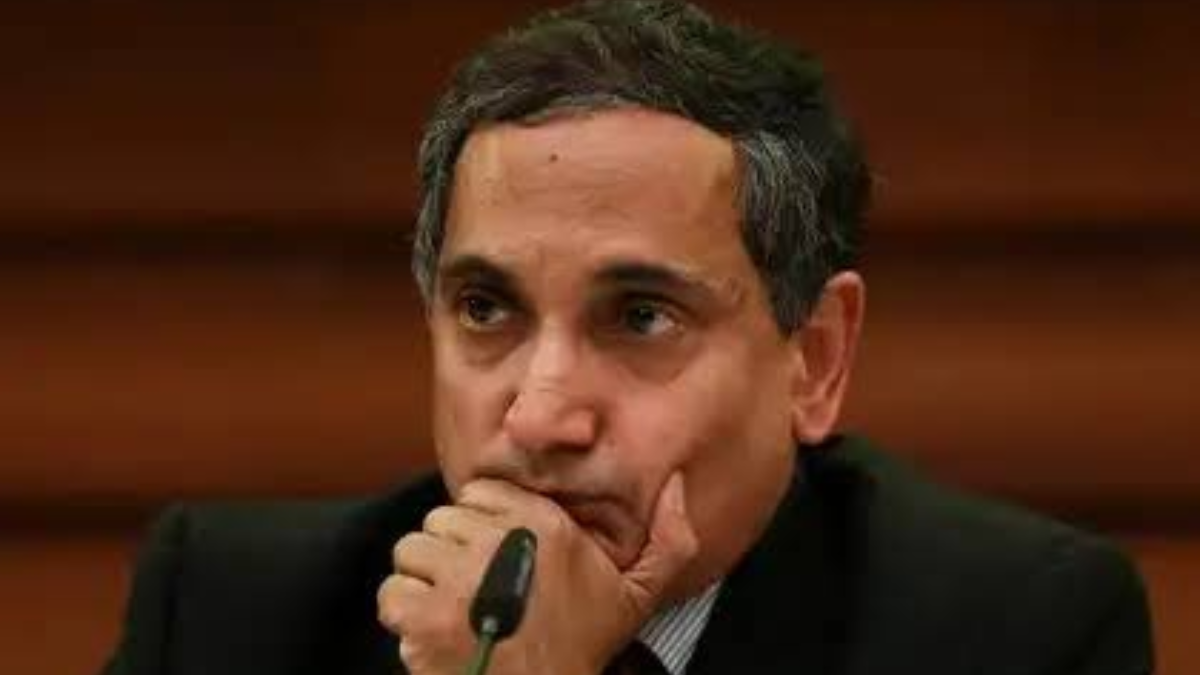
Krishna Srinivasan, director of the IMF’s Asia and Pacific Department, said India should let the exchange rate move as the first line of defence against shocks. “Our advice to countries is to use the exchange rate as the first line of defence,” he said at a Mumbai media briefing.
Krishna Srinivasan, director of the IMF’s Asia and Pacific Department, said exchange rates should act as the first line of defence when economies face external shocks.
“Our advice to countries is to use the exchange rate as the first line of defence amid ongoing shocks,” Srinivasan said at a media briefing in Mumbai. “We would advise India to let the exchange rate move.” The Reserve Bank of India (RBI) has taken several steps to support the rupee.
These include selling dollars from its foreign exchange reserves, opening a special window to supply dollars to oil companies and requiring banks to set aside cash against certain foreign exchange transactions. The rupee fell close to record lows earlier this month but recovered around 2% after the central bank introduced these measures.
Srinivasan said foreign exchange intervention offers limited benefits beyond the short term when economies face an oil shock. He said exchange rates need to act as shock absorbers by adjusting to changes in global economic conditions.
“Countries which allow exchange rates to move have benefited more,” Srinivasan said at a press conference in Mumbai on Wednesday, responding to a question about Asian currencies. He did not name the RBI directly while explaining why exchange rates should be allowed to absorb some of the pressure from global shocks.
IMF backs measures to attract foreign capital
The IMF has distinguished between intervention to support a currency and measures to attract foreign investment. While Srinivasan called for greater flexibility in exchange rates, Ranil Salgado, the IMF’s senior representative for India, Bhutan and the Maldives, supported the RBI’s recent steps to encourage foreign capital inflows.
In June, India reduced taxes on foreign investments in government debt and raised $134 billion through a dollar deposit scheme aimed at the Indian diaspora.
Salgado said the measures to encourage foreign investment were largely positive because they helped bring more capital into the country. “We think that is a good policy,” he said.
The RBI has also eased rules for foreign borrowing and introduced incentives to attract foreign currency deposits from Indians living abroad. These measures have brought in billions of dollars, helping increase the supply of dollars without relying entirely on the central bank’s foreign exchange reserves. Salgado also noted that the RBI’s stated policy is to limit excessive fluctuations in the rupee rather than defend a specific exchange rate.
RBI faces pressure from rising oil prices and foreign outflows
Central banks across Asia are dealing with currency weakness as global economic shocks drive capital outflows and increase demand for dollars. Countries such as Indonesia and Japan have used a combination of interest rate increases and market intervention to support their currencies.
In India, the RBI has stepped up its efforts to support the rupee, which has been among Asia’s weakest-performing currencies this year. Elevated oil prices and continued foreign investor outflows from Indian stocks have added to the pressure.
The RBI recently introduced a special window to meet the dollar requirements of state-run oil companies and a new measure requiring banks to set aside cash against certain foreign exchange transactions. These steps followed the central bank’s first interest rate increase in nearly four years.
Policymakers are concerned that a weaker rupee, combined with high crude oil prices, could increase inflationary pressure in the economy.
Srinivasan has served at the IMF since 1994 and has worked across several departments, including those covering Asia, Europe and the Americas. He holds a PhD in international finance from Indiana University and a master’s degree from the Delhi School of Economics.