
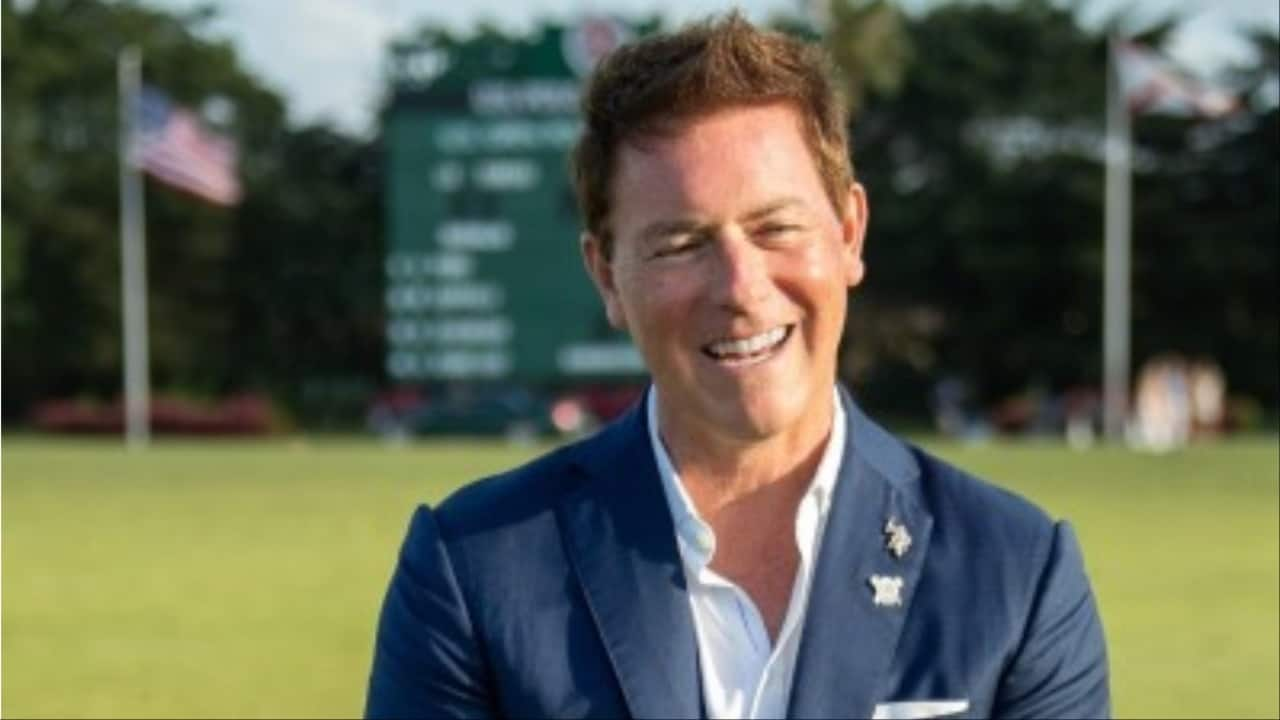
U.S. Polo Assn. recorded robust growth in India and aims to reach Rs 4,000 crore in sales this year. CEO J. Michael Prince said, "I've never been more excited about India." The brand is expanding its store count and online focus, as India remains its fastest-growing market globally right now.
Despite a challenging macroeconomic environment, American casualwear brand U.S. Polo Assn. has recorded robust growth in India and is aiming to close the year with sales of Rs 4,000 crore. While premiumisation has contributed significantly to this growth, the brand is also stepping up marketing spends, sharpening its focus on online channels, expanding product categories and increasing its store count. The brand's India business is its fastest-growing market globally. USPA Global CEO J Michael Prince, who visits India almost every year, is in the country to meet employees, visit stores and interact with partners on the ground.
U.S. Polo Assn. has set a long-term target of generating $1 billion in retail sales from India and sees the country playing a key role in contributing to its broader global retail sales target of $4 billion. "I've never been more excited about India," Prince said, adding that America is very positive about India. Prince and Kulin Lalbhai, vice-chairman of Arvind, the brand's India partner, spoke with Moneycontrol. Edited excerpts: What are the changes that you have seen on ground in India and how has the retail landscape evolved over the years? J. Michael Prince: Every year I come over, I see how dramatically it continues to evolve and change.
You see the middle income rising up. And it's really a beacon of light around the world when you think about the growth of India, the evolution of India, all the advancements that the country has. Arvind has been a great partner for us and we have a shared vision about the future. I've never been more excited about India and the opportunity we have globally for this brand. What is the vision for the brand? J. Michael Prince: Globally, we've talked about the $4 billion (in global retail sales) vision. And we're going to be close to $3 billion this year. That was from a billion dollars six, seven years ago.
This year will be a record year on all fronts. What I love about the brand is that we're winning with young consumers. I'm not sure they knew who we were 10 years ago. But through our brand initiatives, a great price to value proposition, we're elevating the brand and giving the consumers this great opportunity to engage with us. That's been a winning formula that's worked not only in India, but all over the world. How far will India play a big role in helping the brand achieve the $4 billion sales mark? J. Michael Prince: It's our fastest growing market and among the top three. Over time, it could easily be the number one.
Globally, we've (India) been growing somewhere between 5-10 percent annually. This year it'll probably be 7 percent. India will also help us compensate for the downturn in the Middle East. Barring the Middle East, how have markets been faring this year globally? J. Michael Prince: The consumer globally is stretched. They're very thoughtful about their acquisitions and their purchases, but what we offer the consumers is this great price to value proposition. The product's gotten better, but it's still at a great price. That's worked for us. How has the consumer sentiment been in India? Have you taken price hikes?
Kulin Lalbhai: I think customers generally have become discerning. People are not kind of in the mood to just blindly splurge money. Brands that are doing well and are strong and aspirational are gaining market share and that's where growth is coming from. It's not necessarily a very crazily buoyant market. That being said, this festive was amongst the better festives. Last year's GST cuts have definitely improved the mood for us also. The impact is still there. Secondly, there are enough sectors of the economy that are doing very well. GDP print is showing it. A lot of capex, private capex is coming.
Of course, the Iran war is a big negative but largely the customer got shielded right? Inflation has gone up but consumers in the rest of the world got hit much worse. We are taking a 4 percent increase in price as we speak. You haven't seen spends getting reduced at your store, even though consumers have been discerning? Kulin Lalbhai: No. Our higher price products are actually selling through. We increased 30% supply of premium products, and they sold out. Has inflation not impacted demand at the entry level price points? Kulin Lalbhai: Not a downturn, but I would say it's kind of, you know, the problem with apparel as a business is that parts of it have become commoditized, where everyone's doing the same thing.
So in some of the entry level products, it's difficult to differentiate, right? Not that it's degrowing, but our share of offering of premium products is growing. How's growth been for the brand this year and is it largely on the back of premiumisation? J. Michael Prince & Kulin Lalbhai: We've had a year of the highest growth we've seen. This is the year where we will touch Rs 4,000 crores in consumer sales for U.S. Polo. In that sense, it's a very unique Goldilocks kind of period for the brand where there are so many interesting growth drivers that are kicking in. We are leaning into brand storytelling, increasing marketing by 50 bps every year.
We've created a content-led engine which is engaging digitally and are acquiring a lot more customers in our stores. We have extended the brand into many product categories. The brand started as a polo brand. Then we brought in the casual shirt. We then got into denim and kids. We went into footwear. and today, we sell 3 million sneakers a year in just a five-year time frame. Similarly, women's wear is our latest franchise. It's hit 100 crores in two years. The runway in the women's segment is going to be massive for us. We are adding 60 to 70 stores a year. Online.com...we just launched it. It's scaling up at triple digits.
There's much runway even in distribution. We feel quite confident of doubling this franchise and becoming a big contributor to his next billion. How will you expand the brand in India? J.Michael Prince & Kulin Lalbhai: We'll open 60 to 70 stores a year. We're upsizing our size of stores because the offering is getting wider. We also continue to penetrate more in wholesale, department stores. Our online will remain our highest growth channel. The competitive landscape in India has evolved with the entry of D2C brands. What is your counter strategy? Kulin Lalbhai: We are holding our own against even new age brands, because they have realised the world is omnichannel.
Every online brand is trying to come offline where they are one-tenth or less of our scale. And also close to 30% of our business is now online. What's the plan for faster deliveries and quick commerce in India? Kulin Lalbhai: The percentage of same day, next day delivery is dramatically going up in our online business. And maybe 30% of what we will sell digitally will become close to same day, next day, very soon. We have now started working, not only with all the Q-comm players, but we are also leaning into the Q-comm offerings of Myntra, Flipkart, Amazon. USPA was the first apparel brand to launch on Zepto.
How will the US-India trade deal help in the growth of the brand in India? J. Michael Prince: I think anytime you can find a common ground with a great international partner, it's very important for relations and also just opportunities. Hopefully, the deal will get signed. And I know America is very positive on India. We love the people. We love the relationship. It's a tremendous growth opportunity for the world. And we just see the value that India provides to the world.