
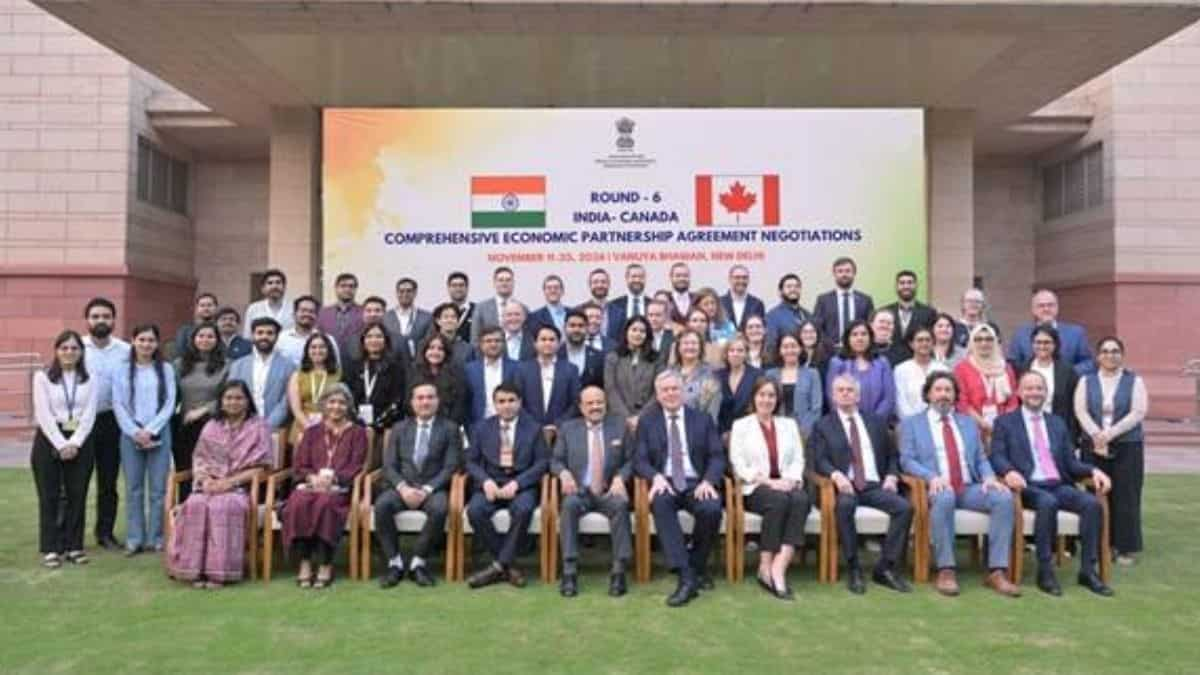
India and Canada held a sixth round of trade talks in New Delhi from November 11 to 20. Negotiators reviewed progress on the Comprehensive Economic Partnership Agreement, which covers goods, services, and investment. Both sides said the meeting provided an opportunity to take stock of the overall status of discussions.
The meeting provided an opportunity to review the progress achieved during the sixth round and take stock of the overall status of the India-Canada CEPA discussions, according to an official statement by the Indian Ministry of Commerce and Industry.
Indian and Canadian negotiators held a sixth round of discussions in New Delhi from November 11 to 20, with Commerce Secretary Rajesh Agrawal and Canadian Vice Minister Glenn Purves reviewing the status of talks. India and Canada are in the final stretch of negotiating a Comprehensive Economic Partnership Agreement (CEPA), with a stated goal of concluding it by the end of the year. A CEPA goes beyond a conventional free trade agreement, as it typically covers goods, services and investment along with wider economic cooperation. With the year-end target drawing closer, the latest round assumes significance.
Agrawal held a productive meeting with Purves, the Ministry of Commerce and Industry said in a statement. The meeting provided an opportunity to review the progress achieved during the sixth round and take stock of the overall status of the India-Canada CEPA discussions, it said.
The deal is set to be signed once the final negotiations are concluded.
Here are 10 things to know about the India-Canada CEPA:
1. Both sides reaffirmed their commitment to concluding an ambitious, balanced and commercially meaningful agreement that delivers tangible benefits to farmers, industries, businesses and MSMEs in both countries.
2. The proposed CEPA would unlock new opportunities in trade and investment, strengthen resilient and diversified supply chains, and further deepen the economic partnership between India and Canada.
3. The successful conclusion of the sixth round reflects the continued engagement of both sides towards advancing the negotiations and strengthening bilateral economic and commercial ties.
4. The Indian delegation was led by Dr Brij Mohan Mishra, Chief Negotiator, while the Canadian delegation was led by Mary-Catherine Speirs, Chief Negotiator.
5. The negotiations covered a range of significant areas, including trade in goods, trade in services, rules of origin, trade remedies, intellectual property and investment promotion. Rules of origin determine whether a product qualifies for tariff concessions under the pact, while trade remedies deal with measures such as anti-dumping duties.
6. The sixth round witnessed constructive and substantive discussions across the negotiating tracks, with both sides making progress.
7. The talks were guided by the shared objective of concluding the negotiations within the ambitious timelines envisaged by the leaders of the two nations.
8. Earlier, Commerce Minister Piyush Goyal met Canada's International Trade Minister Maninder Sidhu on November 11 to advance the talks, with the Canadian government explicitly aiming for a successful conclusion by 2026-end.
9. Negotiations so far have covered areas such as agriculture and agri-food, digital trade, mobility and sustainable development. The inclusion of mobility and digital trade shows that the proposed pact is not limited to tariffs alone.
10. Both sides aim to more than double bilateral trade to 70 billion Canadian dollars annually by 2030, from an estimated 30.4 billion Canadian dollars in goods and services in 2025. How quickly the remaining issues are bridged will determine whether the year-end target is met.
Beyond Canada, India is simultaneously working on several other trade pacts. Goyal said India is negotiating with the US, Oman, the EU, Chile, Peru, and New Zealand, with more countries seeking talks. He separately said India has engagements with eight or nine more geographies expected over the next 12-18 months.