
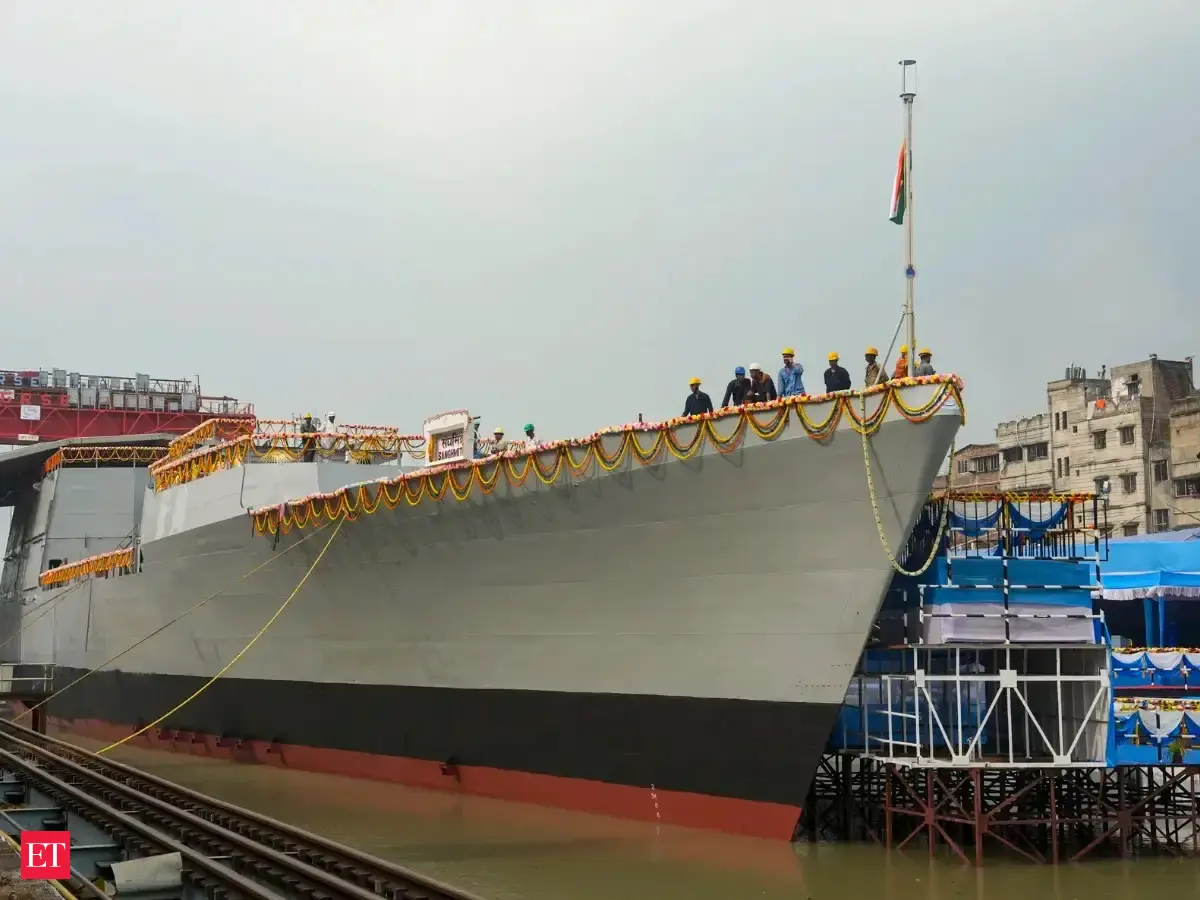
Hyundai and Samsung are eyeing India’s shipbuilding sector as the Centre lines up a Rs 69,725-crore package. Union minister Sarbananda Sonowal said, "HD Korea Shipbuilding & Offshore Engineering has emerged as the anchor partner for the proposed mega shipyard at Thoothukudi." These partnerships aim to boost domestic capacity and maritime trade.
India's shipbuilding industry is attracting global partnerships, particularly with Hyundai and Samsung on significant projects. The government targets a seafaring workforce of around 600,000 by 2030, up from 320,000 currently. Proposed investments for new shipyards in Thoothukudi and Pipavav aim to boost domestic shipbuilding capacity. Collaborations and government incentives are expected to enhance India's position in global maritime trade.
New Delhi: India's shipbuilding industry is attracting interest from global players such as Hyundai and Samsung, which are partnering with domestic companies on major projects, Union minister for ports, shipping and waterways Sarbananda Sonowal said.
"HD Korea Shipbuilding & Offshore Engineering (HD KSOE), a Hyundai group company, has emerged as the anchor partner for the proposed mega shipyard at Thoothukudi, which is expected to attract investments of around ₹38,000 crore," he said.
More than 30 international shipyards and maritime companies participated in the recent India Shipbuilding Conclave, reflecting "strong global confidence in India's long-term maritime growth story," the minister said.
"Samsung Heavy Industries, meanwhile, is providing technical collaboration to Swan Defence and Heavy Industries at Pipavav in Gujarat. Domestic shipbuilder Mazagon Dock Shipbuilders has signed agreements to participate as the anchor shipyard developer for the proposed greenfield shipbuilding clusters in Andhra Pradesh and Maharashtra, each with envisaged investments of around Rs 15,000 crore," Sonowal said.
India's shipbuilding output has risen by more than 80% in the current financial year and is expected to cross 100,000 gross tonnes, the minister said.
Referring to challenges the ongoing West Asian conflict has posed, having claimed 23 Indian seafarers' lives since February, Sonowal said the government remains committed to its target of nearly doubling India's
seafaring workforce.
Online dashboardThe government aims for around 600,000-strong workforce by 2030, up from 320,000 now. This would account for about 20% of the global seafaring workforce, he said.
"By 2030, the global seas will be dominated by Indian seafarers. Geopolitical challenges will always remain, but our youngsters are brave enough to take them on," the minister said.
The government has also set up a dedicated online dashboard to assist Indian seafarers. "We have developed a dashboard through which any seafarer, from anywhere in the world, can contact us for help. It is a very transparent process," Sonowal said.
The minister also flagged the estimated annual foreign exchange outflow of ₹6.25 lakh crore on payments to foreign shipping companies for seaborne freight. He said the government plans to expand Indian ship ownership and domestic shipbuilding capacity to reduce dependence on foreign carriers and curb this outflow.
Sonowal outlined five key pillars of the strategy: a ₹69,725-crore shipbuilding incentive package; a procurement pipeline of more than 400 vessels; a ₹25,000-crore maritime development fund; the development of plug-and-play shipbuilding clusters; and the granting of infrastructure status to large vessels to improve their access to long-term financing.
He said government-owned entities and public-sector companies are expected to buy more than 400 new ships, involving potential expenditure of over ₹2 lakh crore. A one-year vessel acquisition plan had been drawn up for 62 ships, with tenders already floated for 46 of them.
"The demand for new ships has already been created. The message from the government is simple: India is open to shipbuilding investment," Sonowal said.
"We are building the capacity, ecosystem and partnerships required to become one of the world's leading shipbuilding nations. The ships that will power the future of global trade can increasingly be built in India, for the world."