
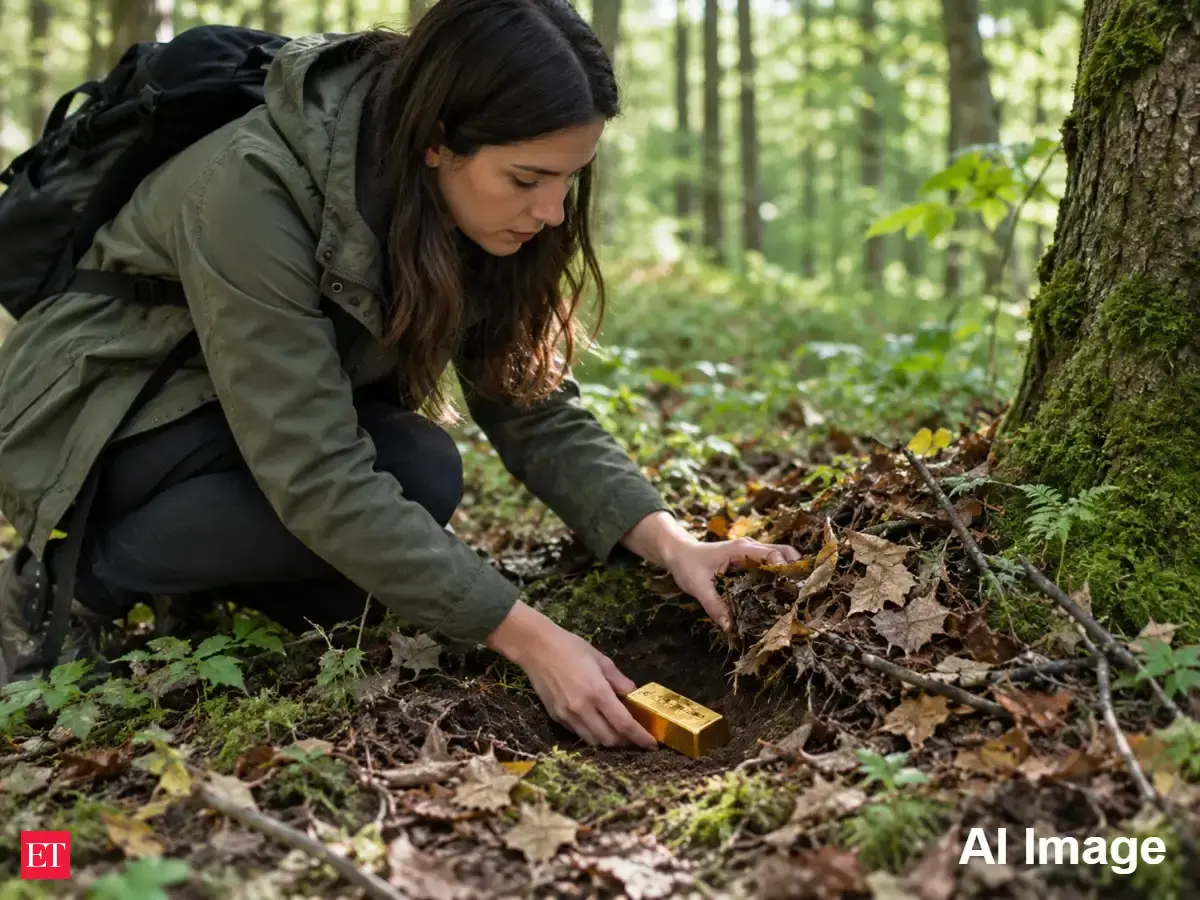
A bizarre investment scam in Norway is tricking victims into buying gold and leaving it in forests. Finans Norge said the first cases emerged in spring. Fraudsters convince people that this keeps their savings safe, but the gold gets stolen. Banks reported that customers lost 962 million kroner to fraud.
Synopsis
Gold scam: A bizarre investment scam in Norway is prompting warnings after victims were persuaded to buy gold and leave it at secluded forest locations, only for the precious metal to disappear. Finans Norge says the first cases emerged in spring, while separate figures reveal that Norwegian banks and their customers lost 962 million kroner to financial fraud last year.
Imagine spending your savings on gold, taking it into a forest and leaving it behind because someone promises it will be safe. That is the bizarre situation facing victims of a reported investment scam in Norway, where people are being persuaded to buy the precious metal before handing it over at secluded locations. The gold then vanishes, leaving its owners out of pocket. Finans Norge, which represents Norway's financial services industry, has alerted the public to the scheme after several bank customers reportedly suffered losses. The cases have prompted Norwegian banks to warn people about suspicious investment offers and the unusual tactics fraudsters are using to gain their trust.
Gold scam in Norway: Why are victims taking gold into forests?
Unlike conventional investment fraud, where victims may be asked to transfer money into an account, this scheme involves buying a physical asset.
People are reportedly persuaded that purchasing gold and leaving it at a particular spot in a forest is part of a plan to protect their investment and benefit from a rise in its value. But the arrangement does not deliver the promised security. Once the gold is left behind, it is stolen.
The director of anti-fraud operations at Finans Norge, Gry Nergård, said the first cases were reported in spring. Since then, incidents have been reported in Oslo and nearby towns, as well as Bergen on Norway’s west coast.
Live Events
The organisation has not revealed the combined value of the gold stolen in these incidents. However, the method has raised concerns because victims are being convinced to part with something they have physically purchased and may have considered a safe investment.
Finans Norge reveals scale of fraud losses in Norway
The forest gold scheme is not the only form of fraud Norwegian banks are warning customers about.
Finans Norge reported that banks and their customers lost a total of 962 million kroner to financial fraud last year, equivalent to around $100 million.
There is also evidence of efforts to stop such losses before they occur. Banks prevented attempted fraud worth more than 3.5 billion kroner during the same period, according to the organisation.
These figures indicate the financial toll of scams and the importance of identifying suspicious behaviour before money or valuables change hands. Fraudsters can exploit trust in different ways, whether through convincing investment pitches, misleading promises or instructions that appear to come from reliable sources.
'NO WAY – you won’t fool me': Norwegian banks step up warnings
To help people recognise these tactics, Finans Norge and banks across the country have introduced an awareness campaign titled “NO WAY – you won’t fool me”.
The initiative encourages the public to pause before acting on unexpected financial requests and to question arrangements that seem unusual. Rather than relying on assurances from the person making an offer, potential investors are encouraged to check the details independently.
A request to buy gold and leave it in a forest is an obvious reason to stop and investigate. But other scams may be presented in ways that appear more convincing, particularly when fraudsters build a relationship with their targets before asking them to take action.
Can buying gold protect you from investment fraud?
Gold is often bought as a long-term store of value, but the metal itself cannot protect an investor from theft or deception. Its market price can rise or fall, and the circumstances in which it is bought, stored and sold matter just as much.
The Norwegian cases demonstrate how an asset associated with financial security can become the target of a scam when people are persuaded to follow instructions they have not properly checked.
Before committing money to an unfamiliar investment, it is worth verifying who is behind the offer, understanding exactly how the arrangement works and seeking independent advice where necessary. Any proposal involving the unexplained movement or abandonment of valuable possessions deserves particular scrutiny.
Inputs from TOI
(You can now subscribe to our Economic Times WhatsApp channel)
KYB and KYC: Business behind the wealth creator called ‘Divi’s Lab’ – Part 2, concluding
KYB and KYC: Business behind the wealth creator called “Divi’s Lab” – Part 1
The global business of promising more
One company, 2 words. Bond yield and CDS: Will they decide the fate of global markets?
Business of Odd Things: Inside an industry that farms fish that nobody is meant to eat