
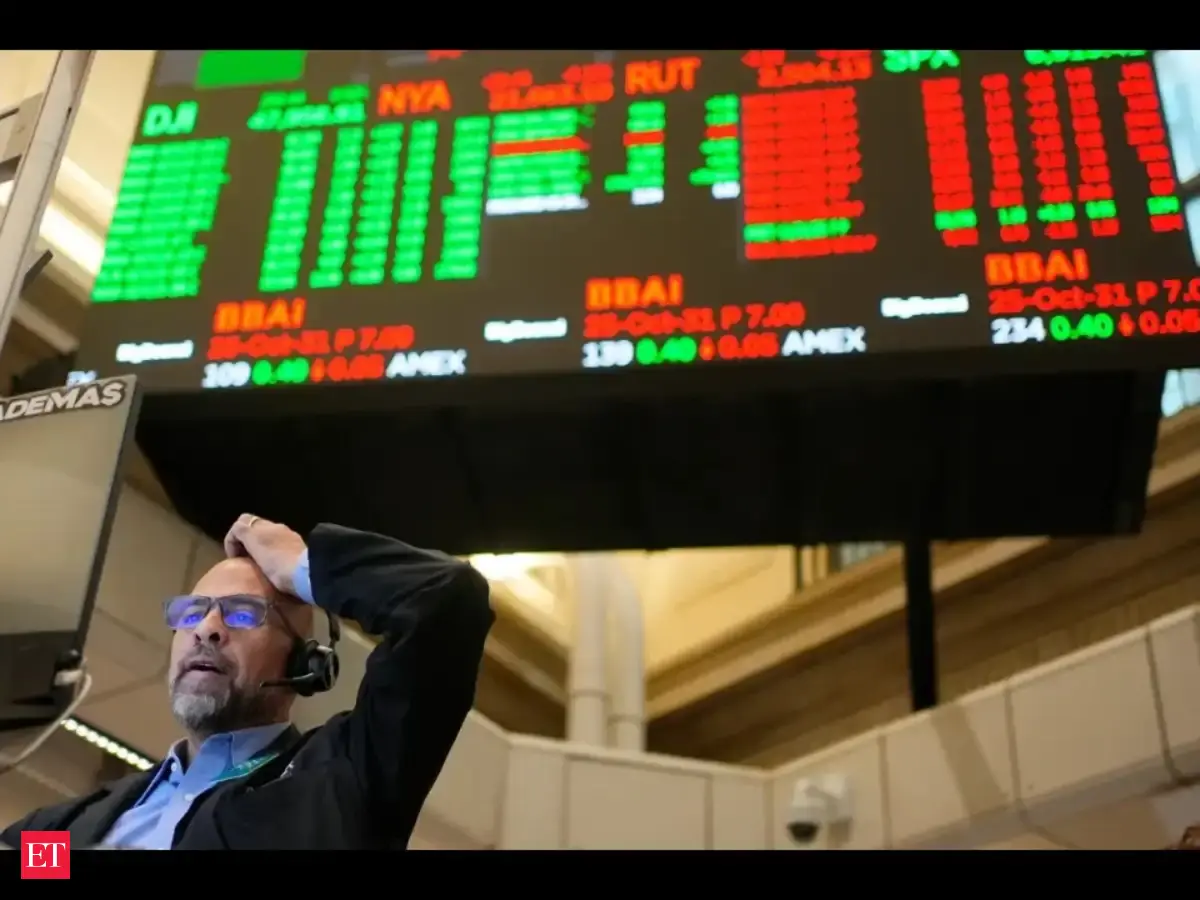
Paul Tudor Jones II made a fortune when the Dow fell 22% on Black Monday in 1987. He says, "most people lose money as individual investors or traders because they're not focusing on losing money." Jones suggests investors should spend 90% of their time thinking about how much they could lose.
Paul Tudor Jones II is renowned for his insightful market predictions, notably reaping substantial rewards during the 1987 market crash. He emphasizes that investors should prioritize capital preservation over mere profit chasing. Despite facing a performance dip post-2007, Jones remains a key player in the macro trading realm, and his investment strategies are particularly pertinent in today's unpredictable market landscape.
Paul Tudor Jones II bet against the market on Black Monday in 1987. He has a simple rule for investors; spend 90% of your time thinking about how much money you could lose, not how much you could make.
The report that revived the rule described stocks as being in a correction. That usually means prices have fallen 10% or more from a recent peak.
He made his name on the day the Dow fell 22%On Black Monday in 1987, the Dow dropped 22% in a single day. Jones had shorted the market. A short is a bet that prices will fall, so the crash worked in his favour.
His fund returned 200% that year. In plain terms, money invested at the start of the year had tripled by the end. Jones earned an estimated $100 million from it. That figure is an estimate, not a confirmed number.
The year established his reputation in the hedge fund industry. Jones didn't take the usual route into finance. He chose not to pursue a conventional business education and set up his own fund, Tudor Investment Corporation. He has since become a prominent name in macro trading.
Macro trading looks at the big economic picture rather than one firm. Jones's strategy doesn't revolve around individual companies or sectors. He tries to predict how interest rates and currencies will move.
The 1987 call wasn't his only large one. He made substantial profits during Japan's market crash in 1990. He did so again when the tech bubble burst in the early 2000s.
All three were sharp falls in markets, and the report credits him with an ability to foresee such shifts. The record also has a weaker stretch, which is covered below. First, the rule itself.
Jones explained his thinking in an interview in 2000. He said, "most people lose money as individual investors or traders because they're not focusing on losing money." In his view, one should not focus on making money but on protecting what you have.
He then described what investors should do instead. "People need to focus on the money that they have at risk and how much capital is at risk in any single investment they have," he said. If everyone spent 90% of their time on that, and not on "pie-in-the-sky ideas of how much money they're going to make," he added, they would be "incredibly successful investors."
"Capital at risk" means the amount you stand to lose if an investment goes wrong. Before buying anything, the rule asks you to work out how much of your money is exposed in that one position. Only after that does it matter what the investment might earn.
Jones also has a performance slump to answer for. His main hedge fund recorded an average annual gain of about 26% from 1987 through 2007. From 2008 through 2016, the average fell to about 5.3%. That is a drop of roughly 20 percentage points a year. The report says Jones is determined to show his skill hasn't faded.