
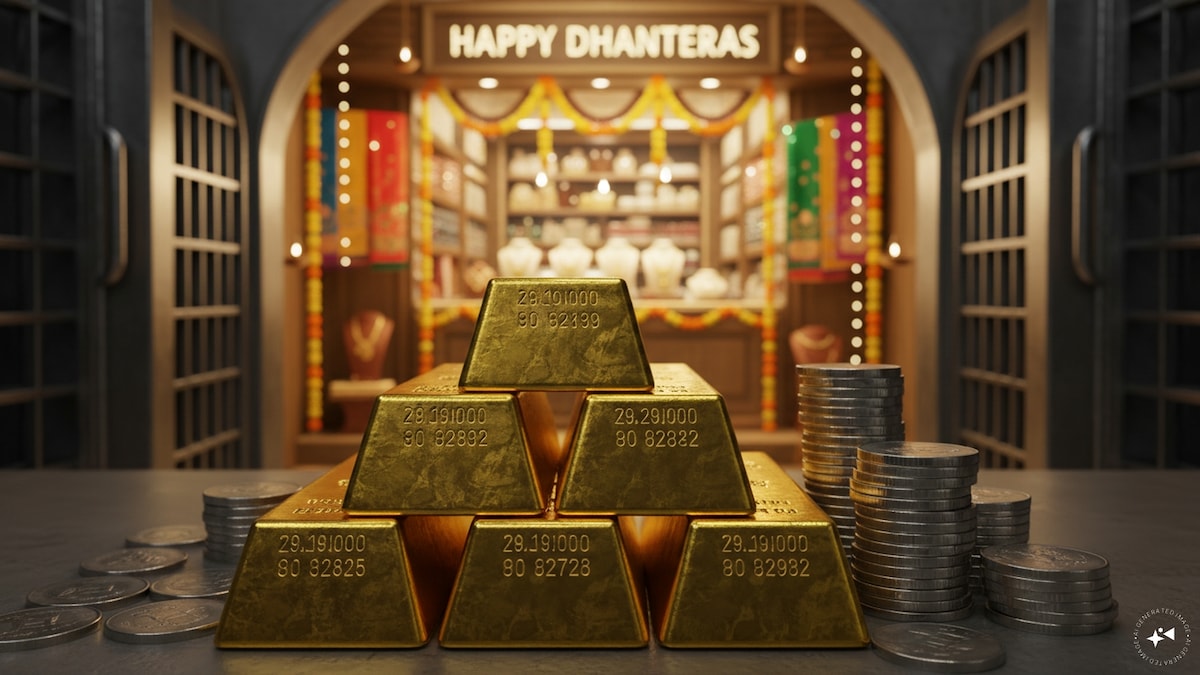
Gold and silver prices fell on Tuesday, November 3, ahead of the Dhanteras festival. Gold futures dropped 1.65% to ₹1.37 lakh, while silver fell 4.47% to ₹1.75 lakh. Colin Shah said, "softer gold prices has brought some cheer to consumers ahead of the festive season." Many buyers now prefer lightweight jewellery.
Gold and silver prices extended their decline on Tuesday, November 3, ahead of the Dhanteras buying season, bringing some relief to consumers who have been grappling with elevated precious metal prices.
On the Multi Commodity Exchange (MCX), gold futures for December 4 delivery were trading at ₹1.37 lakh per 10 grams, down 1.65%. Silver futures for December 4 delivery fell sharper, declining 4.47% to ₹1.75 lakh per kg.
The correction comes at a crucial time for the jewellery market, with Dhanteras and the wedding season expected to drive physical purchases.
However, the recent fall in prices also raises a question for consumers: Is it an opportunity to buy, or could precious metals see further volatility?
Why are gold and silver prices falling?
The weakness in precious metals is linked to changing expectations around US monetary policy, a stronger dollar and elevated bond yields.
Gaurav Garg, Head of Research at Lemonn, said investors are cautious ahead of the US midterm election results, while expectations of a possible Federal Reserve rate hike in December are adding to the pressure.
Silver has seen a sharper decline following its significant correction in October, he said.
NS Ramaswamy, Head of Commodity and CRM at Ventura, said gold has witnessed a notable correction from its record levels. He attributed the weakness to inflation concerns and expectations of tighter US monetary policy, which have supported bond yields and the dollar.
Higher yields make non-interest-bearing assets such as gold relatively less attractive.
Despite geopolitical tensions, gold has struggled to retain its traditional safe-haven appeal, Ramaswamy said. He expects prices to remain volatile ahead of the December Fed meeting, with domestic gold potentially trading in the ₹1.40 lakh per 10 grams-₹1.50 lakh per 10 grams range during November.
Will lower prices translate into higher Dhanteras demand?
The price correction could encourage consumers who had deferred jewellery purchases during the rally. However, buying patterns suggest that affordability and the intended use of jewellery are influencing purchase decisions.
Colin Shah, Managing Director of Kama Jewelry, said softer gold prices has brought some cheer to consumers ahead of the festive season. He observed a shift towards lightweight studded jewellery in the 9K to 19K purity range, as buyers look to manage their budgets.
Demand for both lab-grown and natural diamonds has also been concentrated in the ₹1.5 lakh to ₹3 lakh ticket-size range, he said.
Shah expects value-wise jewellery demand to remain broadly similar to last year, although volumes could decline by around 10%. The rise in gold prices in rupee terms, partly influenced by the rupee-dollar exchange rate, remains a constraint.
Meanwhile, online jewellery shopping is also seeing festive traction.
Siddharth Bhagat, Director, Amazon Beauty, Personal Care and Fashion Accessories, said gold jewellery demand on Amazon.in was 2.5 times that of a regular shopping day, while demand for gold coins and pendants was three times higher.
The platform also recorded over 50% year-on-year growth in fashion jewellery shoppers. Silver jewellery demand was nearly twice the regular-day level, while silver idols and figurines saw demand at 2.6 times a regular day.
Bhagat also highlighted growing participation from smaller cities, with new jewellery buyers in Tier 2 and 3 markets increasing by over 40% year-on-year.
Buying gold this Dhanteras: Jewellery, digital gold or ETFs?
For consumers planning a purchase, the decision goes beyond tracking the daily price. The format of buying gold can affect the overall cost, liquidity and suitability for the buyer.
Kumar Binit, CEO of airpay money, said first-time buyers should identify whether they want gold for wearing, gifting, savings or long-term investment.
Here are the key differences:
Physical gold: Jewellery and coins offer tangible ownership and suit traditional purchases and gifting. However, buyers should account for making charges, check BIS hallmarking and consider storage costs
Digital gold: Buyers can start with small amounts without having to store the metal themselves. However, they should check platform terms, applicable charges, storage arrangements and redemption conditions.
Gold ETFs and mutual funds: These are market-linked investment options for those who want exposure to gold without physically holding it. Gold ETFs trade on stock exchanges, while gold mutual funds provide an alternative for investors who do not have a demat account.
"There is no single correct method to invest in gold. The decision lies in the use of gold for wearing purposes, gifting, savings or investment," Binit said.