
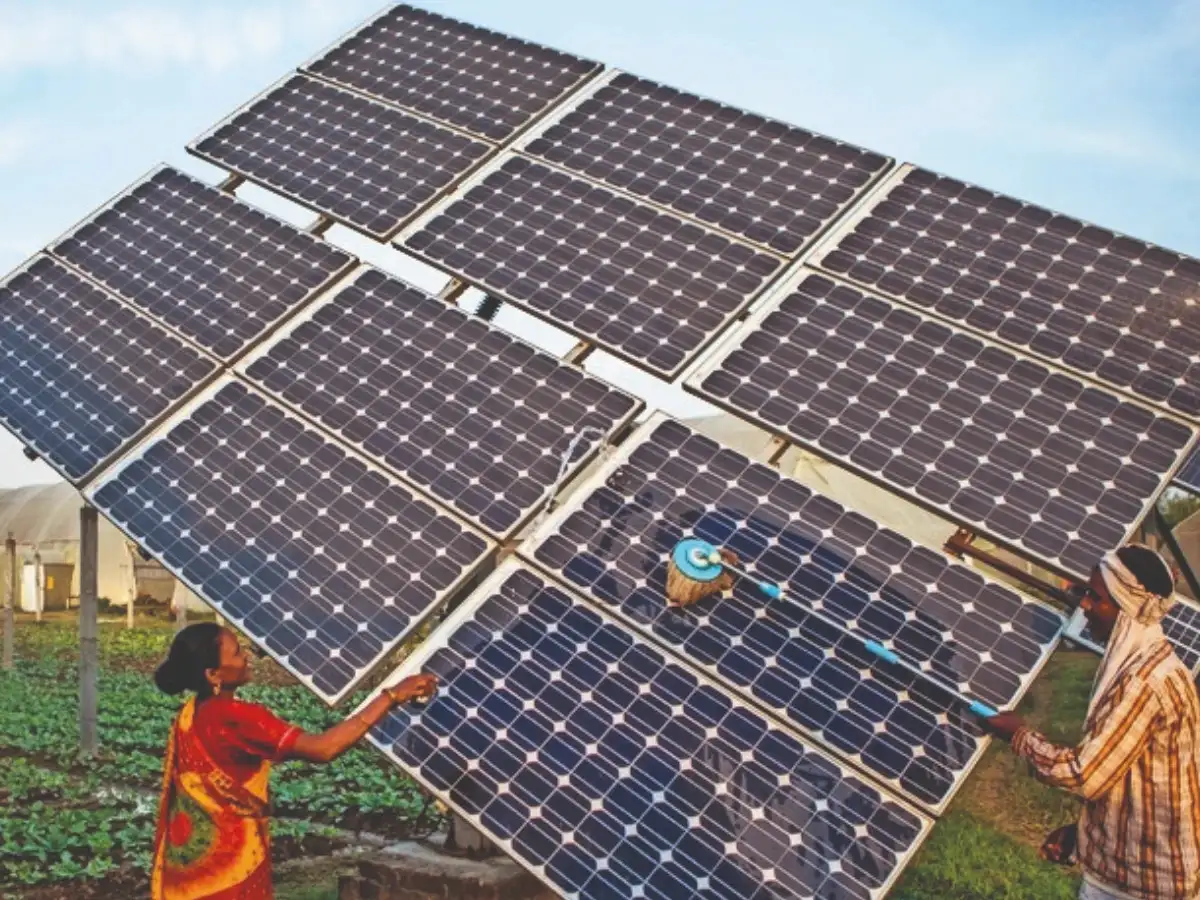
As COP31 starts in Antalya, Turkiye, today, renewable energy has become cheaper than coal in India. Solar and battery costs fell significantly since 2010, making green power commercially viable. Experts said, "Sunshine now challenges coal after sunset, too." India can now pursue a green transition using market-based finance instead.
Falling solar and battery costs have made renewable energy commercially competitive with coal in India. As COP31 begins in Turkiye, the focus should shift to accelerating electrification of transport, promoting agrivoltaics, investing in transmission and grid stability, and ensuring reliable payments by discoms to sustain the country's green transition.
Donald Trump rejects climate science, but cannot repeal the economics of sunshine. As countries assemble for COP31 that starts in Antalya, Turkiye, today, the most encouraging development is that green electricity makes commercial sense without requiring governments to agree on who should pay.
Climate conferences have traditionally resembled negotiations over a hospital bill, with rich countries disputing their liabilities and poor countries demanding assistance. Those arguments still have some force for adaptation and climate damage. But electricity generation increasingly offers a different proposition: go for RE because it is cheaper.
Energy think-tank Ember supplies striking evidence. Its April report concludes that solar energy plus storage batteries can meet 90% of India's future electricity demand at ₹5.06 a unit. Bids at recent auctions for coal-based thermal power ranged from ₹5 to ₹6.30. Sunshine now challenges coal after sunset, too.
Ember assumes unrestricted transmission. Its figure excludes full delivery costs and supply of the remaining 10%. Monsoon shortfalls will require additional other sources. Yet, the competitive frontier has shifted decisively to renewables, even if solar has not become the cheapest answer everywhere, every hour.
This changes the politics of COP31. RE, in India and all but some least developed countries, can attract market finance without grants or operating subsidies. US withdrawal from climate funding may hurt adaptation finance. But, for India, electricity can now go green entirely on commercial grounds, without requiring US generosity.
International Renewable Energy Agency (Irena) estimates that installed solar costs have fallen 87% since 2010, and battery storage costs 93%. Moreover, costs keep falling year after year. This needs no major breakthroughs in technology, just marginal annual improvements. Progress will fluctuate. Interest rates, trade barriers and material prices can temporarily overwhelm engineering gains. But for long-term planning, RE is now the cheapest source, regardless of one's views on climate change.
Today's solar technology is dominated by monocrystalline silicon. Perovskites offer an exciting advance. Their most plausible near-term role is as a layer above silicon in tandem cells, capturing wavelengths that silicon uses less efficiently. This will build upon established tech and, therefore, become commercial much faster than totally new technologies.
Oxford PV has already shipped commercial tandem panels. Its targets envisage 27% module efficiency in 2027 and 30% in 2030, although durability and mass production remain challenges. Sodium-ion batteries offer an alternative to lithium-iron phosphate batteries for storage, but have yet to prove themselves cheaper. Neither breakthrough is necessary for immediate progress.
India should concentrate on 4 priorities:
Electrify transport Do this especially for 2- and 3-wheelers, buses, and suitable commercial fleets. Cheap electricity can replace imported petroleum, improve urban air and reduce exposure to oil shocks. Charging should follow electricity availability, encouraging daytime consumption wherever vehicles and operating schedules permit.
Agrivoltaics panels These can be developed on sufficiently high stilts for cultivation below. While generating solar power, this arrangement provides enough sunshine to grow some vegetable and fodder crops, though not cereals. Shade can help conserve moisture. But elevated structures cost more. We need to establish through demonstration projects which crops can be grown profitably under solar panels in which agroclimatic conditions.
Invest in transmission and grid stability India is currently building solar farms faster than wires needed to carry power to distant users. In Rajasthan especially, so much solar power is produced that the transmission system cannot cope. Excess production means the market price of solar power falls to zero in daytime for want of transmission. Look at the absurdity: sunshine arrives free, panels have been paid for, yet generation must be switched off.
Storage batteries help shift afternoon surpluses into evening demand. They cannot replace every missing transmission corridor. India also needs faster land clearances for lines, better forecasting, flexible demand, modern inverters, and ancillary services that maintain voltage and frequency.
Reliable payments by discoms Cheap technology cannot finance unpaid bills. Too many state-owned distribution companies still suffer massive losses because politicians want to give free power to favoured lobbies (farmers, low-income urban users), and simply stop paying generators for electricity. This, rather than carbon emissions, is the most unsustainable part of the current electricity system.
What about rising interest rates? Solar requires most expenditure upfront, making finance unusually important. Ember assumes a 7% discount rate over 20 yrs. As a simplified illustration, raising that rate to 10% increases the annual capital-recovery charge by a stiff 24%. But coal-based and nuclear power will also face higher financing costs. So, improving solar tech should let RE maintain its commercial edge.
The annual jamboree of COPs is not needed. Gone are the days of moral lecturing on the need for trillions of dollars in concessional finance to save the planet. India should transition to zero net carbon at its own pace, using its own ability to attract global finance.
Most important, it must tackle the political hurdle of requiring customers to pay for the power they consume. That does not require finance from Trump, or resolutions from COP jamborees.