
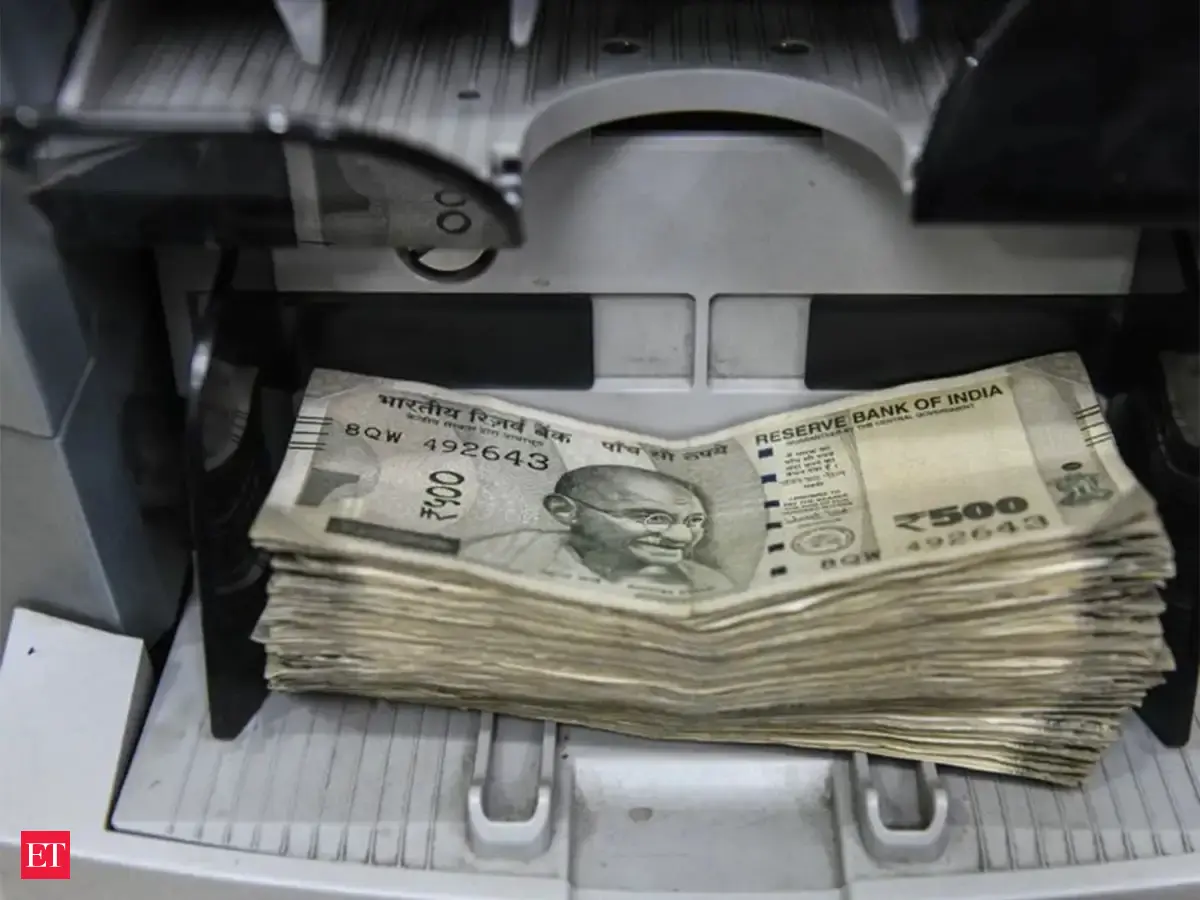
Economists predict the Indian rupee will strengthen against the US dollar in the coming months. Lower crude oil prices and better foreign capital inflows are helping this trend. "Overall, we can expect the Indian rupee to appreciate further over the coming couple of months," said economist Santosh Mehrotra.
Synopsis
Economists predict the Indian rupee will strengthen against the US dollar in the coming months. Factors contributing to this appreciation include lower crude oil prices and improving foreign capital inflows. Additionally, a weaker US dollar and the easing of geopolitical tensions are supporting this trend. The Reserve Bank of India has implemented measures to stabilize the currency and enhance dollar availability.
The Indian rupee may appreciate further against the US dollar over the next couple of months, supported by easing global headwinds, declining crude oil prices, improving foreign capital inflows and a weakening US dollar, according to economists.
Speaking to ANI, former UN adviser and economist Santosh Mehrotra said the domestic currency could strengthen further if the recent easing of global economic and geopolitical pressures continues.
"Overall, we can expect the Indian rupee to appreciate further over the coming couple of months," Mehrotra said, adding that the outlook would depend on whether global headwinds, which are currently subsiding, remain subdued or ease further.
Explaining the factors behind the rupee's recent strengthening, Mehrotra said the Democrats' victory in both chambers of the US Congress had weakened the dollar by reducing the political and fiscal risk premium associated with the currency.
He noted that the election outcome could make it more difficult for US President Donald Trump to push through his fiscal and spending agenda, potentially limiting fiscal expansion.
Live Events
Mehrotra also pointed to the possibility of de-escalation in the Middle East, which could reduce geopolitical risks and ease the risk premium in international crude oil prices.
He said international crude prices, which were around USD 105 per barrel before the US election results, had declined to approximately USD 96 per barrel.
With India importing around 90 per cent of its crude oil requirements, lower international oil prices could reduce the country's import bill and provide support to the domestic currency.
Mehrotra also highlighted the return of foreign portfolio investors (FPIs) to Indian equity markets as another factor supporting the rupee.
He said foreign investors had purchased approximately USD 1 billion worth of Indian equities in November up to November 5, contributing to dollar inflows into the country.
Another supporting factor, according to Mehrotra, was the decline in US Treasury yields.
He said US bond yields had eased from around 5.3 per cent to 5.2 per cent on the first day following the election results, as investors anticipated that a Democrat-controlled Congress could constrain Trump's fiscal expansion plans.
Lower US Treasury yields could reduce the relative attractiveness of dollar-denominated assets and encourage investors to explore emerging-market bonds offering higher returns.
Mehrotra added that Indian government securities had also benefited from improving market conditions, with yields declining by 11 basis points in November.
Meanwhile, Devendra Pant, Chief Economist at India Ratings and Research Private Limited, told that declining crude oil prices, a narrowing gap between petroleum product and food prices, and the possibility of lower freight rates could further support the rupee.
Pant said freight rates could ease if the announcement of no further US military activity in the Strait of Hormuz and surrounding areas translated into a sustained reduction in regional tensions.
He noted that these developments, alongside measures taken by the government and the Reserve Bank of India (RBI) to improve dollar availability, could help stabilise the domestic currency.
These measures included the RBI directly providing dollars to oil marketing companies, reducing their need to purchase dollars from the market, along with measures relating to gold.
Pant further highlighted that lower crude oil prices could moderate gas prices and ease pressure on the government's fertiliser subsidy bill, a major expenditure component that could otherwise affect fiscal calculations.
He added that declining oil prices would also reduce the cost of petroleum imports compared with expectations prevailing a week or 10 days earlier.
According to Pant, these developments could result in a lower-than-anticipated current account deficit, while capital inflows, particularly foreign portfolio investments, could improve.
Asked about the extent of potential rupee appreciation, Pant said it was difficult to predict a specific level, although the overall outlook remained positive.
"I will not stick my neck out to give a number. The outlook is, you can say cautious optimism, and the rupee is likely to strengthen further," he said.
However, Pant cautioned that any adverse geopolitical developments could reverse the currency's strengthening trend.
He said that if the temporary truce or peace in the region holds, the rupee could appreciate further. Even in the event of depreciation, he expected the movement to remain orderly rather than witnessing the sharp declines seen over the past year or year and a half.
Pant added that the global economic environment was showing signs of improvement, with headwinds originating in the Middle East gradually easing, a development that could benefit India's economy and international trade.
(You can now subscribe to our Economic Times WhatsApp channel)
Business of Odd Things: The farm that needs no land, freshwater, or fertiliser
KYC and KYB: Inside Pidilite, the company that turned Fevicol into a word for a strong bond – Part 1 of 3
Seoul halts trading, Nifty has its best week since 2021: Money leaving the AI trade – will it land in India?
Junk bonds are cracking at the bottom. Will the noise get loud enough to make ‘junk bond’ a household term again?
PNG connections rise half a million, but how many use piped gas for cooking?
Some elections matter more than you know: No crop changed in the fields, yet sugar, coffee and soya got cheaper in a day