
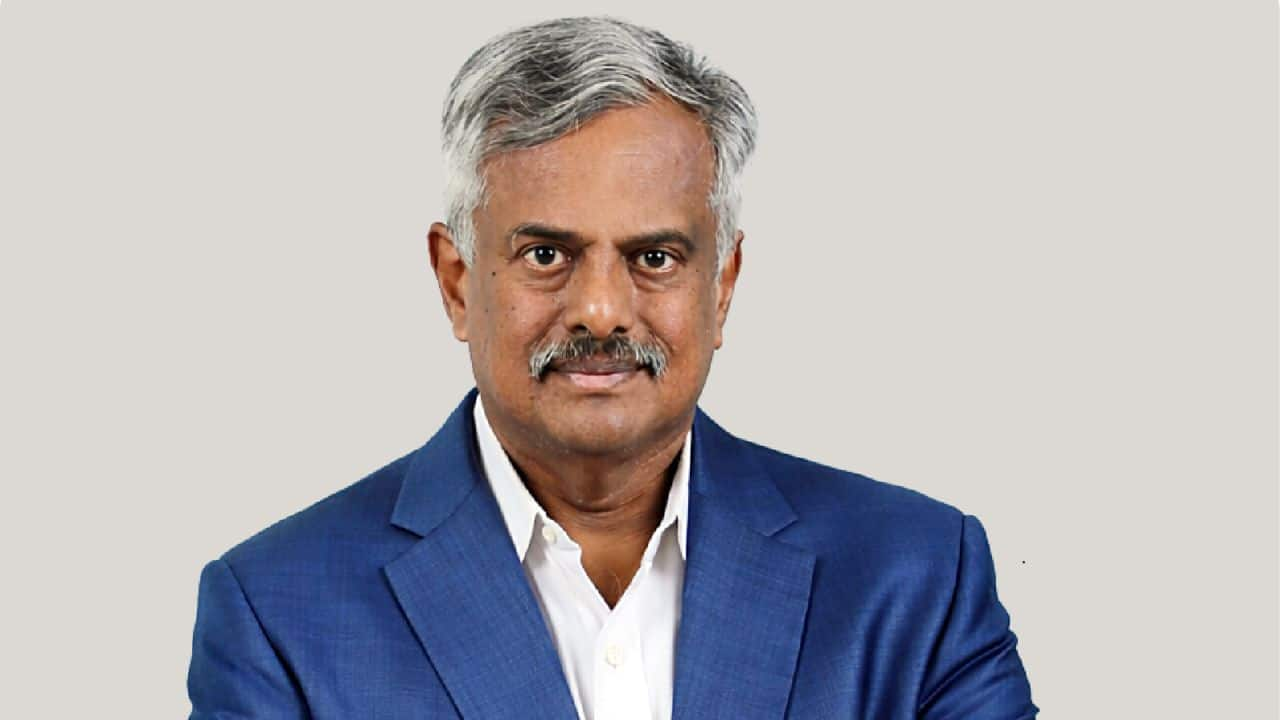
P Krishnan of Spark Investment Management said the worst of foreign selling is over for India. He noted, "I do not view the current FII buying as the beginning of a strategic shift towards India." He prefers energy stocks and banks, though he warned investors not to get ahead.
"I do not view the current FII buying as the beginning of a strategic shift towards India. However, from an FPI selling perspective, the worst is over for India," said P Krishnan, MD & CIO - Equity Asset Management at Spark Investment Management, in an interview with Moneycontrol. Among sectors, Krishnan believes energy is undervalued. He said he would rank the visibility of energy demand significantly higher than that of any other sector, adding that this visibility extends well beyond the next few quarters. According to him, banks are reasonably valued, although the recent pace of price appreciation is flashing an amber signal.
He also prefers asset-owning businesses over asset-light business models. Considering the recent sharp rally, could India emerge as a preferred global investment destination for FIIs as AI-related stocks and themes lose momentum globally? To a certain extent, the unwind of the AI trade could bring some flows into India. It is like a pendulum swinging back. The bigger point is that if the US economy suffers from the AI bubble popping, there will be global risk-off and all emerging markets could lose out. So, I do not view the current FII buying as the beginning of a strategic shift into India. Indian large caps, particularly the banks, became very cheap as well.
We should not get ahead of ourselves on this one. That said, the worst is over for India from an FPI selling perspective. Are Indian equity markets reassessing their stance on the AI theme, which was earlier criticised for lacking meaningful investment opportunities and earnings visibility? India continues to be broadly on the sidelines as far as the AI build-out is concerned. The AI bubble popping is reflective of the excess asset valuations getting corrected and maybe a moderation in AI capex. AI is not going away anywhere. India is not positioned at the leading edge of this technological transformation and there is no change in that.
We missed the crazy ride up and we don't therefore need to fall like crazy. Do you expect the US Federal Reserve to go in for another rate hike in December, while the RBI maintains a status quo on interest rates? Yes. It is highly likely. The inflationary threat to the US economy has not vanished because of the Nvidia issue or the AI bubble beginning to crack. This Fed does not appear to believe that they are responsible for sustaining bull markets. As for RBI, inflation is well above RBI's comfort zone, and the underlying drivers are still flashing red. It does not make sense for the RBI to stop at one rate hike and end up not reining in the inflation for good.
That would be a flip-flop which will neither help inflation control nor facilitate growth. Can the resilient Indian economy withstand a couple of interest rate hikes without significantly impacting growth and corporate earnings? Growth is likely to be resilient at current levels of nominal growth. Inflation is high. Perhaps it shows that the rising stroke of the K is doing well in India. There is still a problem on the other side. A good part of the healthy corporate earnings is riding on the rising stroke of the K. Corporate earnings should continue to hold out. However, the first half of the current fiscal is not something that can be extrapolated.
There will be headwinds. What are your expectations from the December-quarter earnings season, considering the performance of previous quarters, management commentaries and easing global risks? Consumer demand during the festival season has not been uniformly great. The demand boosts from GST started in October 2025 and going forward, the base effect sets the bar on the higher side. While I do not expect any major disappointments, the earnings momentum could start to taper. Companies are likely to feel the margin pressure from inflation with a lag. Come Q4 and we may see the companies being impacted due to food & fuel inflation and from global demand.
On the flip side, commodity inflation could start to ease. So, it is a mixed picture. Indian earnings should be okay, but I am not sure whether the macro will humour the insatiable Indian investor appetite for feel good, positive vibes and high returns. The global environment remains far from stable. Every time we take a few steps forward, another potential landmine emerges, reinforcing the uncertainty surrounding the outlook. What are your top sectoral bets at this stage, particularly after the significant market rally and the easing of external risks? We believe energy is undervalued. We will rank energy demand visibility very high as compared to any other segment and the visibility extends way beyond the next few quarters.
Generic drug firms were punished due to the misplaced notion of a tariff threat which never really materialised. Pharma & healthcare continue to look good. Banks are reasonably valued though the pace of recent price movement lights up an amber signal. We like asset owners in general as against asset-light business models (which had a great run in the decade before COVID). Is the banking sector trading at attractive valuations, supported by a favourable operating environment? If so, are you bullish on both private and public sector banks? Banks continue to remain a reasonable bet. One, asset quality remains benign (though mathematically, we will soon run out of scope for reducing the NPA percent).
Two, a hardening rate environment could be helpful for bank margins. Both public and private sector banks offer opportunities. However, there is no great case for taking aggressive fresh bets on this theme as a good part of the returns is behind us due to this sharp up move. We now need to take a longer-term, patient view. Many leading questions seem to be focussed on where big money can be made. There is no such opportunity that we can see. We are in an era of playing the long haul in investments with a need to anchor expectations at reasonable levels. Disclaimer: The views and investment tips expressed by experts on Moneycontrol are their own and not those of the website or its management.
Moneycontrol advises users to check with certified experts before taking any investment decisions.