
The Confederation of Indian Industry proposed 15 financial reforms to help India reach a $26.5 trillion economy by 2047. These changes aim to boost banking and non-banking sectors. CII said that reaching this goal requires $106 trillion in financial assets. They also suggested new lending rules to support small businesses.
The Confederation of Indian Industry has recommended reforms to improve India's financial system for future growth. These proposals include enhancing liquidity for non-banking financial companies and revising priority sector lending norms. The aim is to address the significant gap in financial assets needed for a $26.5 trillion economy by 2047. The CII emphasizes the importance of deep institutional investments in corporate bonds to support this growth.
New Delhi: The Confederation of Indian Industry (CII) has proposed 15 priority reforms across banking, non-banking finance, capital markets, insurance and financial technology to strengthen the financial system's capacity to fund India's long-term growth ambitions.
The recommendations include a permanent, rule-based liquidity facility for well-governed non-banking financial companies (NBFCs), changes to priority sector lending norms, wider investment opportunities in lower-rated corporate bonds and a national catastrophe and climate risk pool.
The proposals come as the government has constituted a High Level Committee on Banking for Viksit Bharat, announced in the Union Budget 2026-27, with a six-month mandate to examine the long-term capital requirements of banks, development finance institutions and NBFCs, among other issues.
CII said its analysis estimates that a USD 26.5 trillion economy by 2047 would require close to USD 106 trillion in financial assets, compared with around USD 7 trillion at present.
Banking assets would need to grow 3 to 3.5 percentage points faster than nominal GDP, taking the bank assets-to-GDP ratio from around 1 time currently to 1.5 times, it said.
The industry body also highlighted the relatively shallow corporate bond market, which stands at around 15 per cent of GDP, compared with 36 per cent in China and more than 80 per cent in South Korea.
Among its proposals, CII has recommended raising the priority sector lending limit for renewable energy projects from Rs 35 crore to Rs 80-100 crore per borrower and including activities such as recycling and battery reuse in the framework.
It has also called for a dedicated export credit sub-target and insurance protection for small businesses against risks such as fire, floods and machinery breakdown. CII estimates the
MSME credit gap at Rs 25-30 lakh crore.
For NBFCs, the industry body has proposed a permanent liquidity and refinancing window, with access linked to compliance, collateral standards and eligibility criteria. It has also sought parity with banks in loan recovery mechanisms.
CII further recommended allowing pension funds, insurers and provident funds calibrated exposure to corporate bonds rated below AA, to broaden the investor base and deepen debt markets.
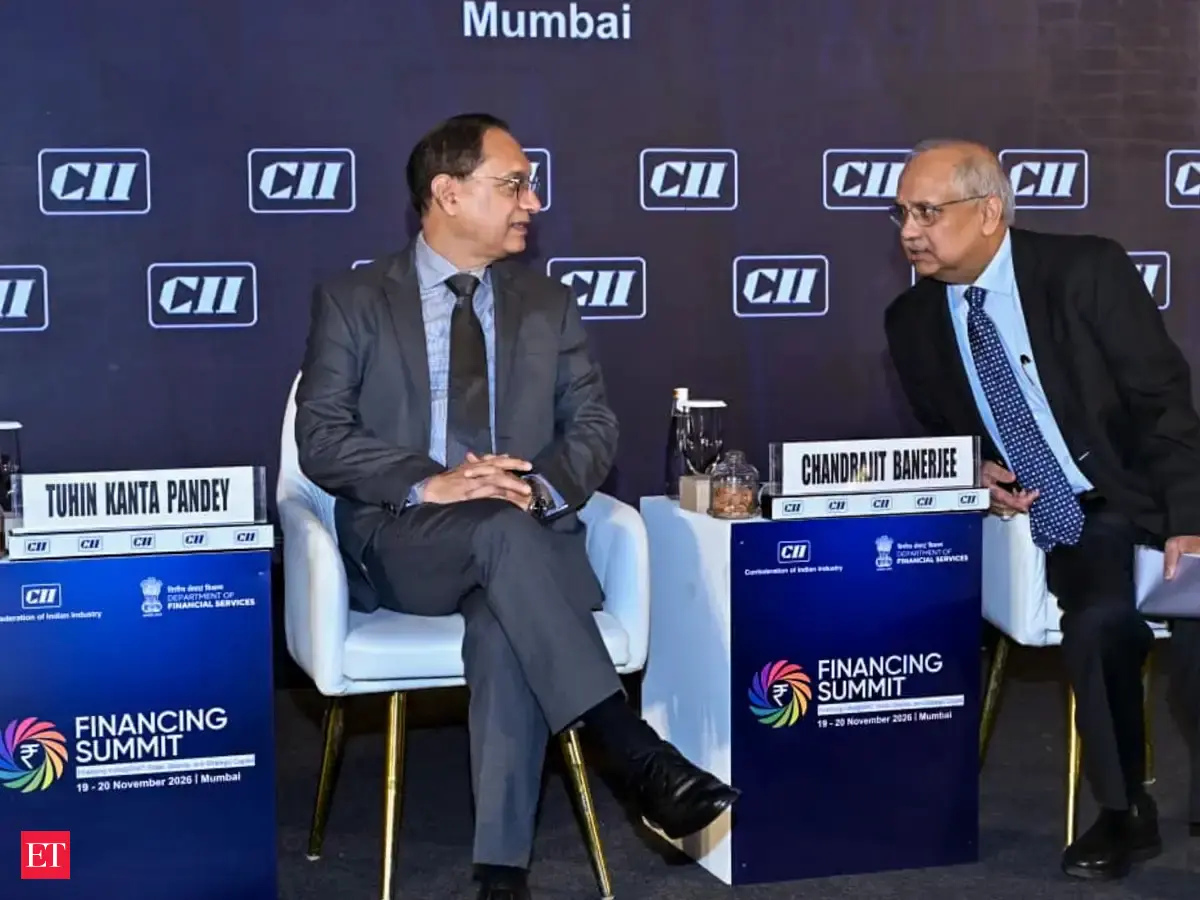
"The task now is to build a system that can finance an economy several times its present size by 2047," CII Director General Chandrajit Banerjee said.
He added that deeper pools of long-term capital, wider credit access and regulation keeping pace with financial innovation would be important to support the country's growth ambitions.