
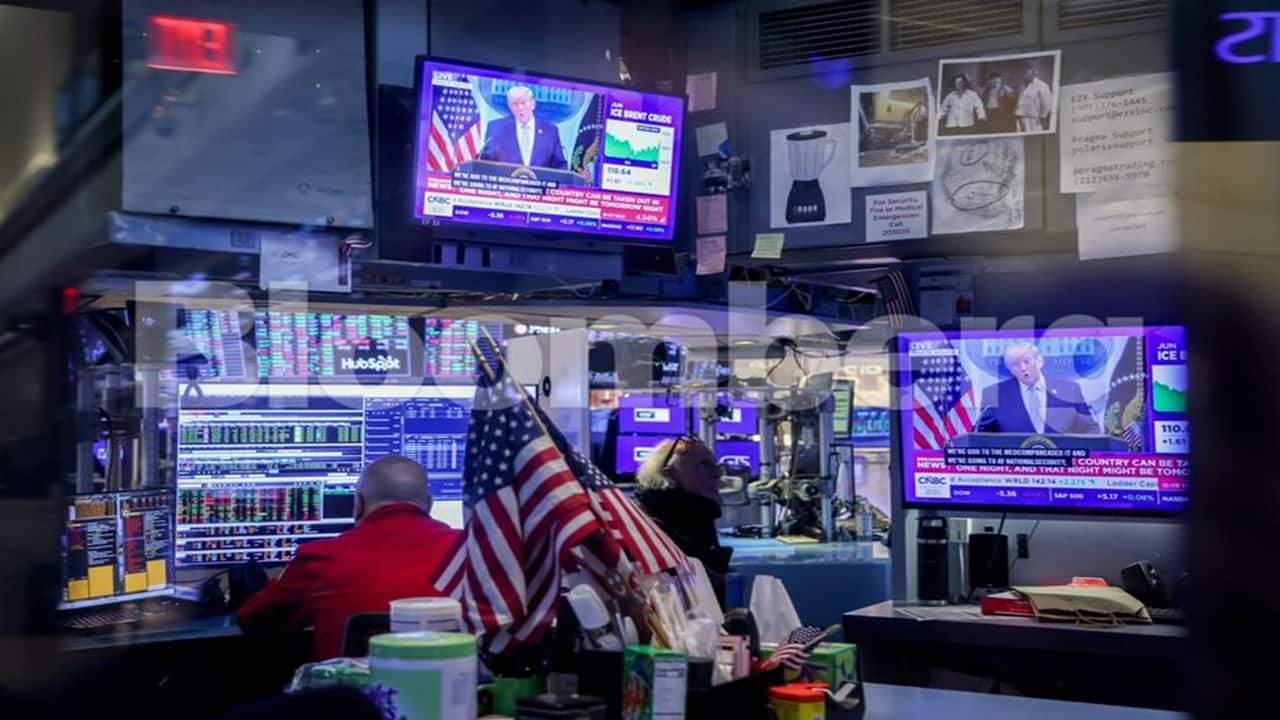
Big US bank stocks recorded their worst weekly losing streak since the 2008 Global Financial Crisis. The KBW Bank Index fell nearly 1% this week, marking six weeks of losses. Analyst Herman Chan said, “Big-bank stocks are facing a confluence of concerns, with a higher-for-longer rate backdrop raising the risk.”
Big US bank shares recorded their worst weekly losing streak since the 2008 Global Financial Crisis after quarterly earnings didn’t do enough to lift sentiment for the ailing sector.
The 24-member KBW Bank Index fell nearly 1% this week and is well into correction territory, losing about 13% since its last record in August. While the group has suffered larger selloffs over the years — including an almost 17% drawdown early this year — its six-week long decline would mark the longest such losing streak since 2008.
Citigroup Inc., State Street Corp., Bank of America Corp. and Morgan Stanley are among the worst performers on the gauge. While, JPMorgan Chase & Co. is up about 2% for the week.
Even before mixed quarterly earnings this week, the sector has been battered by worries around how artificial intelligence technology will disrupt the financial services space. A hot inflation print this week also added to concerns on how aggressive the Federal Reserve will be in its campaign to rein in persistent inflation.
“Big-bank stocks are facing a confluence of concerns, with a higher-for-longer rate backdrop raising the risk of slower economic growth and higher loan losses,” said Bloomberg Intelligence analyst Herman Chan. “Third-quarter results did little to reverse the weakness, with stable operating leverage but mixed trading as fixed-income results disappointed despite strength in equities.”
Sustained weakness in bank stocks can be a troubling sign for the economy, given the role lenders play in fueling growth by providing credit.
The “rising funding costs for AI companies are now adding questions about the durability of the capital-markets revenue opportunity tied to the infrastructure buildout,” says Chan. “Agentic AI is also emerging as a potential longer-term threat to the stable, low-cost deposits that drive bank profitability.”
The gauge has underperformed the S&P 500 Index in 18 of 21 trading days since the Fed raised interest rates on Sept. 16, Barclays analyst Jason Goldberg wrote in a late Wednesday note. That’s unprecedented across rolling 21-session periods since the index’s May 1992 inception, he said.