
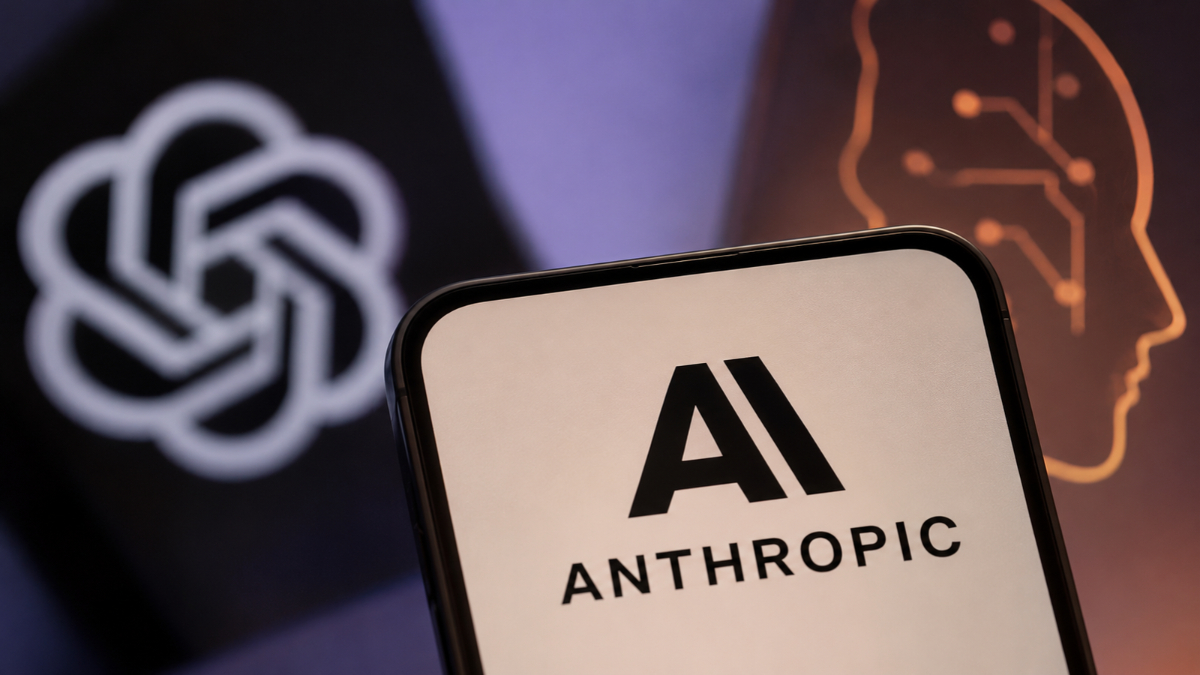
Anthropic’s upcoming IPO has drawn massive interest, with orders reaching seven times the shares on offer by November 15. As the company eyes a $1.4 trillion valuation, expert Aswath Damodaran said, “A plausible path, but it’s not a pathway that I want to put a lot of money on.”
Investor interest has been strong. Market experts are of the view that this IPO is set to become one of the largest public offerings in history. Orders for Anthropic’s IPO had reportedly reached close to seven times the shares on offer by November 15, according to Bloomberg. With the IPO price expected to be finalised on November 18, retail investors should consider several factors before deciding whether to participate in the offering or buy shares after trading begins.
1. IPO price and valuation
The first step for investors is to understand the difference between the IPO price and the price at which the shares eventually begin trading. Anthropic has indicated a price range of $70 to $78 per share. The final issue price will be determined after the company and its underwriters assess investor demand during the underwriting process.
The valuation also deserves scrutiny. At the upper end of the proposed price range, Anthropic’s fully diluted valuation could reach approximately $1.4 trillion. On CNBC on November 16, Aswath Damodaran, professor of finance at New York University’s Stern School of Business, questioned whether the company’s annualised revenue of around $80 billion justified a valuation of $1.5 trillion. Damodaran said, “I’m already stretching to get to 1,500,000,000,000. A plausible path, but it’s not a pathway that I want to put a lot of money on.
2. Revenue growth alongside profitability
Anthropic’s rapid revenue expansion is one of the biggest attractions of its IPO. However, investors should examine whether that growth can translate into sustainable profits. The company’s latest disclosures show that its annualised revenue run rate reached approximately $81 billion by the end of October 2026. Its third-quarter revenue stood at around $17 billion, revenue for the first nine months of the year was approximately $33.2 billion.
However, the company remains loss-making. Its prospectus reported a net loss of approximately $104 billion for the nine months ended September 30, 2026. Another important consideration is the cost of computing infrastructure.Anthropic disclosed approximately $900.9 billion in aggregate committed spending on computing and infrastructure, including purchase commitments and lease agreements.
These obligations show the large amount of capital needed for developing and operating advanced AI models. Investors should assess whether Anthropic can sustain its revenue growth, manage infrastructure costs and eventually improve operating profitability.
3. Regarding subscription numbers
A heavily oversubscribed IPO can generate considerable excitement, but subscription demand alone is not a measure of a company’s long-term investment potential. Bloomberg reported on November 15 that orders for Anthropic’s offering had approached seven times the number of shares available. This indicated substantial interest from institutional investors ahead of the listing.
However, investors should distinguish between demand during the IPO process and demand once shares begin trading publicly. Brian Levitt, global market strategist at Invesco, told on CNBC on November 16, “If we’ve looked at the IPOs over the last year, they have not come out of the gate typically strong,” Levitt said, adding that markets would not necessarily be concerned if Anthropic’s initial trading days were weaker.
4. Opening price and trading volumes
Once Anthropic shares begin trading, investors should pay attention to the opening price, trading volumes and price movements during the first session. The first trade may not happen immediately when the Nasdaq trading session begins. An opening auction helps establish an equilibrium price by matching buy and sell orders.
5. Understand the risks before investing
Anthropic’s growth prospects come with several risks that prospective shareholders should examine. One of the biggest is competition. The company faces competition from OpenAI, Google’s Gemini models and other AI developers. Investors will need to assess whether Anthropic can maintain its technological advantage and continue attracting enterprise customers.
Its dependence on computing infrastructure is another concern. The company has committed substantial resources to securing computing capacity, and any disruption in supply or increase in costs could affect its financial performance. Corporate governance also raises questions.
Anthropic is structured as a public benefit corporation, meaning it is expected to balance shareholder interests with its stated public-benefit mission of developing AI responsibly. AP in its November reporting on the company’s IPO, explained the potential tension between its public-benefit commitments and the pressure to deliver profits to shareholders.
Sarah Kreps, director of Cornell University’s Tech Policy Institute, told AP, “I think then the real test emerges if and when the question of public benefit becomes costly.” Anthropic’s IPO is arriving at a time when technology and AI stocks are facing market uncertainty. Reuters, in its November 16 market commentary, noted that the listing was approaching amid a turbulent period for technology stocks.