
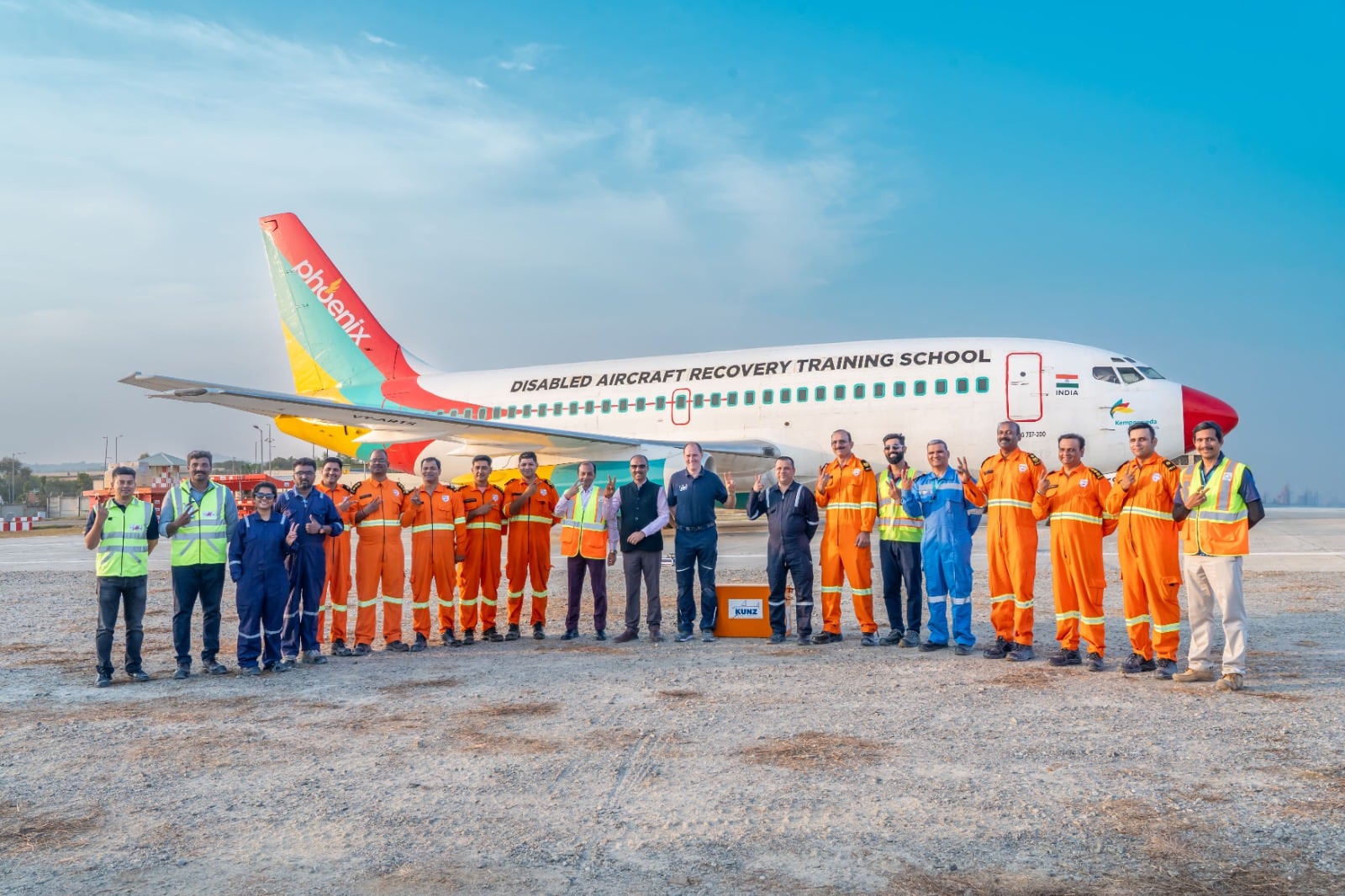
An Air India Boeing 737-200, grounded in Kolkata for over a decade, reached Bengaluru to train aviation professionals. On November 18, BIAL unveiled the plane, now called Phoenix. It helps teams learn to recover disabled aircraft. Girish Nair said, "operational resilience would be fundamental to sustaining the" growing aviation sector.
An Air India Boeing 737-200 aircraft that remained grounded at Kolkata airport for more than a decade has found a new purpose in Bengaluru. The aircraft, once known as 'Baby Boeing', will now help train aviation professionals in recovering disabled aircraft at Kempegowda International Airport. Bangalore International Airport Limited (BIAL), which operates Kempegowda International Airport, on November 18 unveiled the aircraft, rechristened 'Phoenix', as part of its Aircraft Recovery Training School. The aircraft had remained non-operational at Kolkata airport for over 10 years before being acquired by BIAL.
Its relocation to Bengaluru involved a 45-day logistical exercise. The aircraft was dismantled and transported on four specialised trailers after detailed route assessments before being reassembled at Bengaluru airport. The aircraft has retained its engines, avionics and cockpit, allowing aviation professionals to undertake practical exercises using a full-scale aircraft rather than relying solely on classroom instruction or simulated training. The development comes as airports and airlines look to strengthen operational preparedness amid the expansion of India's aviation sector. Aircraft becoming immobilised on runways or taxiways can disrupt airport operations, affecting flight movements and causing delays.
Recovering such aircraft without causing further damage requires specialised equipment and trained personnel. Disabled Aircraft Recovery involves safely removing an immobilised aircraft from an airport's movement area without causing secondary damage. Such situations can arise from incidents involving landing gear or nose-wheel collapse, among other technical failures. Bengaluru Airport's Aircraft Recovery Training School was initially established to build in-house expertise but is now opening its programmes to the global aviation industry. BIAL describes it as South Asia's only dedicated Disabled Aircraft Recovery Training School.
The school offers specialised programmes in collaboration with Germany-based KUNZ, a global provider of aircraft recovery solutions, and BIAL's qualified and certified trainers. Its courses include a five-day advanced hands-on programme, a three-day basic hands-on course and a one-day open house for familiarisation with recovery equipment. The curriculum covers aircraft lifting and towing, ground preparation, nose-wheel and landing-gear collapse scenarios, and the use of specialised recovery equipment. Each batch can accommodate 16 participants, with certificates awarded under the KUNZ-BIAL training school framework.
Bengaluru airport's aircraft recovery capabilities include specialised equipment compatible with Code F aircraft, including a low-pressure inflatable lifting-bag platform. The addition of Phoenix will provide a full-scale aircraft for practical training alongside these recovery systems. Girish Nair, Chief Operating Officer of BIAL, said operational resilience would be fundamental to sustaining the growth of India's aviation sector. He added that specialised capabilities, continuous learning and collaboration among airports, airlines, regulators and industry partners would be essential to improving operational readiness.
With Phoenix, BIAL aims to extend its aircraft recovery training capabilities to aviation professionals across India and Southeast Asia.