
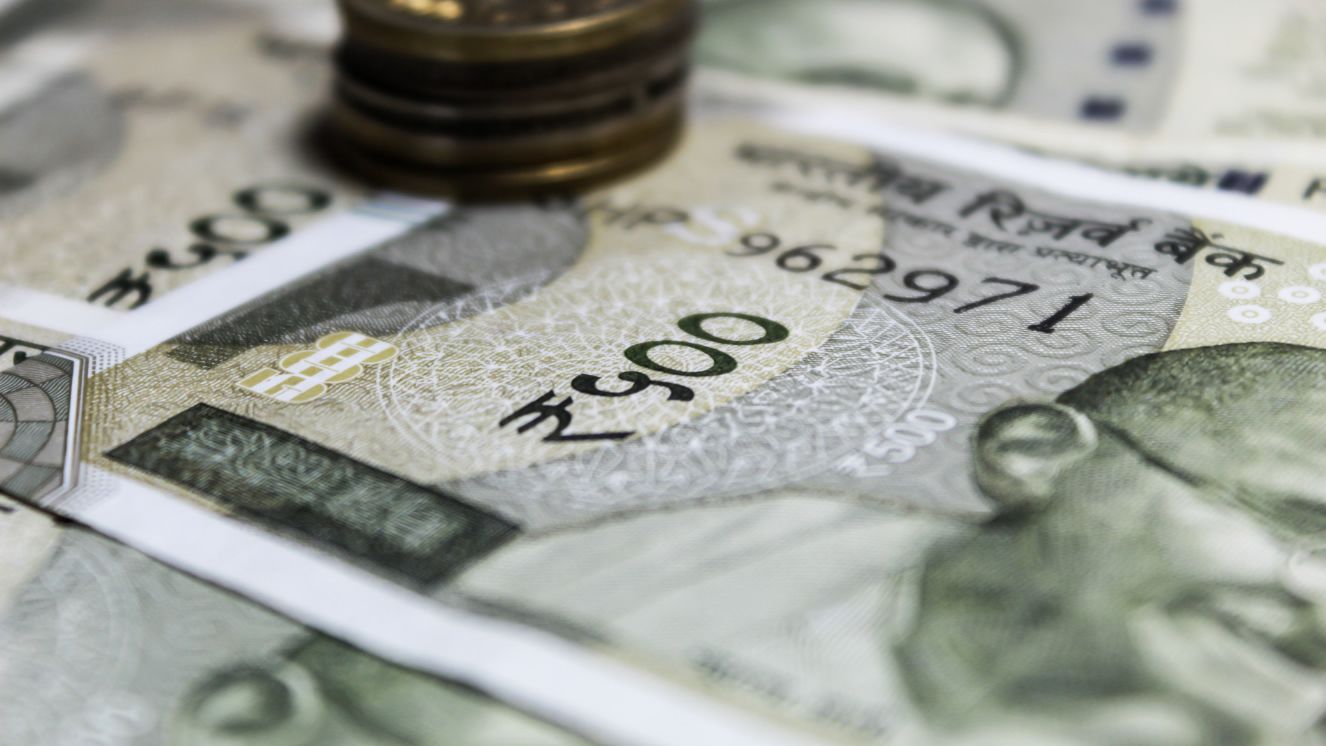
India’s currency faces pressure as foreign investors pull billions out of the market. Between April and June, the balance of payments fell $8.1 billion into the red. While trade deficits once drove rupee shifts, financial account flows now matter more. Investors withdrew nearly Rs 3 lakh crore through October this year.
India's currency crisis reveals the impact of financial account flows overshadowing trade deficits as foreign investors withdraw billions, pressuring the rupee despite strong services and remittances.
Consider, between April and June, India ran a CAD of just $4.2 billion, about 0.5% of GDP. Services and remittances covered most of a goods trade gap that had swollen to $86.1 billion: net services receipts came to $51.6 billion, and remittances to $42.9 billion, nearly 30% more than a year earlier. By the old arithmetic, that is a comfortable position. Yet the overall balance of payments ended the quarter $8.1 billion in the red, down from a $4.5-billion surplus a year earlier, and reserves fell. The gap opened in the financial account, where portfolio investors pulled out a net $9.6 billion.
For decades, we have had a familiar explanation. The trade deficit widened, oil got dearer, importers needed more dollars. That still counts for something, and oil is expensive. Nonetheless, the trade account is no longer the whole story. The rupee has become a financial-market currency, and global investors move it as much as oil importers do.
The scale of the shift shows up in the gross numbers. Add up the credits and debits in the financial account and compare the total with the same sum for the current account. In 2018-19 the financial account was about 79% of the current account. In 2024-25 it was 111%, roughly $2.29 trillion against $2.06 trillion. Preliminary data for the first half of 2025-26 put it at 125%. Most of those dollars cancel out, which is why the net figures look so harmless: a CAD of about $23 billion in 2024-25, and a net financial-account balance that hides large movements in both directions. However, the foreign-exchange market has to handle every trade before any netting happens. A foreign fund buying bonds, a resident investing abroad, a company repaying a loan, and an investor taking profits home all pass through the same market, whatever they add up to on paper.
The composition of flows matters too. Foreign direct investment (FDI) tends to stay, while the portfolio money can leave quickly. Foreign investors have pulled close to Rs 3 lakh crore out of Indian equities through October this year, roughly $30 billion, compared with Rs 1.66 lakh crore in all of 2025. They sold about Rs 35,000 crore in each of September and October. This is not unexpected, though. Ten-year US Treasuries were paying more than 5.2% with no credit risk attached, and the Federal Reserve is also poised to raise rates again. Therefore, a shift in US rate expectations can create demand for dollars in Mumbai without a single change in India's trade.
October showed what this looks like. Talks between the US and Iran had dragged on without a deal, oil was above $100, US yields were high, and the rupee closed at about Rs 96.7 on October 9, a few paise from the Rs 96.96 record set in May. Two days earlier, the RBI had raised its repo rate to 5.50%, the first increase since February 2023. Before that, it had run a special dollar-mobilisation window from June to August that brought in $136 billion, about four times the $34 billion raised in the 2013 episode. None of it settled the currency. Companies bought a record $77 billion of forward dollars in September, 80% more than a year earlier, which is what importers do when they expect the rupee to keep falling.
On October 10, the RBI went further. From October 12, three state-run oil companies -- Indian Oil, HPCL, and BPCL -- would buy dollars directly from the central bank, taking an estimated $11-12 billion a month of demand out of the spot market. It also tightened the rules on forex derivatives, which bankers said could add 80 to 150 basis points to hedging costs.
Reserves have already moved. They hit a record $785.7 billion in the week to September 4. By October 23, they were $719.8 billion, down about $66 billion in seven weeks, including a fall of nearly $13 billion in the week to October 2. Moves in gold explain a part of that. Foreign currency assets, which are where dollar sales in defence of the rupee are recorded, fell as well, by $7.1 billion in the week to October 9 alone.
The mechanics are not complicated. Foreign investors sell shares and bonds, convert the proceeds, and send them home. Importers see the rupee slipping and buy their dollars early or hedge more heavily. That extra demand pushes the rupee lower, which makes the next importer more anxious. None of it requires trade to get any worse.
None of this makes India fragile. Services exports and remittances are strong, FDI keeps arriving, and reserves are still above $700 billion. The point is narrower. A manageable CAD offers less protection than it once did when so much money moves through the financial account, and so much of it can turn around quickly.
The past few days have been kinder to the rupee. It strengthened to Rs 92.68 against the USD on November 20, its strongest closing level in seven months, gaining more than 1.6% in five consecutive trading sessions from Rs 94.19 on November 13. The turnaround has been supported by a resurgence of foreign portfolio inflows, softer crude oil prices, and improved investor sentiment. Foreign investors have poured nearly $12 billion into Indian equities in November, marking a reversal after months of sustained selling. The recovery is encouraging, but it underscores how quickly currency-market sentiment can change. In barely a fortnight, the rupee has recovered much of the ground it lost in the preceding period of dollar pressure.
What should policy do about it? Defending a particular level, whatever the cost, is the wrong objective, and reserve sales cannot be the whole plan. Intervention is useful when markets turn disorderly. It is not a strategy. They cannot replace capital that has left, and a deposit scheme is borrowed money, not earned income: those are three-to-five-year liabilities that must be rolled over or repaid. India needs exporters competitive enough to keep earning dollars when oil is dear. It needs deeper domestic capital markets, and the early evidence is encouraging: domestic institutions had bought Rs 6.83 trillion of shares by mid-October, almost double what foreign investors sold in the secondary market. And it needs more long-term foreign money and less dependence on whatever arrives next week. A special deposit window can fill the hole once. It is a poor thing to budget on.