
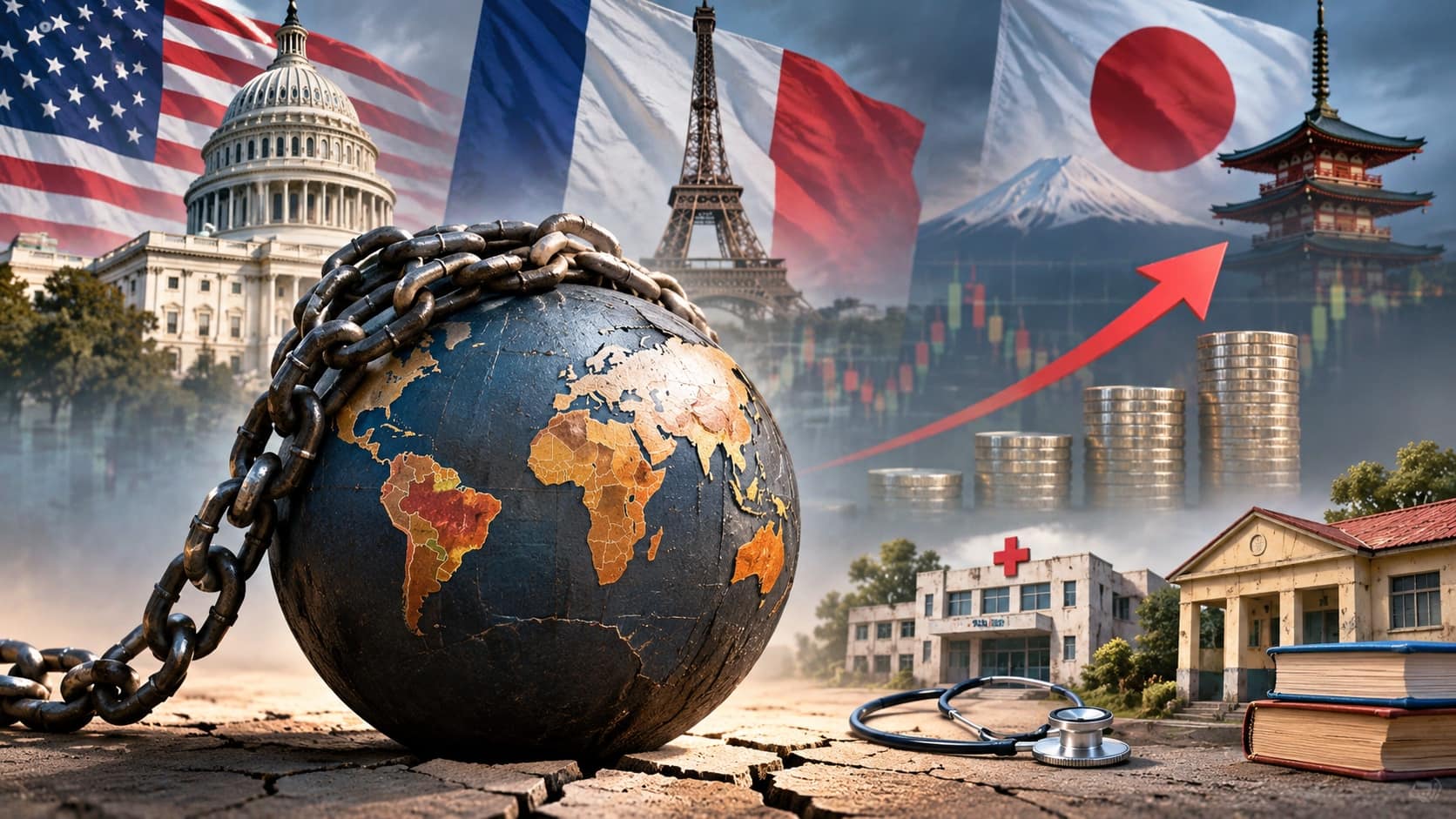
Developing nations face a record $9.4 trillion debt as wealthy countries borrow heavily. Rising interest rates in major economies make it expensive for poorer nations to get funds. Many countries now pay high returns to attract lenders, while debt repayments grow faster than the new money they get to use.
The mounting debt burden of the world's wealthiest economies is adding to the financial pressures faced by developing nations, pushing their external debt to a record $9.4 trillion. As governments in major economies borrow heavily to finance spending, energy shocks and geopolitical conflicts, rising global interest rates are making it increasingly expensive for poorer countries to access funds. The World Bank's International Debt Report, released earlier this month, shows that total debt obligations of low- and middle-income countries rose 5.5 per cent over the past year. This was the sharpest annual increase since 2021.
The borrowing costs faced by the poorest economies have also climbed to levels last recorded in the late 1980s. The trend comes as fiscal deficits and rising government borrowing in the United States, France and Japan push up bond yields. Developing countries, which must compete with advanced economies for private investment, are being forced to offer higher returns to attract lenders. How debt in wealthy economies is affecting developing nations Heavy government borrowing in major economies can push up the cost of credit across global markets. As investors demand better returns amid concerns over rising sovereign debt, yields on government bonds increase, making borrowing more expensive for other countries as well.
The United States' federal debt has crossed $40 trillion, equivalent to around 120 per cent of its economic output. Its 10-year Treasury yield has moved beyond 5 per cent, while French government bond yields have reached their highest levels in 25 years. Japanese yields, meanwhile, have climbed to levels not seen in three decades. These developments have raised the cost of raising funds for developing economies. To compete with government securities in wealthier markets, countries such as Kenya, Nigeria and Ivory Coast have had to offer annual returns ranging from 7.5 per cent to more than 10 per cent.
The pressure is particularly high for the poorest economies. Nations eligible for concessional support from the World Bank paid an average interest rate of 8.2 per cent on new private loans, the highest since 1989. Borrowing from the International Monetary Fund has also become more expensive, as its lending charges are linked to interest rates set by major Western central banks. Debt repayments are outpacing fresh financing The rising cost of borrowing is adding to an already heavy repayment burden. Between 2022 and 2025, developing economies paid $436 billion more in principal and interest than they received through new financing.
Their annual debt-servicing payments have reached $1.4 trillion, with countries including Egypt, Pakistan and Tunisia seeing more money flow out to creditors than they receive through fresh loans. The pressure is also reflected in payments to private creditors. Developing nations paid $363 billion to private bondholders alone in the past year, further reducing the funds available for other spending priorities. Healthcare and education spending under pressure The consequences of rising debt payments are extending beyond government finances. According to the figures cited in the report, 3.7 billion people across 51 developing countries live in economies where governments spend more on interest payments than on public healthcare or education.
As debt-servicing costs rise, governments have less room to finance hospitals, schools, infrastructure and employment programmes. The squeeze is becoming more difficult to manage as traditional foreign aid declines and China shifts from being a major lender to collecting repayments on its outstanding loans. For several developing economies, maintaining debt repayments has increasingly meant cutting back on public expenditure. While this may help them avoid a formal financial default, it also leaves fewer resources for healthcare, education and other long-term development priorities.