
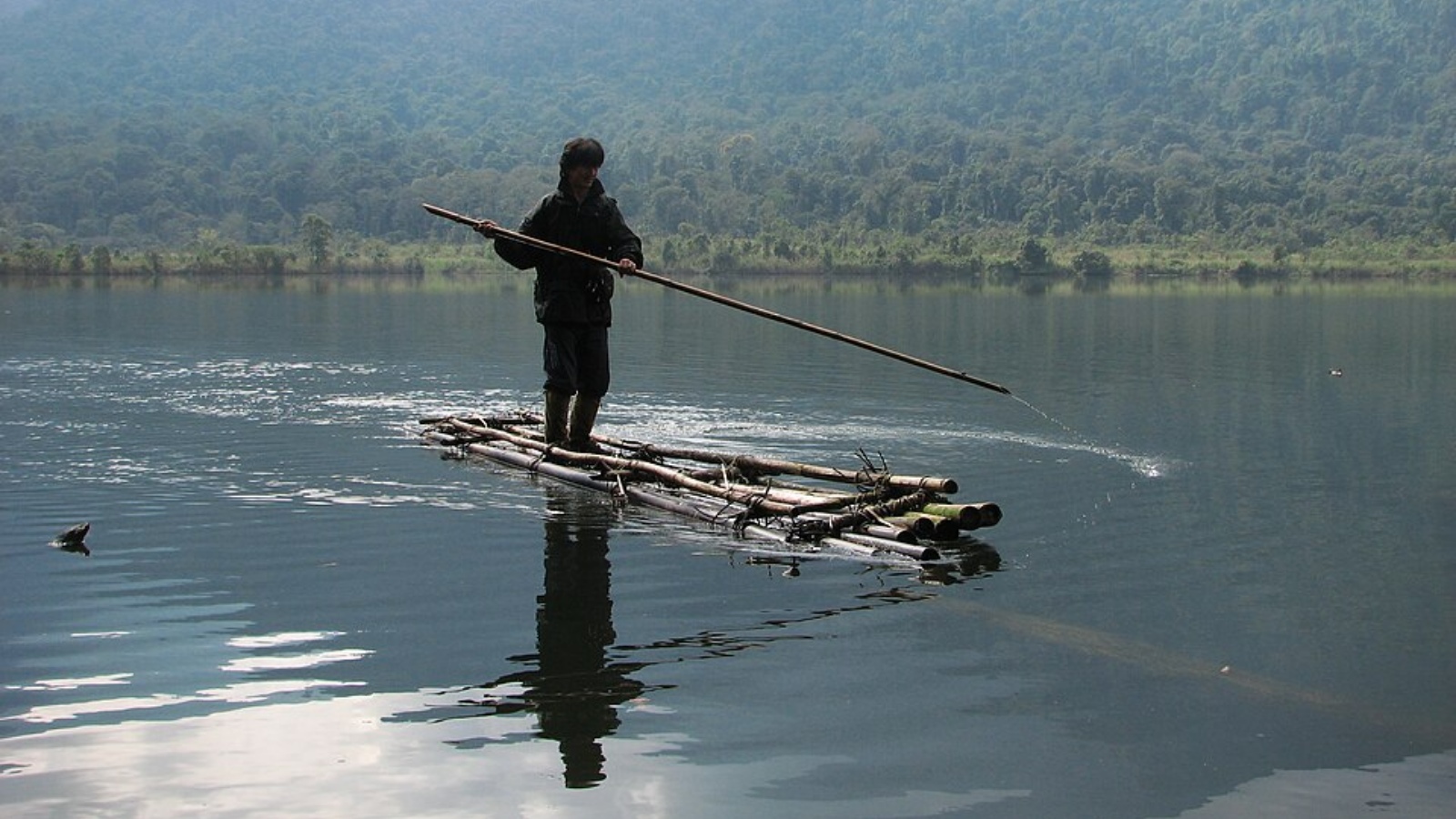
Glaw Lake in Arunachal Pradesh became India’s 101st Ramsar site on August 3. Union Environment Minister Bhupender Yadav announced the status for this pristine freshwater ecosystem. Environmentalist Jasmit Singh Arora said, "Glaw Lake is ecologically significant because it is a clean, untouched freshwater lake in the Eastern Himalayas." It supports biodiversity.
Arunachal Pradesh gets its first Ramsar site with Glaw Lake, a freshwater ecosystem rich in orchids, trees and biodiversity.
Glaw Lake in Arunachal Pradesh has been designated India's 101st Ramsar site, making it the state's first wetland to receive international recognition. Union Environment Minister Bhupender Yadav announced this on August 3. The lake lies within the Kamlang Tiger Reserve and Wildlife Sanctuary, and the government describes it as a pristine freshwater lake in the Eastern Himalayas.
The designation also highlights the ecological importance of a landscape where perennial mountain streams feed the lake and its surrounding vegetation supports significant floral diversity. According to the Press Information Bureau, more than 150 tree species and 49 orchid species have been recorded within the wetland and its catchment.
Why is Glaw Lake ecologically important?
Environmentalist Jasmit Singh Arora, also known as the "Gutli Man of India," says the lake's importance lies in its relatively undisturbed freshwater ecosystem.
"Glaw Lake is ecologically significant because it is a clean, untouched freshwater lake in the Eastern Himalayas, located inside the Kamlang Tiger Reserve," Arora says.
Mountain streams naturally feed the lake, creating a freshwater habitat surrounded by rich vegetation. Its biodiversity extends beyond the water body itself.
"The lake and its surrounding area are home to over 150 tree species and 49 rare orchid species, providing a safe, thriving habitat for unique plants and wildlife," he says.
What does Ramsar status mean for Glaw Lake?
The Ramsar Convention is an international framework for conserving and wisely using wetlands. For Glaw Lake, its designation brings international recognition to an ecosystem that was already important locally and ecologically.
Arora says the recognition matters on several levels. "First, it marks Arunachal Pradesh's very first Ramsar site, bringing pride and global attention to the state," he says.
The designation also strengthens the focus on maintaining the wetland's ecological character and its surrounding habitat.
"This international status guarantees strict environmental protection, preventing pollution and habitat loss," Arora says.
However, Ramsar recognition should not be seen as merely a label. Long-term benefits depend on effective conservation, monitoring, and responsible management of the wetland and its catchment.
How can the lake support water and climate security?
According to Arora, "it helps ensure clean water, fights climate change, and supports the sustainable livelihoods of local communities who depend on this healthy, natural ecosystem."
The Union environment ministry has also described Glaw Lake's designation as significant for biodiversity conservation, water and climate security, and sustainable livelihoods.