
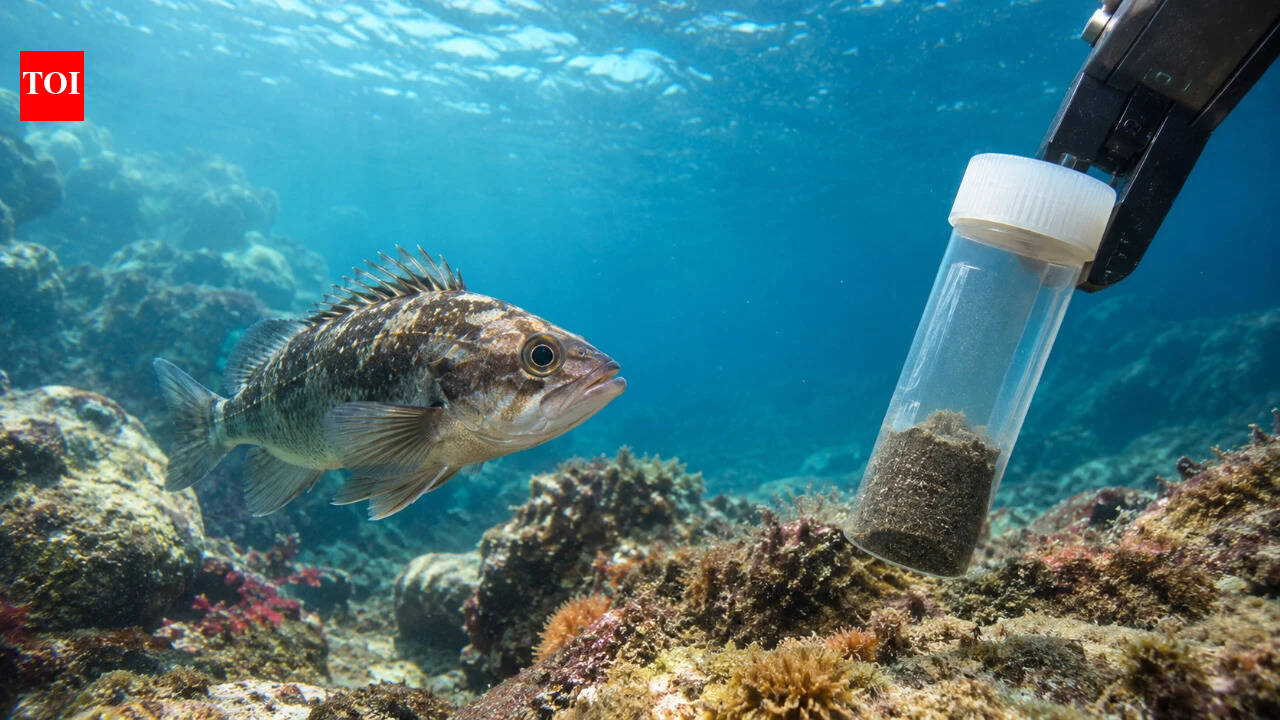
In 2024, scientists detected 10 DDT+ compounds in deep-sea fish near Catalina. Researchers analysed 215 fish and sediment to examine a possible link between seafloor pollution and marine contamination. While the study showed these chemicals exist in both, it did not show how they move into the food web.
Industrial waste dumped into the ocean can remain in the marine environment long after disposal stops. This has been a concern in Southern California, where decades of industrial activity left behind chemical pollutants, including DDT. More than 50 years after offshore dumping ended, scientists are still investigating how these substances affect marine life. The presence of several DDT-associated chemicals was confirmed by researchers studying deep-sea fish and sediment of Catalina Island in 2024. According to the study in
Environmental Science & Technology Letters, the research team collected 215 fish from the water column above the San Pedro Basin, around Dumpsite 2. According to their results, 10 DDT+ chemicals were detected in marine organisms, whereas 15 were detected in the nearby sediment. Researchers found an association between DDT chemicals in deep-sea sediment and their presence in marine organisms, but the study did not determine how the chemicals move from the sediment into the food web.Researchers detected 10 DDT+ compounds in deep-sea fishThe findings appeared in 2024 in Environmental Science & Technology Letters in a research paper examining DDT+ contamination in deep-ocean sediment and marine life in the Southern California Bight.
Researchers used chemical analysis to examine sediments and marine organisms from the Southern California Bight, focusing on the San Pedro Basin near the historical offshore dumping area. The researchers conducted their analysis using 215 fish from three species, namely: Cyclothone acclinidens, Melanostigma pammelas and Leuroglossus stilbius. The 215 fish were pooled into four composite samples for chemical testing: 61 shallower and 146 deeper C. acclinidens, six M. pammelas and two L. stilbius. In this study, 10 DDT+ were found in the biota, while 15 were found in the sediments.
DDT+ is the broader group. It covers the DDT-related compounds that are routinely tested for, plus TCPM and other lesser-known DDT-related chemicals. Of the DDT+ found in the biota, there were 8 DDT-related and 2 TCPM (tris(4-chlorophenyl) methane) related. All 10 DDT+ compounds found in the biota were also present in the sediment, which brings the total to 15. Of those 15, 13 (87%) had already been identified in Southern California's birds and marine mammals.Chemical findings pointed to a possible connection between sediment and fishThe researchers analysed fish obtained at various depths in order to determine the pattern of contamination in the marine environment. C. acclinidens and M. pammelas were collected between 546 and 784 meters, while L. stilbius was collected between 546 meters and the surface. Within that range, the C. acclinidens composite from the shallower layer (546 to 657 meters) had less total DDT+ than the composite from the deeper layer (657 to 784 meters). But both the TCPM-associated compounds were not detected in the surface-dwelling L. stilbius sample. These data do not show any consistent correlation between depth and contamination for all three fishes.TCPMs were found in every biota sample except the single L. stilbius composite, which contained neither of the two TCPM-related compounds. As these compounds were also found in deep ocean sediments, it was concluded that the seafloor could be one of the sources of contaminants getting into the marine food web. However, the exact pathway by which the compounds were transferred from sediments to fish was not determined in this study.
Earlier research connected fish contamination with polluted ocean sedimentsA separate 2024 study, "The persistent DDT footprint of ocean disposal, and ecological controls on bioaccumulation in fishes", published in the Proceedings of the National Academy of Sciences in November 2024, examined existing sediment and fish contamination data collected across Southern California. It was established that the closer the fish were to the regions with high concentrations of DDT in sediment, the higher the level of accumulation of the compound in fish. As demonstrated in the above-mentioned study, the consequences of past activities are still present in the marine ecosystem in the region, more than 50 years after the last industrial discharge in 1971. From the results of these studies, it can be stated that the deep-sea sediments are still one of the components of pollution of the waters of Southern California. Even though the process of movement of DDT+ compounds up the food chain is not yet entirely clear, the presence of the compound in both the sediment and marine organisms proves that its effects are still present. The PNAS paper compiled a database of decades of sediment and fish measurements. It found that DDX levels in fish rose with sediment contamination, though not in a simple, uniform way. The authors say ecological factors such as species and habitat use mattered only in context and that combining ecotoxicology with ecology will be needed to predict risk in undersampled regions and species.