
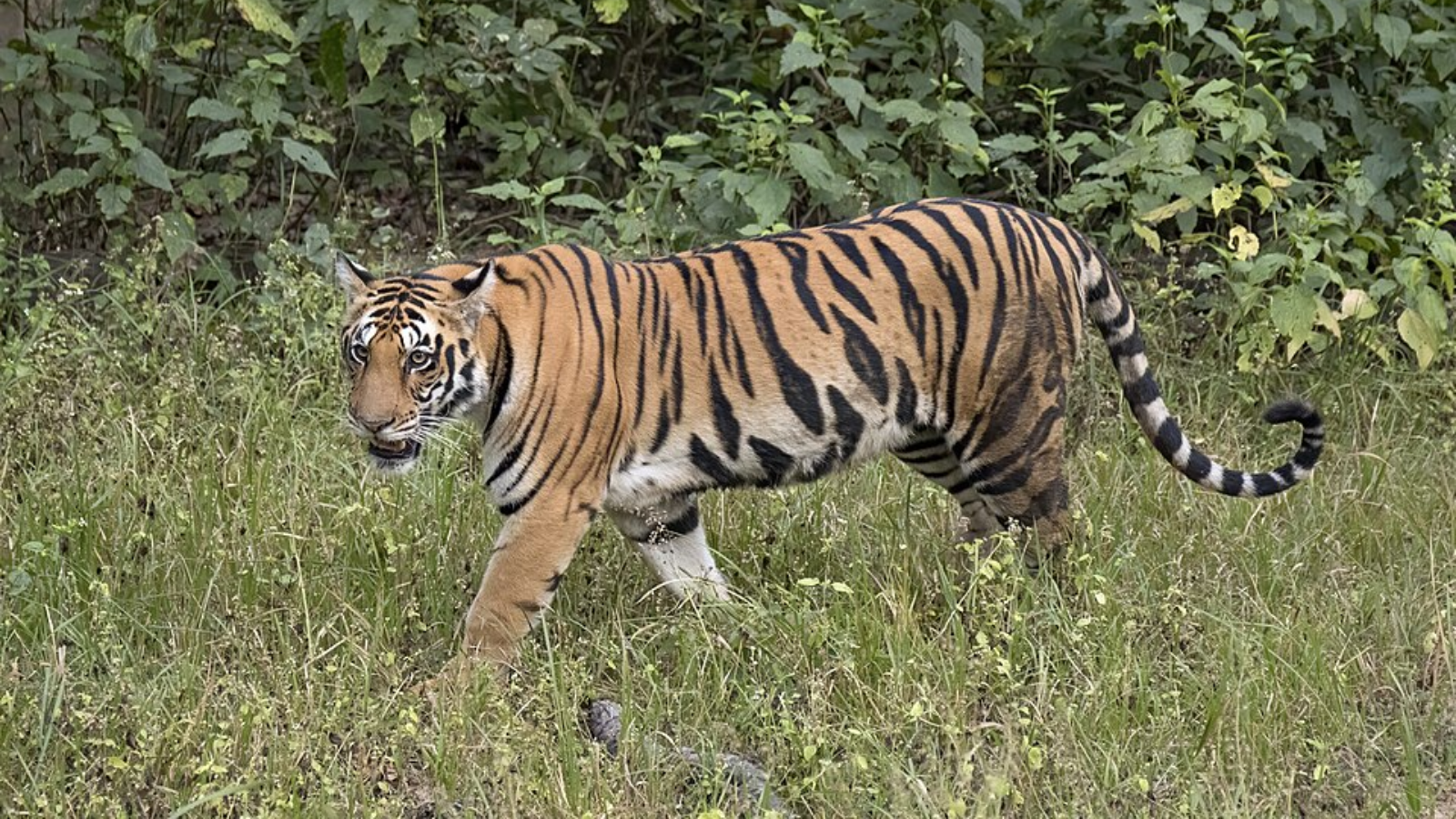
A tiger's stripes help the big cat blend into its surroundings to hide from prey. Wildlife photographer Indrajit Ghorpade says, "Many of these animals have dichromatic vision," which makes the orange coat hard to see against green vegetation. These unique patterns also break up the tiger's body outline while stalking.
A tiger's stripes are among its most recognisable features, but they serve a practical purpose in the wild. These patterns help the big cat blend into its surroundings, making it harder for prey to spot it as it moves through vegetation.
According to wildlife photographer Indrajit Ghorpade, the tiger's vertical stripes break up the outline of its body, helping it remain less conspicuous in its natural habitat. This camouflage is particularly useful when the animal is stalking prey through forests, tall grass and shrubs.
How do stripes help tigers hide from prey?
Tigers have orange coats with dark stripes, a combination that may appear conspicuous to humans. However, their prey, including deer and other ungulates, perceive colours differently, explains Ghorpade.
"Many of these animals have dichromatic vision, meaning they have two types of colour-sensitive cones in their eyes. They have difficulty distinguishing red from green, which affects how they perceive an orange tiger against green vegetation. The tiger's coat can therefore blend into its surroundings more effectively than it might to a human observer," he says,
The stripes also help disrupt the tiger's body outline. In environments with patches of light and shadow, the alternating bands can make it harder to distinguish the animal's shape, especially when it is partially concealed by vegetation. This gives the tiger an advantage as it approaches prey before launching an attack.
Are a tiger's stripes unique?
Much like human fingerprints, every tiger has a distinctive stripe pattern. The arrangement, width and density of the stripes vary from one individual to another, allowing researchers to identify and monitor individual animals through photographs.
Ghorpade notes that stripe patterns can also vary across habitats. Tigers living in dense forests may have patterns that work well amid thick vegetation and shadows, while those inhabiting more open landscapes, such as the scrub forests of Ranthambore, encounter different backgrounds. The Sundarbans, with their mangrove vegetation and shifting patterns of light and shade, offer another distinct environment.
However, stripe variation is not simply a direct response to the habitat an individual tiger inhabits. Genetics largely determines these patterns, which have evolved over generations.
Are tiger stripes present from birth?
"Yes. Tiger cubs are born with their characteristic stripes, which are visible on their coats from an early age. The patterns remain as they grow, although their appearance changes as the cub's body increases in size," explains Ghorpade.
Interestingly, a tiger's stripes extend beyond its fur: its skin is also pigmented in a corresponding pattern. If you shave the fur, the stripes remain visible on the skin.
Explore more captivating stories about pets and animals here, and make us your daily stop for the latest from the animal kingdom.