
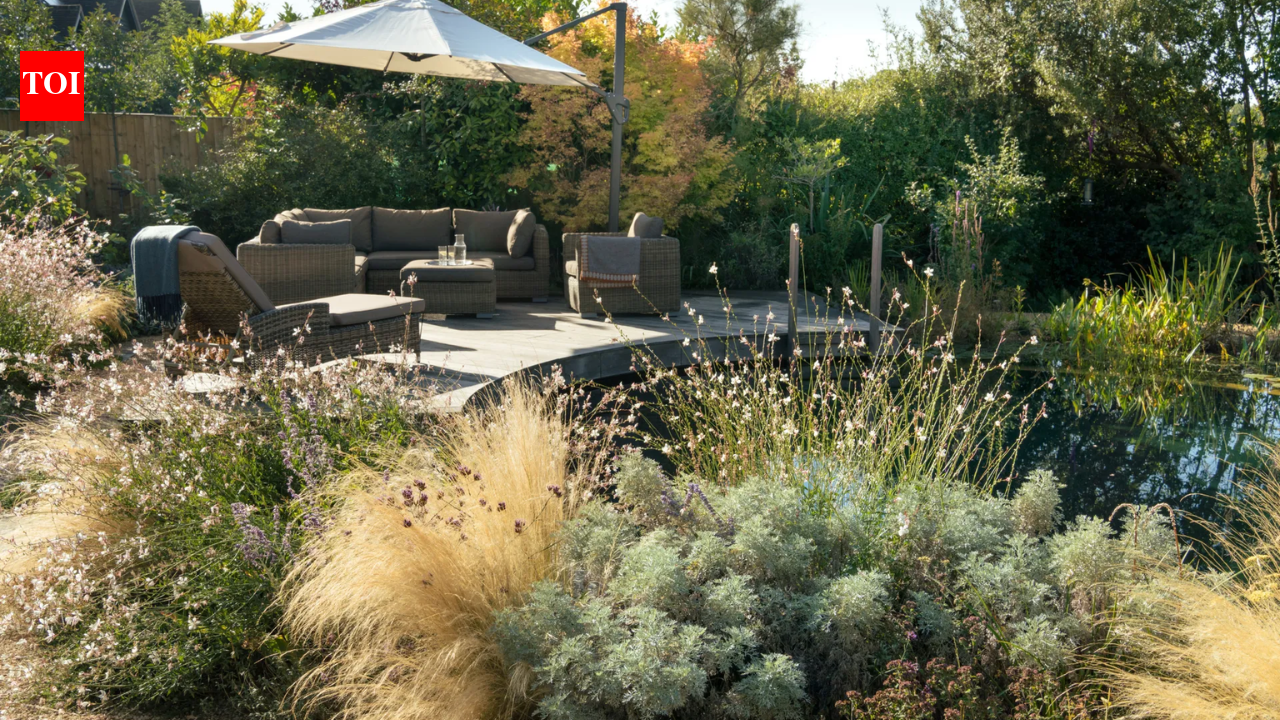
Two veterinary workers in south Buckinghamshire redesigned their garden to include an unheated natural swimming pond. Designer Rachel Platt created a space that connects to the surrounding fields. The project now attracts frogs, bats, and dragonflies. It features a chalk meadow and an edible hedgerow for local wildlife to enjoy.
A place where the daily swim could begin at the back door, surrounded by dragonflies and flowering plants, even in winter, was the dream of two owners in south Buckinghamshire, who work in the veterinary sector and wanted a garden connected to the surrounding fields. Garden designer Rachel Platt answered with an unheated natural swimming pool, a sweeping chalk meadow, and an edible hedgerow. The result attracts frogs, bats, dragonflies, and more. Read on to discover how the design works, which plants and features support wildlife, what changed along the way, and how the owners describe their transformed outdoor sanctuary.
A wildlife and wellbeing brief, how Rachel Platt connected a Buckinghamshire garden to the countryside
According to Homes and Gardens, which featured the project in an article by Rachel Bull, the owners both work in the veterinary sector and dreamed of a garden linked to the rolling fields and hedgerows around them. Their brief asked for a biodiverse landscape that would support wildlife while also providing space to swim, grow food, entertain, and spend more time outdoors. Rachel Platt Garden Design responded with a layout that deliberately changes character as it moves away from the house: stronger geometry near the building gives way to softer curves, a sweeping chalk meadow, and an experimental edible hedgerow toward the fields beyond.
Before the redesign, the owners regularly drove elsewhere to swim in rivers and spent relatively little time in their own garden, so the new design was meant to bring that experience home.
Inside the unheated natural swimming pool, a plant-free swim zone and a planted regeneration zone
At the heart of the garden sits an unheated natural swimming pool, created as both a wildlife habitat and a place for the owners to reconnect with nature, Homes and Gardens reports. Designer Rachel Platt developed it in collaboration with Ellicar Natural Pools. The pool is divided into a swim zone, kept clear of plants and wildlife, and a regeneration zone planted with a range of aquatic species that filter the water naturally, a process the article calls hydrobotanical filtration. Around the shoreline, water mint, water forget-me-nots, native flag irises, marsh marigolds, ragged robin, and purple loosestrife add colour, seasonal structure, and fragrance, flowering from March to September and attracting pollinators and moths. Deeper-growing aquatics such as common water plantain and arrowhead offer late summer flowers and seedheads, and give emerging dragonflies stems to climb while they unfurl their wings.
Frogs, toads, newts, dragonflies, bats, and birds, all the wildlife that has moved into the garden's ponds
The wildlife has arrived in force. Homes and Gardens reports that dragonflies and bats were already drawn to the pool, with planting softening its edges and tying it into the wider ecosystem. The owners told Homes and Gardens that frogs, toads, and newts breed in all the ponds, as do several dragonfly species, and that they have even spotted a water snake. Birds also visit, using a beach area, a feature not found in conventional ponds, to enter the water and bathe safely. The owners described the pond as a total escape through every season, and said the garden has become a haven where they feel miles away from everything. For anyone planning a wildlife garden, the lesson is that a single well-planned water feature can support amphibians, insects, mammals, and birds at the same time.
How drainage reshaped the plan and kept old favourites
The pool was not always meant to be round. According to Homes and Gardens, the original concept was a formal linear pond positioned to reflect a mature birch tree visible through large French doors off the open-plan kitchen and living space. Existing drainage and a suspected utility service running across the garden forced a rethink, and the design became a circular pool. Sustainability and sentiment guided other decisions too. The existing terrace and two ponds were kept for their environmental value and the wildlife they support, and much of the existing planting was saved or relocated, including the owners' fig tree, lily of the valley, raspberries, and rhubarb. Reusing what already works reduces waste and preserves habitat, while keeping familiar plants gives the new garden a sense of continuity with the owners' past.
Edible hedgerow, uncut winter meadow, and autumn colour; planting that completes the wildlife garden
Beyond the pool, an edible hedge links the garden to the landscape, Homes and Gardens says, combining common hazel, hawthorn, blackberry, black chokeberry, damson, pear, and serviceberry to provide structure, blossom, fruit, and habitat. It leads gradually into the meadow, which the owners deliberately leave uncut over winter so that insects, birds, and small mammals can feed on seeds and find a place to overwinter. Autumn colour was also requested, so ornamental grasses such as Miscanthus 'Beth Chatto' and perennials such as Ceratostigma plumbaginoides and white gaura carry warm tones, while burning bush adds bright red. A kitchen garden, grapevine pergola, firepit, and outdoor shower complete the picture. Summing up the transformation, the owners told Homes and Gardens, "We really have our own little Eden," and called the redesign the best decision they have ever made.