
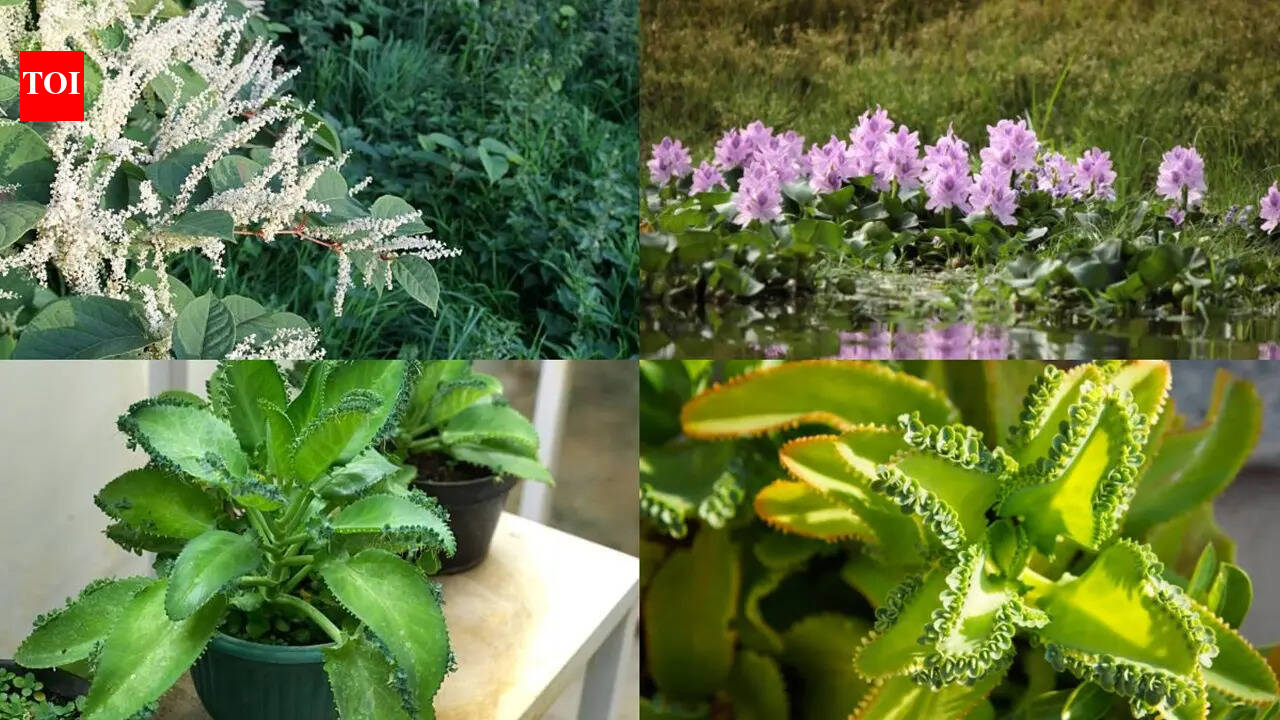
Some plants grow into new ones from tiny fragments, spreading through gardens and waterways. Japanese knotweed spreads when soil moves, while water hyacinth forms mats in many Indian lakes. Elodea and hydrilla also use broken pieces to travel. These plants show how a small leftover bit becomes a big problem.
We tend to think of plants as growing from seeds, but some of them have a far sneakier method. Snap off a small piece, drop it in the soil or toss it into a pond, and it can quietly turn into a whole new plant. That's wonderful when you're taking cuttings of a favourite houseplant. It's not so wonderful when the plant happens to be an invasive weed. These species use tiny fragments to travel, hitching rides on soil, boots, boats and water currents. Here are five that prove how much power a small piece can have.
This is the poster child of plants that regrow from scraps. Japanese knotweed spreads through thick underground stems called rhizomes, and a fragment weighing as little as half a gram can grow into a new plant, as long as it carries a bud or node. Pieces without one can't regrow. Because most of its spread happens when soil containing fragments is moved around, a single truckload of dug-up earth can start a fresh patch somewhere else, which is why digging it up yourself is a bad idea.
With its pretty purple flowers and glossy leaves, water hyacinth looks harmless, but it's one of the most troublesome water plants in the world, including in many Indian lakes and rivers. It forms thick floating mats that block sunlight and slow the flow of water. As the mats are churned by wind, boats or currents, pieces break off and drift away, then start new colonies elsewhere. A small leftover bit in a pond can slowly become a big problem downstream.
Elodea, also known as Canadian pondweed, is a common aquarium and pond plant, and it's a master of regrowing from fragments. In some regions, only female plants exist, so it spreads almost entirely by broken pieces. Fragments, even from a single node, can float away on the water, or hitch a ride on a boat, a fishing net or even a duck, and then root downstream. Related plants like hydrilla spread in a similar way.
This small, creeping aquatic plant looks innocent, but it forms dense mats that can crowd out all the other plants in still or slow-moving water. It can grow from the tiniest piece of stem. One of the most unexpected ways it spreads is by sneaking into the garden centre trade, as an unnoticed contaminant in bags of other water plants. A tiny hitchhiker in a pot can end up in a garden pond, and from there, into the wider countryside.
Some of the best regenerators actually do it on purpose. Kalanchoe species, including the one known as mother of thousands, grow tiny baby plantlets along the edges of their leaves. These drop off, land in the soil and root with no help at all. Others, like the familiar patharchatta, will even sprout when a single leaf is placed on damp earth. They're easy to grow, but they can also quickly take over a pot or a garden bed.
This article is intended for general informational purposes only. Which plants are considered invasive, and the rules for dealing with them, vary by country and region, so check local regulations and advice. For serious infestations, particularly of plants like Japanese knotweed, consult a qualified specialist rather than trying to remove them yourself.