
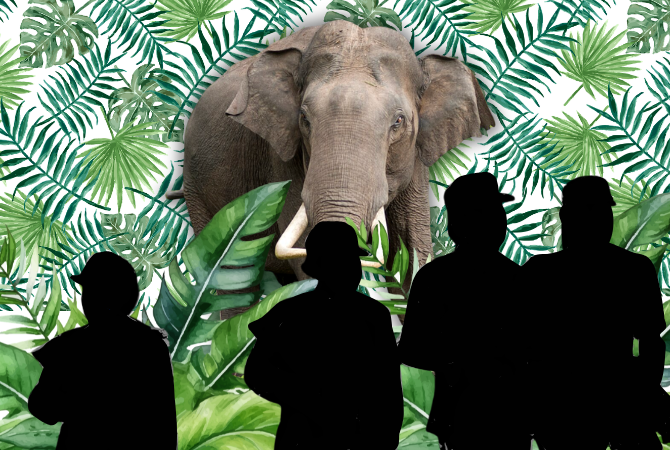
Six elephants died by electrocution in Chittoor this year, prompting officials to identify 1,166 dangerous power points. Meanwhile, the Madras high court stayed a March 14, 2026 order to transfer 196 acres of university land for industry. This move protects a vital elephant corridor, ensuring these animals keep their ancient paths.
The death of six elephants by electrocution in Chittoor district of Andhra Pradesh this year, and the recent intervention of the Madras high court to protect an elephant corridor near Coimbatore, Tamil Nadu have brought back many memories of my years in the Tamil Nadu Forest Department dating back to the 1960sForest officials have identified 1,166 vulnerable electrical points across five forest ranges in the Chittoor region, including hundreds of low-hanging power lines. They have also sought Rs. 1.68 crore to fix 150 high-priority vulnerable electrical points. The Madras high court, meanwhile, has stayed the government order (G.O.(Ms)
No. 89, Higher Education (H2) Department) dated March 14, 2026 that proposed transfer of 196 acres belonging to Bharathiar University in Coimbatore, Tamil Nadu for industrial development on the ground that it would destroy the elephant corridor and its surrounding ecosystem. Having spent decades in forests, I learnt that protecting elephant corridors is as important as preserving the forests where the elephants reside.An elephant's pathAn elephant is very circumspect in choosing its path. Despite its prodigious size, it generally prefers a smooth, firm passage with a gradient that gradually ascends.
When I was undergoing training in Nilgiri hills in 1963, I often observed how carefully elephants negotiated the undulating terrain. An elephant could ascend a hillside with surprising agility only to struggle while descending. A fall on a precipitous slope, or entrapment in marshy ground, could be deadly for an animal of such enormous weight. They travelled considerable distances in search of forage and water, invariably retracing the same paths on their return journey. I remember the forest stretches of Mudumalai, Bandipur and Mysore being closely connected through which elephants moved. Farther south, their movements extended through the forests around Usilampatti, Megamalai, Chinnamanur, Cumbum, Gudalur and Kumily, towards Vandiperiyar and the Periyar forests.
The administrative divisions that appear on our maps are not a matter of concern for these animals.The movement of elephants in the forest is quite a spectacle as they always move in an orderly fashion. The younger ones remained in the centre surrounded by adults. That was the solicitude they showed towards the calves. Their movements often resembled a military march-past, although the former is instinctive rather than being imposed upon. One could watch them for hours without getting tired. Forest officers of my generation learned a lot from such observations. When we went camping in elephant reserves, we would dig trenches around our tents to discourage the elephants from approaching us at night.
We were also mindful of the crops cultivated near forest settlements. Elephants are fond of banana plants and bamboo. So we used to advise villagers not to plant them close to elephant routes. Even dogs kept as pets by the villagers could sometimes taunt the elephants. An elephant provoked by such dogs pursued them towards the village, thereby leaving the locals in panic.Another practice I distinctly remember was the officer quarters, milestones and other structures on the forest road being painted in yellow rather than white. The reason was that some wild elephants are said to be aggressive towards white colour.
This convention dates back to the British administration. Such practices are not reduced to writing; they are often passed on to us from our seniors.During my training at the Tamil Nadu Forest College, Coimbatore in 1962, I ventured into the forest with three of my classmates. All of us happened to be wearing white shirts that day. Suddenly, my companions removed their shoes and began running. Being unable to comprehend what the commotion was about, I stood still. Later I realised there was an elephant. Fortunately, it did not harm me. I have often recalled the incident, particularly how terrified my companions were while I, being a novice, remained unwittingly composed.
Gentle giantsMy acquaintance with the elephants revealed another side of the giants contrary to what the public perceives. However, I do not mean to say that they are invariably docile. They are of course wild animals, and an encounter with a frightened or provoked elephant can end in catastrophe.While serving as a Forest Ranger in 1966, I worked under Mr Andiappan, a 1935-batch officer. He told me that when he was posted as a Ranger in Topslip, his four-year-old child wandered away from the quarters and got lost in the jungle, leaving the entire family distraught. Everyone searched for the child with the help of lanterns.
At last, it was their Kumki (trained) elephant that guided the boy back to the quarters.Such experiences endeared these animals to us. While working in Cumbum range, we forest officers befriended an elephant calf from a circus in Chinnamanur. These were the days before the Wildlife Protection Act, 1972, was enacted, which brought such practices under regulation. One day while we were playing badminton in our quarters, it approached us and began searching our pockets with its trunk, apparently believing that we had something edible. Their inquisitiveness was almost childlike. When elephants fall sick, they often behave like human babies, refusing to open their mouths to take medicine.
I appreciate the ingenuity of veterinary doctors who persuaded those sick elephants to take medicine by concealing it in jaggery, enticing them to open their mouths.There was, however, another side to our acquaintance with elephants, one considerably more distressing.During my service, forest officers had to supervise the post-mortem examination of elephants that were found dead in their jurisdictions. Their tusks and tushes were accounted for and surrendered to the department in accordance with the procedures then in force. The difficulty was that other elephants surrounded the carcass, reluctant to abandon their fallen companion.
We could not approach until they withdrew. The sight was profoundly moving. I remember herds standing around a dead elephant in what appeared to be a solemn vigil. It looked like a gathering of mourners around a departed public figure. Their attachment to one another was difficult to overlook, and those scenes have remained etched in my memory.Ironically, the tusk, which contributes so much to the elephant's majestic appearance, also became one of its greatest misfortunes. Ivory hunters were an abiding menace in the forests. Their avarice spared neither the tusks of male elephants nor the smaller tushes of female elephants.The threats confronting elephants have since acquired new dimensions.
The paths must be protectedThe death of elephants by electrocution in Chittoor illustrates how an animal accustomed to negotiating difficult natural terrain can succumb to an entirely man-made hazard. A low-hanging electric line, an exposed transformer or an illegally high voltage electrified fence may prove fatal to an elephant moving along its customary route.At the same time, we cannot outright ignore the predicament of cultivators. A herd entering agricultural land can cause substantial losses to farmers whose livelihoods depend upon the crops. Nevertheless, the remedy cannot lie in exposing the poor animals to electrocution which is the height of cruelty.The order passed by a Division Bench of the Madras High Court comprising Justices N.
Sathish Kumar and G.K. Muthukumaar staying the aforementioned government order is significant in this context. Ensuring the continuity of these elephant corridors, free from obstructions, is the need of the hour. We cannot insist that herds confine their movements only to gazette-notified corridors. Their paths change with the seasons, especially depending on the availability of water. When water becomes scarce in the hills, elephants must descend towards accessible water sources. Obstructions in the form of buildings and statues along these passages can startle these animals.I have closely followed the controversy surrounding elephant movements near the Isha Yoga Centre at the Velliangiri foothills.
A Forest Department report dated January 19, 2012 identified lands associated with the centre as lying along an important elephant movement route between Sadivayal and Thanikkandi. Isha Foundation, however, disputes the allegation that its premises occupy an elephant corridor and cites subsequent official records in support of its position.In my view, old forest maps should be carefully examined alongside present-day elephant movements and the location of perennial and seasonal water sources. Such records may reveal routes that once existed but were subsequently obscured owing to constructions.
Mere absence of documentation does not mean that elephants have ceased to use these routes.During my early years in service, the forests were extensive enough to provide elephants with considerable freedom of movement. They were, in many respects, the animals' natural fortress. However, I do not suggest that those years were free of hunting and poaching. But now, with forests being fragmented unabatedly, I fear that elephants will increasingly find themselves deprived of the familiar routes through which they have moved for generations.Having spent decades in the forests among these magnificent beings, it pains me deeply to read of elephants being electrocuted along the very paths they have used for generations.
I have watched them negotiate steep slopes and difficult terrain with great caution. It saddens me that elephants which survived the natural dangers of the forest should now lose their lives to the greed of men and the callousness of authorities.If we are really committed to conserving elephants, we must protect not only the forests in which they live, but also the paths by which they reach one another, their feeding grounds and their sources of water.The author is a retired District Forest Officer of the Tamil Nadu Forest Service (1964 batch), who served in various forest divisions and elephant reserves, including Anamalai and Megamalai.