
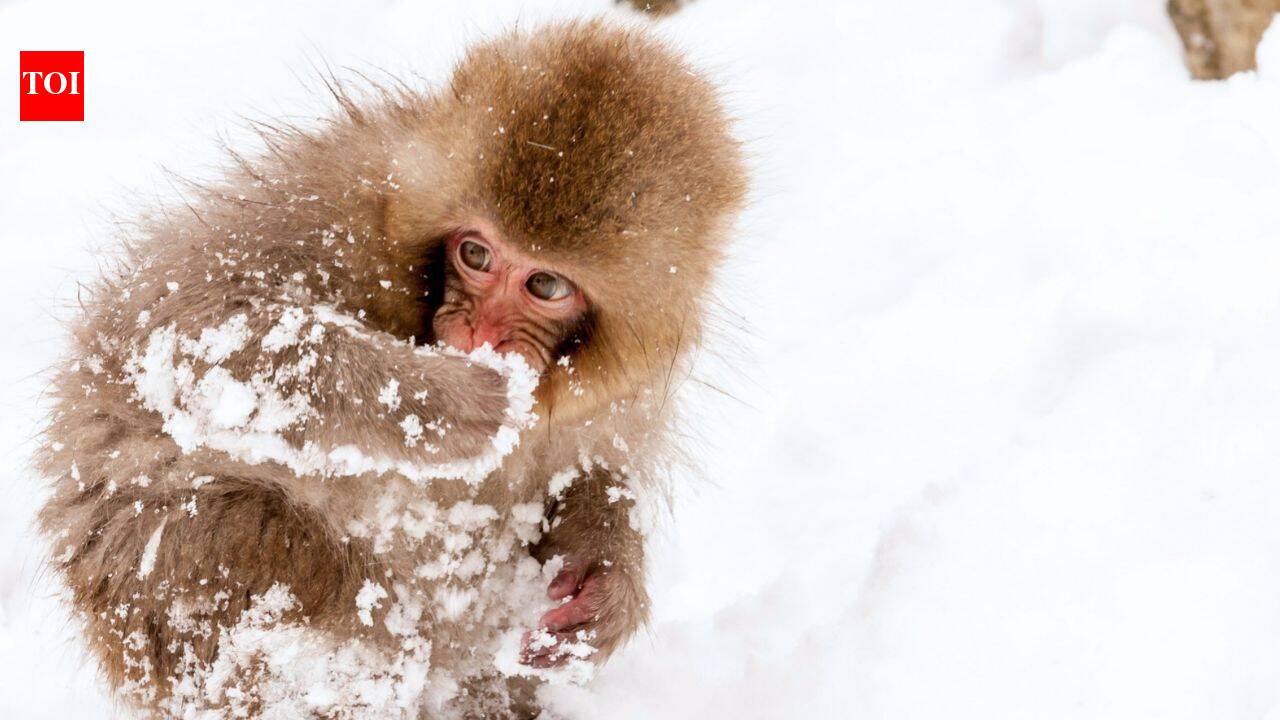
Japanese macaques, known as Japan Snow Monkeys, are the only monkeys that survive in cold climates. These social animals live in troops and famously bathe in hot springs. Photographer Matsu now works to protect them. You can visit the Jigokudani Yaen-Koen in Nagano to see these unique creatures in person.
All of us sympathised with Punch the monkey when an Instagram reel got viral of him being abandoned by his own mother. Later, there even were updates about how he has a girlfriend as well. Well, what most of us didn't enquire about was that Punch was a Japanese macaque which are commonly known as Japan Snow Monkeys. They are the only species of monkeys that live far North and can survive cold climate. These unique species have now caught the eye of Matsu (@matsu_nagano) who is a photographer and now working towards conservation of these species in the wild. His pictures of these creatures away from human attention depict how unique and pristine they are.
Monkeys of the north
The Japanese macaques are native to Japan and can be found in almost all parts of Japan. The only exception is the island of Hokkaido which lies furthest in the North. Typically, their habitat receives a lot of snow during the winters. Interestingly, these monkeys can survive in temperatures as cold as -20°C. Their thick grey-brown fur makes them adaptable to the cold and their reddish faces with human-like emotive eyes make them seem extremely expressive.
They are social beings who usually live in troops of 20-30 which also follow a hierarchy structure among them. The troop is generally led by an alpha female and an alpha male and also have a female majority.
The parks which offer a glimpse of these monkeys also provide an experience for humans to feed them. However, in the wild, these monkeys tend to forage on the ground for food and their meals consist of fruit, seeds, tree bark, insects, leaves and bird eggs. One of the most attractive activities for which they are famous is their bathing in the hot springs. This reportedly began when some young monkeys wanted to enjoy the hot springs after observing humans do it. Eventually the behavior caught on and became a phenomenon for wildlife lovers to observe.
Where can you spot Japan's snow monkeys?
If seeing the famous bathing monkeys is on your Japan bucket list, Jigokudani Yaen-Koen in Nagano is the place to visit. However, Japanese macaques can be spotted in several parts of the country, and not every encounter involves a hot spring.
Jigokudani Yaen-Koen, Nagano: The snow monkey park offers the classic snow-monkey experience. The site was opened in 1964 and is famous for a close encounter with Japanese Macaques. The name Jigokudani, meaning "Hell Valley", refers to the area's steep cliffs, rugged terrain and rising steam from its hot springs. Visit between December and March for the best chance of seeing macaques bathing amid snow-covered scenery. The park is open year-round, but bathing is seasonal and sightings are never guaranteed.Mount Takasaki, Oita: At Takasakiyama Natural Zoological Garden, visitors can observe large troops of Japanese macaques gathering in a forested mountain setting. It offers a different perspective on their social lives, away from the famous snow-covered hot springs.Arashiyama, Kyoto: The Iwatayama Monkey Park provides an opportunity to see Japanese macaques on a hillside overlooking Kyoto. It is a good addition to a city itinerary, although reaching the viewing area involves an uphill walk.These destinations offer different settings, but the same reminder: macaques are wild animals. Observe them quietly, keep a respectful distance and never feed or touch them.
How to reach Jigokudani Snow Monkey Park
From Tokyo, take the Hokuriku Shinkansen to Nagano Station, a journey of roughly 1 hour 40 minutes to 1 hour 45 minutes. From there, travel towards Yudanaka or take a bus to the Kanbayashi Onsen area, depending on your chosen connection. The final stretch involves a walk of approximately 25-40 minutes through woodland to the park entrance.