
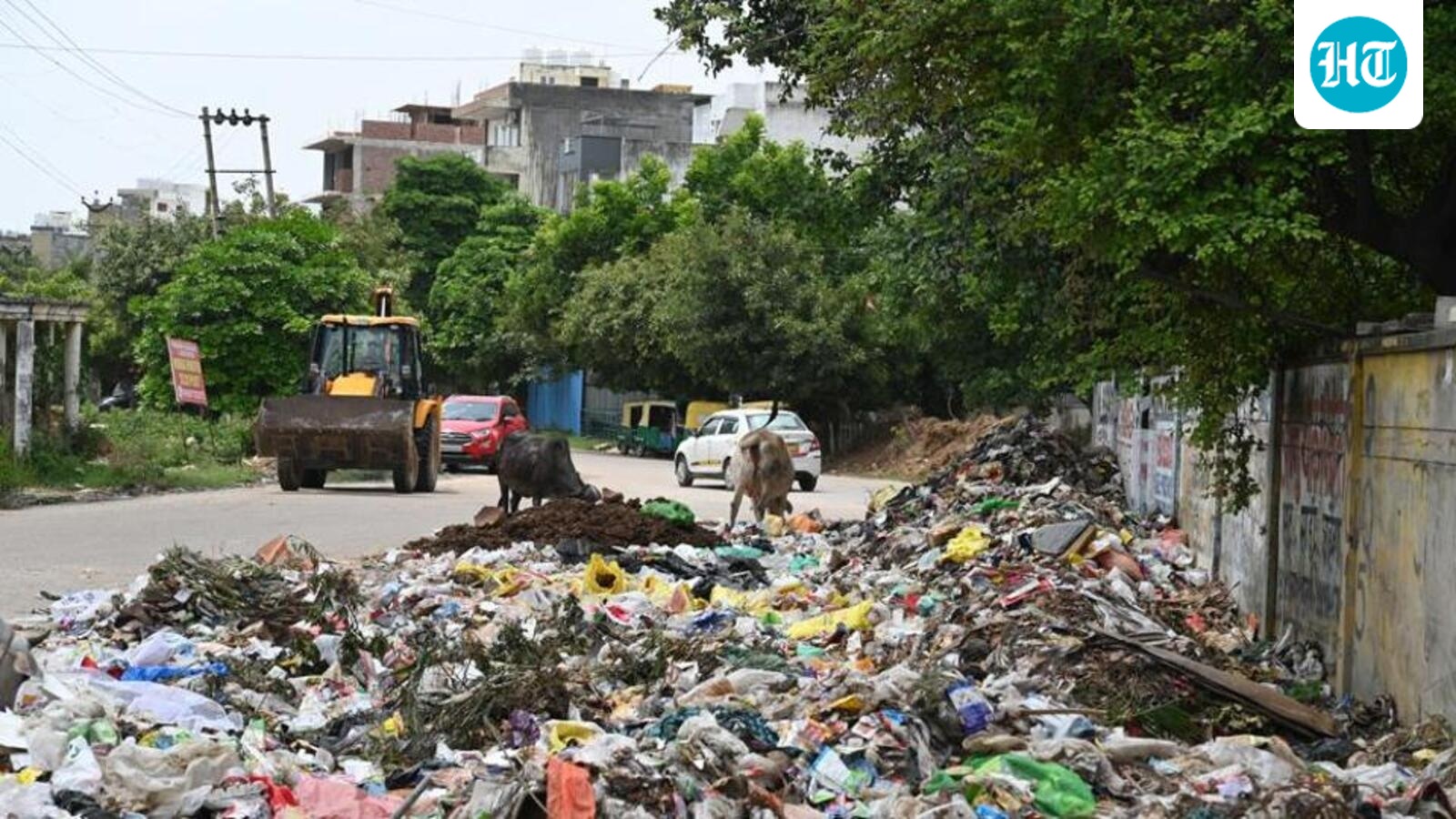
A new report says Delhi’s waste-to-energy plants have a high carbon burden, raising concerns as Haryana plans four new plants by October 2028. Anuradha P Dhawan said, “Bandhwari landfill, with its recurring fires and leachate threatening groundwater and the Aravallis, is a stark reminder of the crisis we are creating.”
The report, ‘The Climate Cost of Burning Waste, The Carbon Intensity of Waste-to-Energy Incinerators in Delhi, and Why It Should Not Be Funded as Climate Action’, by the National Alliance for Climate and Ecological Justice (NACEJ) and the Centre for Financial Accountability (CFA), estimates that electricity generated by Delhi’s four operational waste-to-energy plants carries a substantial fossil-carbon burden, almost 4.7 times the national grid average, has raised questions about the climate implications of Haryana’s proposed expansion of waste-processing infrastructure.
In August 2026, the Haryana government announced memoranda of understanding for four integrated WTE plants across the state, with a combined proposed processing capacity of 5,000 tonnes per day and electricity-generation capacity of 50 MW.
The largest is planned for the Gurugram cluster, covering Gurugram district, with a stated capacity of 2,000 tonnes of waste daily and at least 20 MW of electricity generation. The plants are expected to become operational by October 2028.
Separately, the Municipal Corporation of Gurugram (MCG) has revived its long-pending proposal for a WTE facility at Kasan village in Manesar. The proposed plant is intended to process fresh municipal waste and reduce pressure on the Bandhwari landfill, which reportedly holds an estimated 1.6-1.7 million metric tonnes of legacy waste.
The report raises questions about whether expanding incineration will address the underlying waste-management crisis or create a long-term dependence on a continuous supply of combustible waste.
Gurugram’s proposed incineration capacity comes against the backdrop of persistent problems at the Bandhwari landfill, where legacy waste, recurring fires and concerns over leachate have raised environmental concerns, including risks to groundwater pollution and the Aravallis.
Anuradha P Dhawan, of the Aravalli Bachao Citizens Movement, said the landfill reflected the consequences of rising consumption and inadequate waste management. “Bandhwari landfill, with its recurring fires and leachate threatening groundwater and the Aravallis, is a stark reminder of the crisis we are creating,” Dhawan said, describing the site as a repository for plastic, sanitary waste, construction debris and other discarded material.
The proposed Kasan facility is intended to process fresh municipal waste and reduce the burden on Bandhwari. However, the report argues that incineration should not substitute for measures that reduce waste generation, improve segregation and recover recyclable materials.
Siddharth Ghanshyam Singh, programme manager at the Centre for Science and Environment, said burning mixed waste could undermine the objectives of segregation and recycling.
“India has low per capita waste generation and an even lower combustible waste fraction,” he said, arguing that some WTE plants rely on mixed waste to keep their furnaces operating.
Bhavreen Kandhari, of Warrior Moms, said waste-to-energy plants generated limited electricity while releasing fossil carbon and destroying materials that could otherwise be recovered.
“Delhi cannot burn its way out of a waste crisis,” she said, calling for segregation, waste prevention, reuse, recycling and decentralised composting instead of growing dependence on incineration.
The report calls for municipal-waste incineration to be excluded from climate finance, an end to carbon credits for such projects and the removal of incentives that reward plastic combustion. It recommends prioritising waste prevention, source segregation, reuse, recycling, biological treatment and the integration of waste workers into formal waste-management systems.
For Gurugram, the findings raise a central question as the city plans additional waste-processing infrastructure: whether its strategy will primarily focus on burning waste or reduce the amount generated, improve segregation at source and recover reusable materials before disposal.