
Regulators warned South West Water that failing to fix leaks puts customer supplies at risk during a severe drought. In a letter dated 26 October, officials said, "Achieving your planned leakage reductions is reputationally important." The company leaks 113.5m litres daily, affecting many people across the south-west of England.
With parts of region served by company in severe drought still, regulators give it six weeks to come up with action plan
Repeated failures by South West Water to tackle leaks are putting customers at higher risks of losing water supplies as parts of the region remain in severe drought, regulators have said.
In a warning to the privatised company that serves 1.8 million people across the south-west of England, the regulators said it had been failing to meet targets to reduce leaks and repair burst pipes for seven years.
"Leakage is 18.5% above forecast ... and increased since the previous year. Given the ongoing drought conditions, these shortcomings are placing customers at a greater level of risk. This is not acceptable," said Ofwat, the Environment Agency and the Department for Environment, Food and Rural Affairs in a letter to the company.
The letter emerged as the National Drought Group prepared to meet on Thursday, with about 82% of England still in drought, and severe drought declared in parts of Devon, Cornwall, Dorset, Somerset, East Sussex and West Sussex. The Met Office has said 120% of typical rainfall is needed over seven months to bring the country fully out of drought.
South West Water leaks 113.5m litres of water a day from its pipes and infrastructure, the equivalent of 45 Olympic swimming pools. Leakage is 5.7m litres a day higher than last year and poses a risk to customer's security of supply, the regulators' letter says.
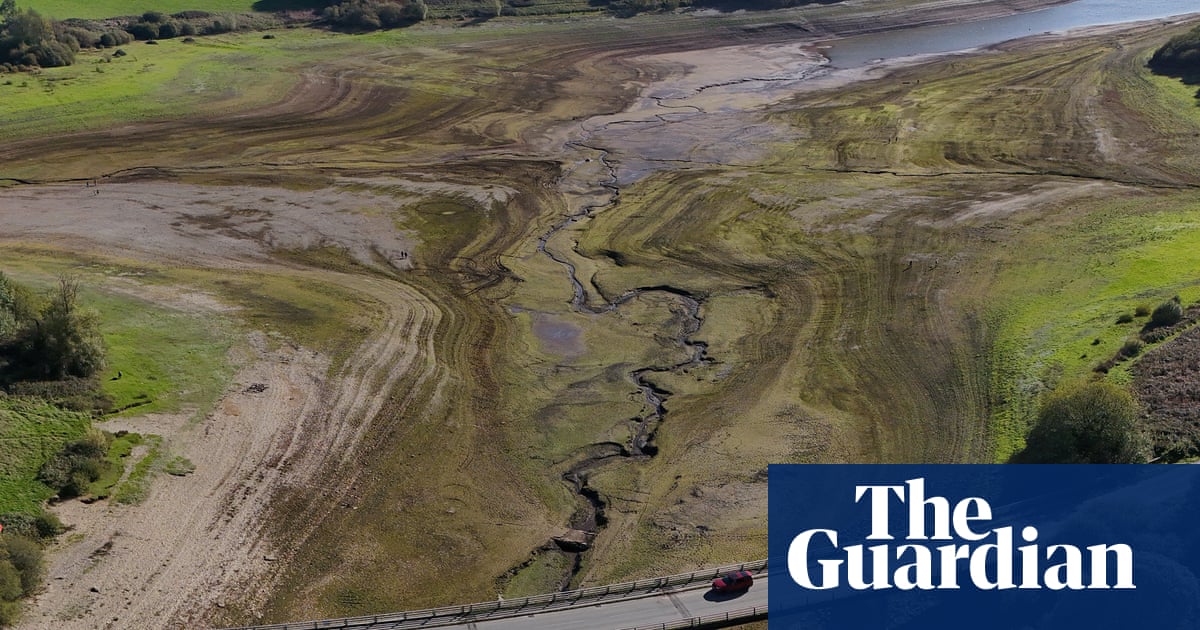
The continued severe drought in many areas of the region affects about 325,000 people and thousands of businesses in Exeter and mid and east Devon. They are at risk of having their supplies regularly cut off over the coming weeks and months, which could lead to school closures and economic losses.
South West Water has written to households in those areas urging them to reduce their water usage to help secure supplies. The company does not acknowledge the contribution that the scale of its own leakage is making to the risk of outages.
In the joint letter to the company dated 26 October, the regulators and the government said: "Achieving your planned leakage reductions is reputationally important as you are asking customers to reduce their water use."
After the driest April to September in more than a century, fuelled by the climate crisis, reservoir levels in some sites are critically low. Storage at Wimbleball, which supplies South West Water customers in east Devon, north Devon, Somerset and west Dorset, and Wessex Water customers in west Somerset, is at 16%. There are also concerns for several smaller South West Water reservoirs serving homes in Devon and Cornwall.
The joint letter says the failure to tackle leakage has reduced confidence in the company to ensure supplies and avoid emergency abstraction from rivers that will cause environmental damage.
"A trend of rising leakage ... represents a risk to your customers' security of supply," it says.
The leader of Devon county council, Julian Brazil, said: "Householders and businesses have been told to save water to avoid worse drought restrictions and that it was all down to the dry weather. Now we learn South West Water has been continually warned for seven years it's not doing its bit on leakage and they are still failing, which puts our rivers and wildlife at risk of prolonged environmental damage and may leave thousands of customers and businesses facing supply restrictions.
"I would say it's a surprise but it's not, because this crisis has been decades in the making. While we've been paying the highest bills in the nation since 1989, South West Water has been busy continually polluting our bathing waters, busy losing nearly one in every five litres of water on its network and most busy paying out billions in dividends to its shareholders."
The warning to South West water comes as the government announced that eight new regional water councils were being created to bring local leaders, customers and businesses together to set priorities for water companies and help shape billions of pounds of investment in water and flood infrastructure. Local leaders have been asked to submit proposals for running the new bodies by the end of the year.
The letter to South West Water says the company has to report to the government and regulators with an action plan to tackle its leaks within six weeks.
The company's drought programme director, Richard Stanbrook, said: "Recent rainfall is having a positive impact on our water resources, with welcome improvements after months of exceptionally dry conditions. However, pressure on supplies remains significant, and we need sustained rainfall in the right places to replenish our rivers and reservoirs and secure a lasting recovery.
"We are repairing leaks, moving water around our network and taking every practical step to strengthen supplies and reduce water losses. As conditions improve, we will keep doing everything we can to protect supplies."