
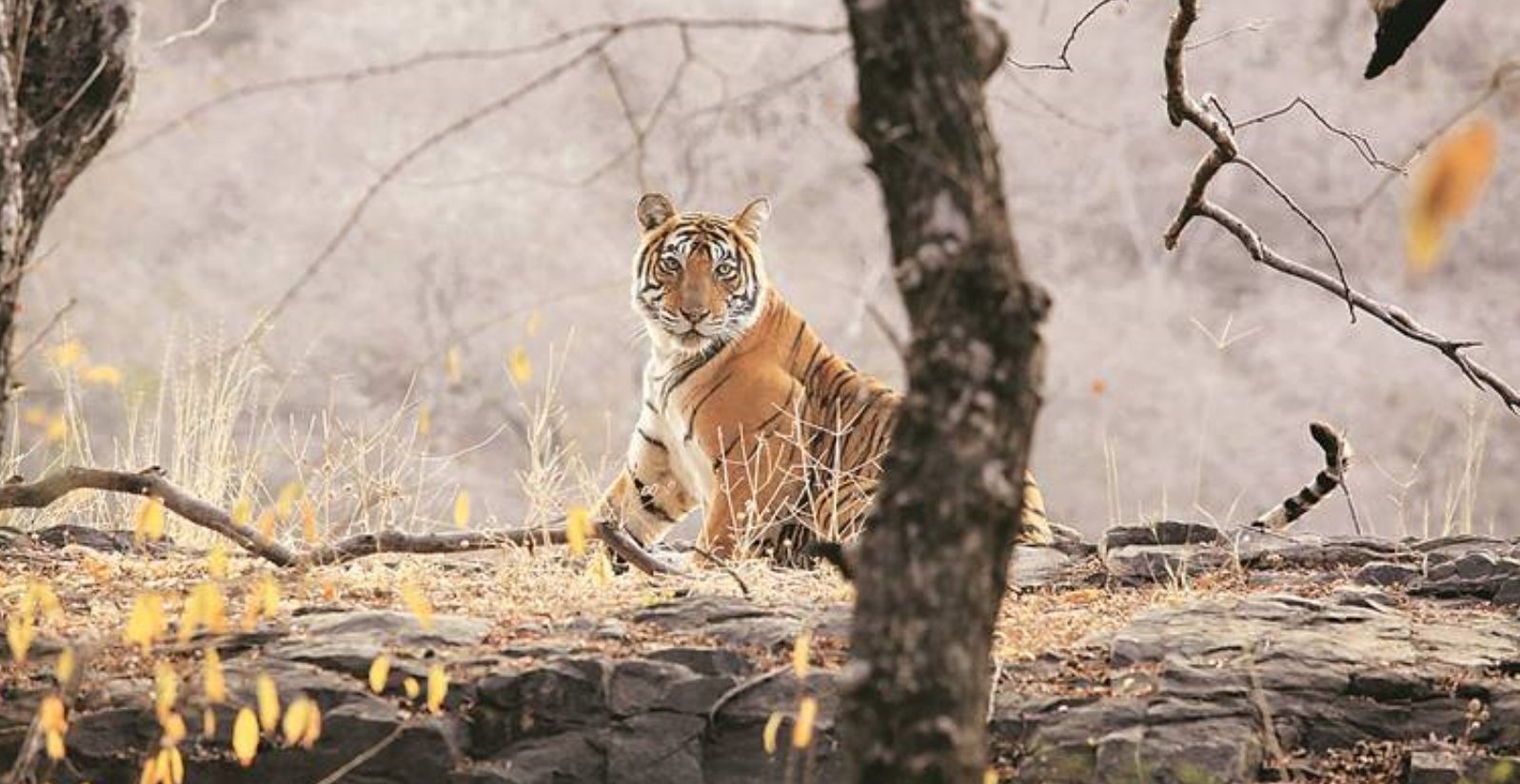
The International Big Cat Alliance became a legal entity on 23 January 2025. Launched by Prime Minister Narendra Modi in April 2023, the group now has 33 members after Venezuela joined in September 2026. It helps countries share knowledge to protect seven big cat species across their shared global landscapes.
The world's seven big cats inhabit different continents and ecosystems, but their futures are increasingly interconnected. A puma crossing a highway in Brazil, a snow leopard moving between mountain valleys in Asia and a tiger dispersing through the forests of central India face the same fundamental challenge: Nature does not recognise the administrative and political boundaries within which conservation policies are framed. Their survival will depend not only on protecting individual species and habitats, but also on connecting landscapes, sharing knowledge and building cooperation across borders.
This ecological reality gives the International Big Cat Alliance (IBCA) its purpose. Launched by Prime Minister Narendra Modi in April 2023, the IBCA became a full-fledged treaty-based intergovernmental international organisation and an international legal entity on 23 January 2025. Headquartered in India, it provides a common platform for conserving seven species: tiger, lion, leopard, snow leopard, cheetah, jaguar and puma. The accession of Venezuela as a member country in September 2026, taking participation in the Alliance to 33 member and observer countries, is especially significant. As a range country for both the jaguar and the puma, Venezuela extends the Alliance's growing reach in the Americas. Five of the seven big cats occur in India; the jaguar and puma do not. Yet the principles needed to conserve all seven are remarkably similar.
Big cats need adequate prey, secure habitats and space to move. They also need the tolerance and participation of people living alongside them. Protected areas are essential, but they are rarely large enough to contain the full movements of wide-ranging carnivores. Animals routinely enter community lands, farms, ranches, production forests and infrastructure corridors. Their survival is consequently shaped as much by decisions on roads, canals, mining, agriculture and regional planning as by the management of national parks.
Big-cat conservation therefore deserves the attention of political leaders and senior decision-makers at the highest level. As apex predators, these species signal the health of forests, grasslands and mountain systems that store carbon, regulate water and support livelihoods. Protecting their landscapes can reduce future restoration costs, strengthen climate resilience and safeguard ecological assets on which local economies and rural communities depend.
India has earned credibility through five decades of Project Tiger, the recovery of the Asiatic lion and its experience with leopards, snow leopards and cheetahs. The IBCA enables India to share this experience while learning from other range countries. Latin America offers lessons on jaguar corridors and puma coexistence; Africa brings experience from lion and cheetah landscapes. Effective solutions should travel across borders even when species do not.
The Alliance must keep demonstrating practical value. Its proposed Big Cat Dashboard could become the instrument that converts cooperation into action. Today, population estimates, habitat-change maps, mortality data, conflict reports and conservation investments are often scattered across agencies and research projects. Decision-makers therefore struggle to see where a population is declining, where a corridor is closing or whether a costly intervention is delivering results.
A well-designed Big Cat Dashboard could organise this information around four essentials: Population trends, emerging threats, conservation responses and the effectiveness of protected areas and wider landscapes. It could warn governments of rising road and rail-induced mortality, retaliatory killing or habitat conversion before these pressures become crises. It could identify transboundary populations, guide the placement of wildlife crossings, reveal gaps in monitoring and help direct finance to landscapes where action is most urgent.
The platform could also help countries report progress under the Kunming-Montreal Global Biodiversity Framework. But it must not become another repository that accumulates data without changing decisions. Its success should be visible on the ground: a corridor secured before it is severed, a conflict hotspot addressed before tolerance collapses, or an isolated population reconnected before genetic decline becomes irreversible.
Trust will be critical. Countries must retain ownership of their data, and sensitive information on animal locations must remain protected. Monitoring systems will differ, and the Dashboard should accommodate different levels of national capacity. Countries with limited resources should receive training, technology and scientific support. Indigenous knowledge, community observations and the experience of frontline staff must complement technological evidence.
you may like
The IBCA should therefore focus on three immediate priorities. First, establish common but flexible standards for monitoring populations, threats and outcomes. Second, build capacity in range countries through training, technical partnerships and sustained finance. Third, connect big-cat conservation with infrastructure, climate and development planning so that critical habitats and corridors are considered before projects are approved.
India has provided the political vision and institutional home for this global initiative. The next test is delivery. If the IBCA can help countries convert knowledge into timely decisions and cooperation into measurable recovery, it will protect more than seven iconic species. It will demonstrate that conservation across borders is possible when science, policy and political commitment move together.
The writer is former Chairperson of India's National Biodiversity Authority and former Director of the Wildlife Institute of India