
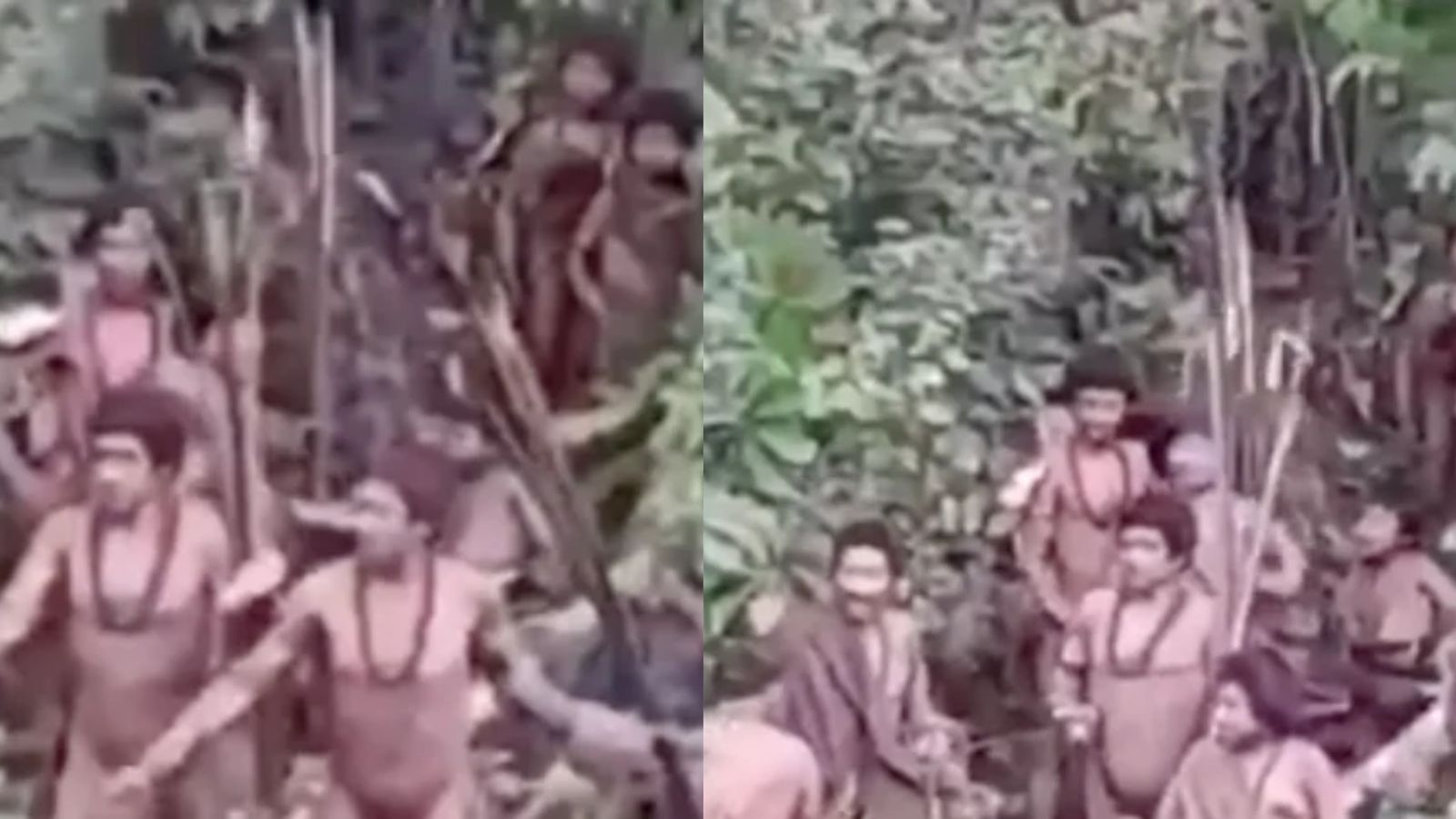
Around 20 members of Brazil’s isolated Awá tribe emerged from the Amazon rainforest on Monday to meet a government team. The viral video shows them carrying bows and arrows near a village. Many people online shared concerns about their safety, with one user saying, "The luckiest people on earth! Leave them alone."
The viral video shows men, women and children gathered near the forest's edge. They can be seen wearing necklaces and carrying bows and arrows.
Brazil's isolated Awá tribe is in the spotlight after around 20 members emerged from the Amazon rainforest and made contact with a government team.
According to The Guardian, the members approached a village in the northeastern state of Maranhão, prompting concerns over the growing threats to their survival amid increasing illegal activities in their territory.
A video of the encounter, filmed by Guajajara villagers and shared by Survival International, shows men, women and children gathered near the forest's edge. Partially hidden by vegetation, they can be seen wearing necklaces, while the men carry bows and long arrows.
Watch here:
The video quickly gained traction, sparking a deluge of reactions. "The luckiest people on earth! Leave them alone," a user wrote. "They don't deserve anxiety, depression and stress like we have," another user commented.
"They don't need help, they have been living like that for centuries. The danger is for those who wander into their world," a third user reacted.
Awá: Hunting, gathering, and survival
According to NGO Survival International, members of the Indigenous community arrived on Monday in a village, located within the Arariboia Indigenous territory, where they made contact with a government team in what the organisation described as a "historic encounter". The territory is also home to the Guajajara Indigenous community, the Guardian reported.
Villagers reportedly offered food to the group, who asked for yams and carried them back into the forest, the NGO said.
The report stated that the Awá traditionally rely on hunting and gathering for survival. However, their territory has increasingly come under pressure from illegal loggers, hunters and cattle ranchers, according to Survival International.
The Coordination of Organisations and Articulations of the Indigenous Peoples of Maranhão (COAPIMA) warned that contact with outsiders could expose the isolated community to infectious diseases, against which its members may have little or no immunity.
Brazil's Indigenous affairs agency, Funai, said its technical teams were monitoring the situation and examining available information about the group's health.
Survival International estimates that around 196 uncontacted Indigenous peoples and groups, who have chosen to live in isolation, have been identified across 10 countries. More than 90 per cent of these communities are believed to live in the Amazon rainforest, largely in Brazil, while others are found in countries such as Indonesia and India.