
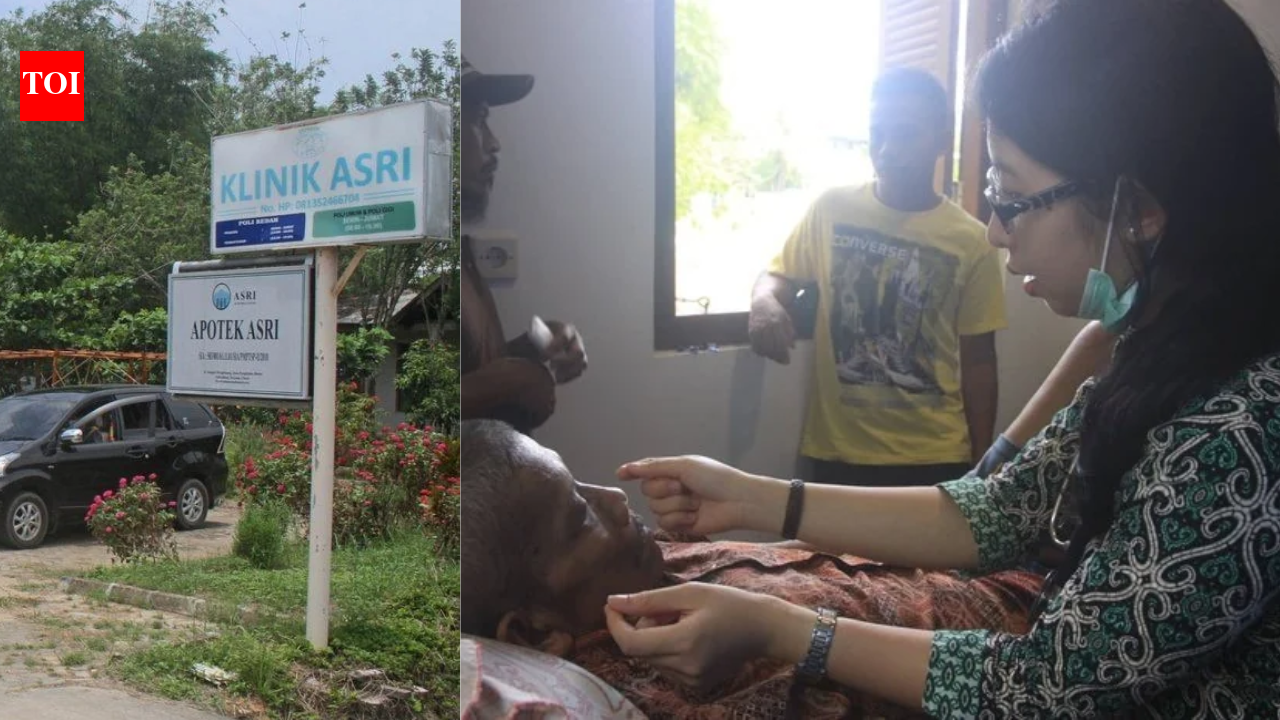
An Indonesian clinic run by Alam Sehat Lestari lets patients pay medical bills with tree seedlings instead of money. This unique conservation model, started in 2007, recently won a €250,000 award. Many villagers now get affordable healthcare while helping restore tropical forests by planting trees near Gunung Palung National Park.
What if paying a doctor's bill meant planting a tree instead of handing over money? In Indonesia's West Kalimantan province, a healthcare initiative is turning this unusual idea into a conservation effort. Run by the non-profit organisation Alam Sehat Lestari (ASRI), the programme allows villagers living around Gunung Palung National Park to make non-cash payments for medical treatment using native tree seedlings, eco-polybags or labour for reforestation activities. The initiative also links access to affordable healthcare with forest protection, offering subsidies to communities that reduce illegal logging. Its efforts have now received international recognition, with the BBVA Foundation awarding ASRI €250,000 in its 21st Biodiversity Awards for helping restore tropical forests while improving access to healthcare.
How an Indonesian clinic turned tree seedlings into medical payments
The initiative was established to address two interconnected problems facing communities around Gunung Palung National Park: limited access to affordable healthcare and the destruction of tropical forests.
The clinic was established in 2007 by ASRI in partnership with the non-profit organisation Health In Harmony, with support from the local government. For many local families, medical emergencies could create a financial burden, while limited livelihood opportunities increased dependence on activities such as illegal logging.ASRI recognised that protecting the forest would require addressing the economic difficulties facing the communities living around it. The organisation therefore developed a healthcare model that connects medical services with environmental protection.Patients visiting its clinics can make non-cash payments for consultations and prescriptions using native tree seedlings and eco-polybags. The wider programme also accepts other forms of alternative payment, including labour for forest restoration activities.The seedlings are collected, nurtured in nurseries and eventually planted in degraded forest areas. This allows villagers to access essential medical services while directly contributing to the regeneration of their surrounding ecosystem.
Villages that reduce illegal logging receive healthcare subsidies
Another important feature of the programme is its system of healthcare subsidies linked to forest conservation.ASRI provides discounts on medical services and medicines based on the environmental practices of villages surrounding the national park. Communities that demonstrate reductions in illegal logging receive subsidised healthcare, with villages that completely stop logging qualifying for the highest level of support.The system creates a direct incentive for residents to protect their forests rather than depend on timber extraction for their livelihoods.ASRI also works with local Forest Guardians, who monitor logging activities and help assess the conservation progress of individual villages. This approach makes environmental protection a shared responsibility rather than something imposed entirely from outside.The initiative is particularly important in communities where limited employment opportunities and inadequate access to healthcare have historically contributed to pressure on forest resources.
Former loggers are being encouraged to find alternative livelihoods
Healthcare payments are only one part of ASRI's wider conservation strategy. The organisation also works with people previously dependent on logging, helping them transition towards more sustainable sources of income.Its Chainsaw Buyback Programme encourages former loggers to surrender their chainsaws in exchange for financial support and assistance in developing alternative livelihoods.Participants are encouraged to explore activities such as sustainable agriculture and other forest-friendly businesses. One example is Muslianto, a former logger from Sukadana who surrendered his chainsaw and subsequently became a Forest Guardian and guide in Gunung Palung National Park.The objective is to ensure that protecting the rainforest does not come at the cost of families losing their means of earning a living.ASRI's broader approach is built around the idea that environmental conservation and community welfare cannot be addressed separately. By improving access to healthcare and supporting alternative livelihoods, the organisation aims to reduce the economic pressures that drive deforestation.
Stanford study finds deforestation declined by 70%
The conservation model has also reported measurable environmental results.A Stanford-led study published in the journal Proceedings of the National Academy of Sciences (PNAS) in October 2020 found that deforestation in the area declined by 70% over the decade following the clinic's establishment, compared with control sites. The difference was equivalent to approximately 2,740 hectares of tropical forest.The organisation's work also supports the protection of threatened wildlife, including Bornean orangutans and Sunda pangolins, whose habitats depend on healthy forest ecosystems.According to ASRI's official programme figures, its wider conservation efforts have resulted in 701,913 tree seedlings being planted and 435 hectares of land being reforested. The organisation also reports that 343 people have handed over their logging equipment as part of its efforts to encourage alternative livelihoods.These figures reflect the organisation's cumulative programme achievements rather than results from a single year.
Indonesian initiative receives €250,000 global conservation award
The BBVA Foundation recognised ASRI in the Global category of its 21st Biodiversity Awards, announced on November 17, 2026. The organisation received €250,000 for its work restoring tropical forests in Borneo through community participation, reforestation and improved access to healthcare.The foundation also recognised two other international conservation initiatives in separate categories, each receiving €250,000.In Rwanda, the Rwanda Wildlife Conservation Association was recognised for helping revive the population of endangered Grey Crowned Cranes. Its work, involving wildlife rescue, rehabilitation, education and community monitoring, has helped increase the country's wild population from fewer than 300 birds in 2015 to 1,438 in the 2026 census.
In Mexico, the Grupo de Ecología y Conservación de Islas received recognition for restoring seabird colonies across Pacific islands. Its efforts have helped recover 27 of 31 seabird colonies that had previously disappeared, benefiting at least 13 threatened species.