
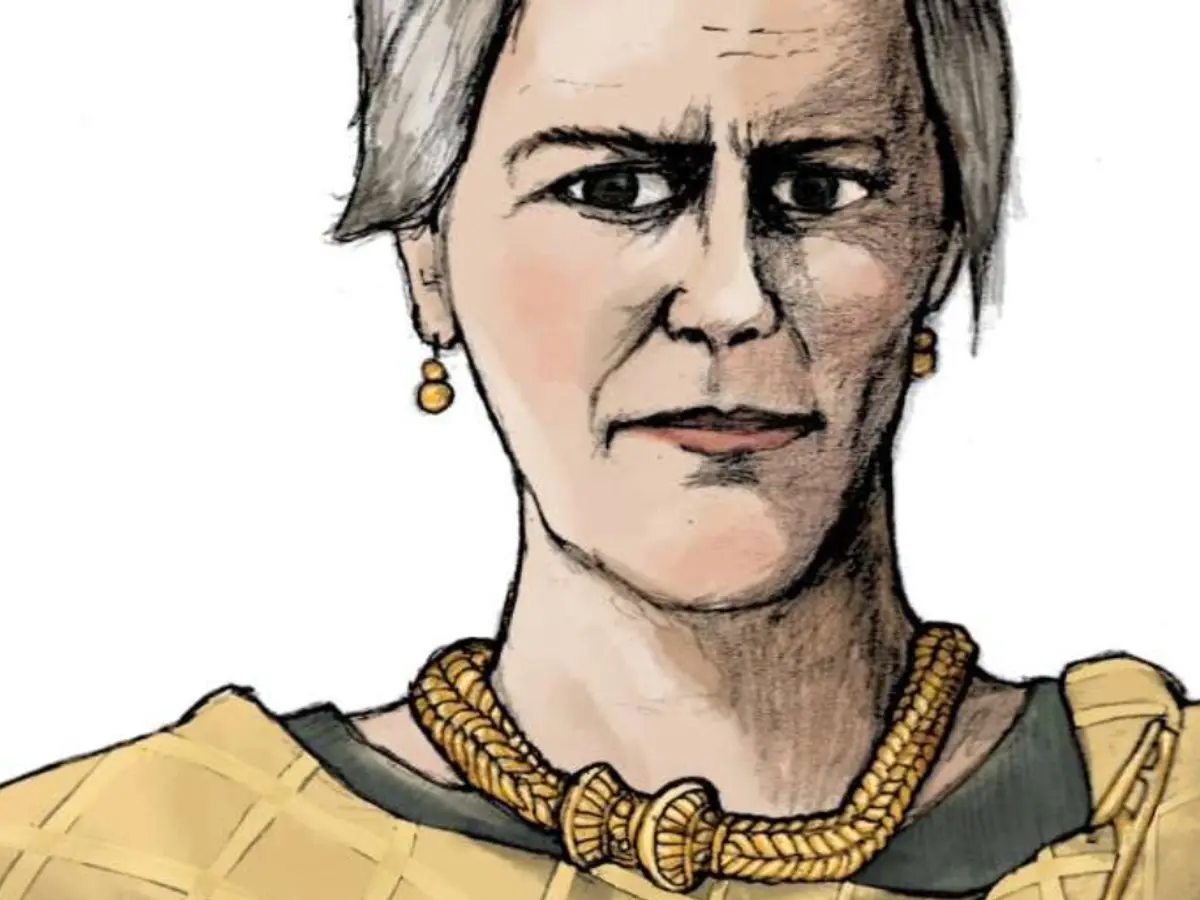
Archaeologists at Bournemouth University found that Verica, a powerful leader during the Roman invasion of Britain in AD 43, was a woman. Historians previously assumed she was a man due to patriarchal bias. Dr Miles Russell said, "Verica was not only critical to the special relationship between Britain and Rome."
Romans conquered Britain in AD 43, thanks to a female warrior whom till now historians have assumed to be a man. A study has found that Verica was a woman and convinced the Emperor to strike Britain. She provided support and was an important British female leader.
An Iron Age British ruler believed to be a man till now was actually a woman. Archaeologists at Bournemouth University have found evidence that shows Verica, who played an important role in the Roman invasion of Britain in AD 43, was a woman, changing the history of early Roman Britain. She ruled the Atrebates tribe, who were spread across modern-day Hampshire and West Sussex.
Verica was the one who convinced Emperor Claudius in Rome to cross the English Channel and invade Britain, according to Roman historian Cassius Dio. Claudius has been portrayed as a weak-minded ruler whose policies were dictated by women and freed slaves. The revelation about Verica has been detailed in the book "Caratacus: Great King of Britain", which researchers have discussed in Current Archaeology.
No proof that this ruler was a man
The research was led by Dr Miles Russell, who said that historians in the 19th century assumed Verica was male because of the patriarchal set-up of the times. However, there is nothing to prove that this ruler was a man. "Verica was not only critical to the special relationship between Britain and Rome in the early first century A.D. but was indisputably female," he added.
Why we know the ruler was a woman
Russell says that her name is the first clue, since female names commonly ended with "a" during that time. Cartimandua of the Brigantes (in Yorkshire) and Boudica of the Iceni (in Norfolk) also belonged to the same period. Boudica is more famous as she led a revolt against the Roman invaders in AD 60. However, according to Russell, Verica was more powerful and influential.
He further said that the term "rex" on coins also made historians believe that the ruler a male. But rex is a non-gender-specific title, and Rome had both male and female kings. "The use of the Latin title rex on coins shows that Verica ruled with the full authorisation of the emperor," he added.
The images used on the coins by Verica add weight to the theory. Russell says, "While other coin-producing British Iron Age leaders portray obviously male warriors, Verica is depicted as a slender, feminine, bare-breasted figure riding on horseback."
Clarifying Dio's claim that Claudius was weak and followed a woman's lead, Russell said that this simply "fit the trope of this emperor as being submissive and henpecked. In effect, Dio was saying that the campaign was undertaken solely because of the whisperings of a barbarian femme fatale." She provided tactical information and support on the ground and was crucial to the Romans' victory.
"The invasion was Claudius' great triumph -- it being the only chance he had to prove he was a successful military leader. Verica provided the excuse for regime change, and the emperor seized it." Russell stresses that we should "remember Verica as a female king and one of the earliest and most important of British female leaders." If she was not ousted from power and fled Britain to Emperor Claudius, "Rome may never have invaded Britain in the first place."