
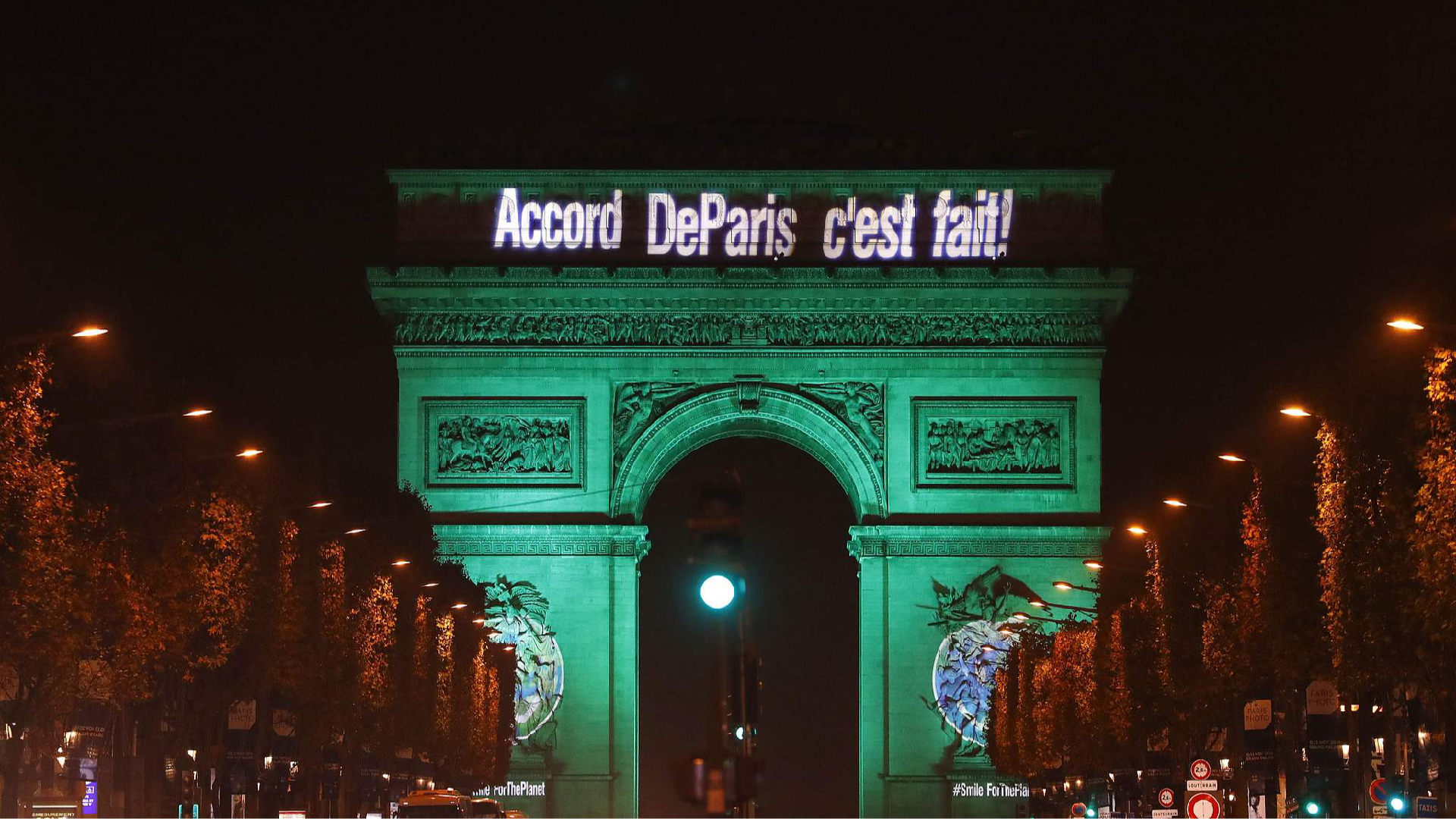
The Paris Agreement entered into force on November 4, 2016, to tackle climate change. Ten years later, the world still faces a gap between pledges and action. A 2026 report warned that current plans leave us on track for 2.6 degrees of warming, showing that many more cuts are needed.
The Paris Agreement entered into force on November 4, 2016, establishing a global framework for tackling climate change. Its nearly 200 parties committed to holding the rise in global average temperature to well below 2 degrees Celsius above pre-industrial levels while pursuing efforts to limit it to 1.5 degrees Celsius.
Ten years on, the agreement has reshaped international climate governance, but the gap between commitments and action remains substantial.
Under the agreement, countries submit and update nationally determined contributions (NDCs) every five years. A transparency framework tracks progress, while a five-yearly global stocktake assesses collective efforts.
The first global stocktake, concluded at the 28th Conference of the Parties (COP28) of the United Nations Framework Convention on Climate Change (UNFCCC), called for accelerating renewable energy deployment, improving energy efficiency and transitioning away from fossil fuels in energy systems.
China contributed to reaching the agreement during the 2015 Paris climate negotiations and has continued to promote its implementation through domestic action and international cooperation.
In September 2025, China announced its 2035 NDC targets, including reducing economy-wide net greenhouse gas emissions by 7%-10% from peak levels and increasing installed wind and solar power capacity to more than six times the 2020 level, aiming for 3,600 gigawatts.
A UNFCCC synthesis report released on October 27, 2026, examined 127 new NDCs submitted by 154 parties between January 2024 and August 2026, covering about 71% of global greenhouse gas emissions in 2019.
Some 98% of parties reported involving non-governmental stakeholders in implementing their plans. However, the new NDCs are projected to reduce global emissions by around 6% by 2035 from 2019 levels, rising to around 9% if all conditional elements are fully implemented.
The United Nations Environment Programme (UNEP), in its 2026 Emissions Gap Report released on October 13, warns that even full implementation of current NDCs would leave the world on track for 2.6 degrees Celsius of warming this century, underscoring the need for much deeper emissions cuts.
According to the Organisation for Economic Co-operation and Development, developed countries provided and mobilized $136.7 billion in climate finance for developing countries in 2024, exceeding the previous $100 billion annual goal for the third consecutive year.
However, funding remains unevenly distributed, and adaptation finance is still insufficient.
The next major test comes at COP31, scheduled for November 9-20, 2026, in Antalya, Türkiye.
A decade after the agreement took effect, translating national pledges into deeper emissions cuts, stronger climate resilience and accessible financial support remains essential to keeping its temperature goals within reach.