
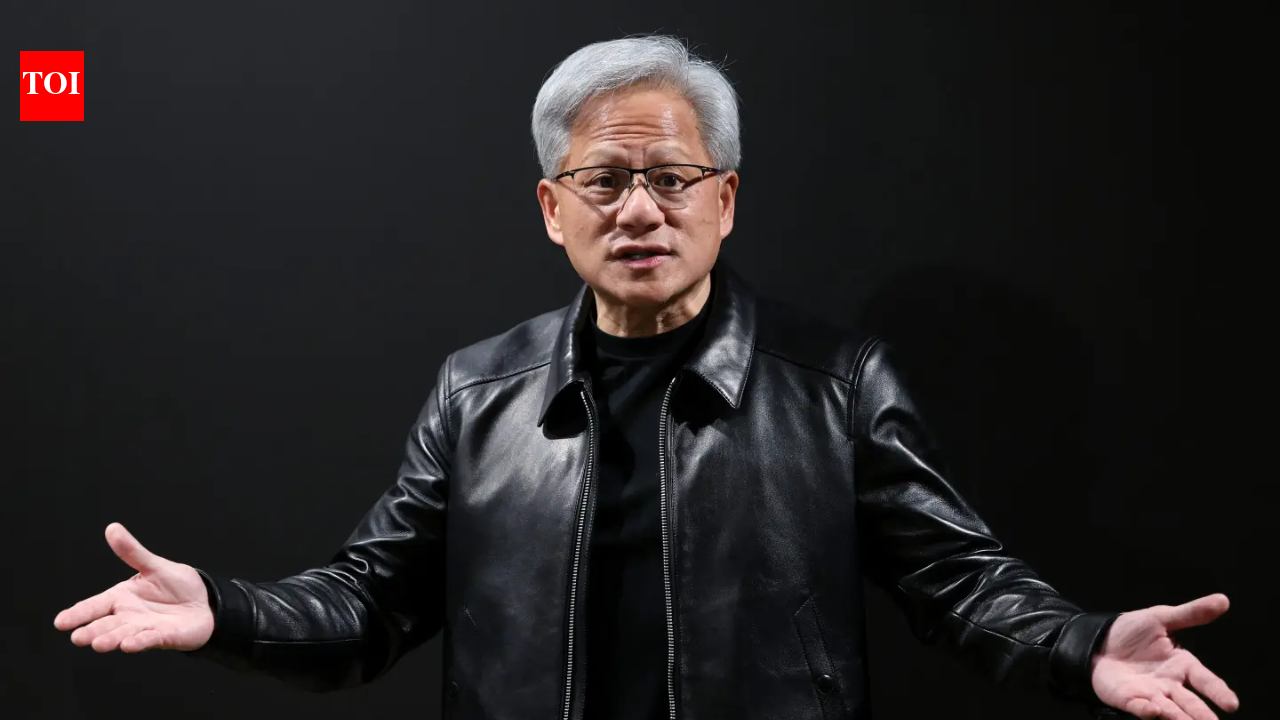
Nvidia CEO Jensen Huang gave the UW Medicine Institute for Protein Design nearly 7 million GPU hours. This grant helps scientists build the new RFD4-Proteina model. It designs proteins 10 times faster to fight pollution and diseases. David Baker said, “RFD4-Proteina will open the door to new solutions in medicine.”
Nvidia CEO Jensen Huang
The Jensen and Lori Huang Foundation, co-founded by Nvidia CEO Jensen Huang and his wife Lori recently provided the UW Medicine Institute for Protein Design (IPD) with a transformational computing grant totaling nearly 7 million GPU hours. The lab recently introduced RFD4-Proteina, an open, generative model co-developed by IPD and Nvidia. The model is claimed to design proteins up to 10 times faster and uses biomolecular reasoning to improve how well scientists can design new proteins with specific functions. Making RFD4-Proteina open will allow scientists around the world to build on its capabilities, explore more potential protein designs and move promising drug candidates into laboratory testing faster. “RFD4-Proteina will open the door to new solutions in medicine, sustainability, materials and biotechnology,” said David Baker, IPD director and professor of biochemistry at the University of Washington School of Medicine.
Nvidia CEO Jensen Huang gives AI computing power nearly 7 million GPU hours to Seattle Lab
Earlier this month, the Jensen and Lori Huang Foundation, granted totaling nearly 7 million hours of compute time, will accelerate the IPD’s development of open-source AI models for protein design. The models will enable the creation of molecules with applications in medicine, technology and sustainability. The in-kind grant provided access to graphics processing units. These specialized AI computing systems will cut algorithm learning and evaluation time from months to days. It will help IPD scientists solve complex protein-design problems in such areas as precision cancer therapeutics, durable vaccines, currently untreatable diseases and new enzymes that degrade environmental toxins like long-lasting hazardous chemicals and plastics. The compute power is provided through the Huang Foundation's partnership with CoreWeave using NVIDIA graphics processing units, or GPUs. “Most of the most important medicines of the future will come from proteins that have never existed," said Jensen Huang, co-president of the Huang Foundation. "For David Baker and the Institute for Protein Design, this path means training AI on tens of millions of molecular structures, learning from virtual experiments, and finding novel protein designs that have eluded nature. The Huang Foundation is providing researchers the compute to expand the frontiers of medicine, while ensuring that the resulting models, data, and tools are openly available to all. "