
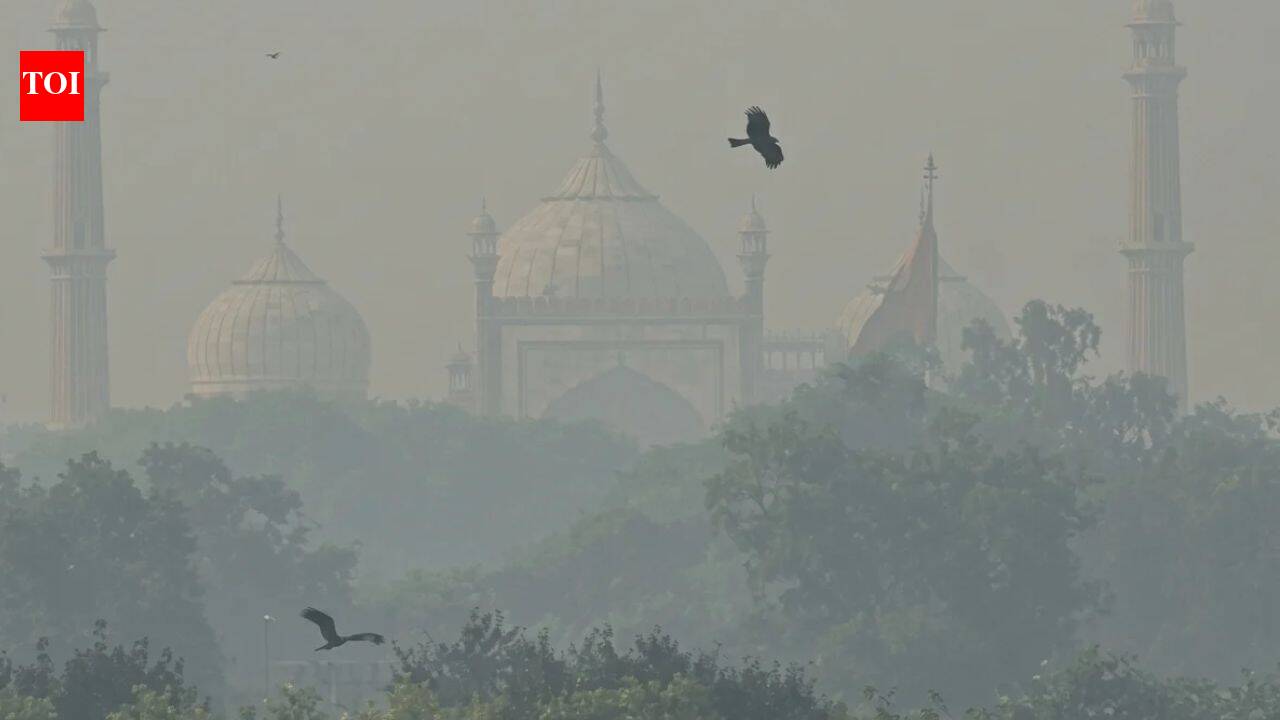
Rural areas near Delhi have 20% higher PM2.5 levels than urban belts, a new study showed. Researchers monitored 49 sites from July to Nov 2024. They found that local combustion and biomass use for cooking caused sharp pollution peaks in villages, challenging the idea that cities are always more polluted.
NEW DELHI: Rural areas in and around Delhi have consistently recorded higher levels of fine particulate matter like PM2.5 in the air than its urban belts, with the concentration of pollutants in villages about 20% higher on average, according to a new study.
Researchers from IIT Delhi and University of California, Berkeley established a network of 49 monitoring sites using sensors: 32 in rural and 17 in urban areas along a 160-km transect covering Delhi and its surrounding region. The data were monitored from July to Nov 2024, with PM2.5 concentrations at rural sites higher than those at urban sites during every month of the five-month period.The findings challenge a commonly held perception that cities in India are more polluted than villages.The study titled 'Rural outdoor air pollution exceeds urban levels in the Delhi megacity region' found that the difference was particularly pronounced during morning and evening hours. Rural sites recorded sharp pollution peaks between 5am and 8am and again between 5pm and 8pm, while those in urban areas showed relatively flatter pollution patterns throughout the day. Pollution levels in rural and urban areas were similar around midday, when atmospheric dilution - the reduction in concentration of gases, vapours or particulates as they mix with surrounding air and disperse through the atmosphere - was strongest.
According to the research, during Oct and Nov, the median morning PM2.5 peak in rural areas was 301 micrograms per cubic metre, compared with 252 g/m³ at urban sites. In the evening, the rural sites recorded a median peak of 263 g/m³ against 210 g/m³ in urban belts. Thus, pollution levels during these peak hours were typically 40-50 g/m³ higher in rural areas.Researchers attributed the higher pollution levels in villages to local combustion activities, including the use of solid fuels and biomass for cooking and making fodder. Other sources included small-scale industries, brick kilns, municipal waste burning and older vehicles.In urban areas, particularly in the capital, traffic, construction and commercial activities were identified as major local sources of particulate pollution. Domestic biomass burning was found to be less common in more affluent parts of the city, but it continued in some lower-income neighbourhoods, according to the study conducted by Sagnik Dey, Sofiya Rao and Amarendra Singh of IIT-Delhi and Joshua Apte, Mark Joseph Campmier and Maria Teresa Hernandez of University of California, Berkeley. Other authors were Saumya Singh, Nidhi Malik, Swagata Dey, Ajay Pillarisetti and Kalpana Balakrishnan.
The 17 sites monitored in urban areas are in south Delhi, east Delhi, north-west Delhi, west Delhi, north Delhi, Rohtak and Faridabad. The 32 rural sites are in north-west Delhi, Sonipat, Panipat, Rohtak, Faridabad and Jind.