
The National Green Tribunal asked the Odisha State Pollution Control Board to act against Odisha Mining Corporation over pollution at its Jajpur mines. A committee found hexavalent chromium levels 100 times above the limit. The board must submit an action-taken report before the next hearing on Jan 13, 2027.
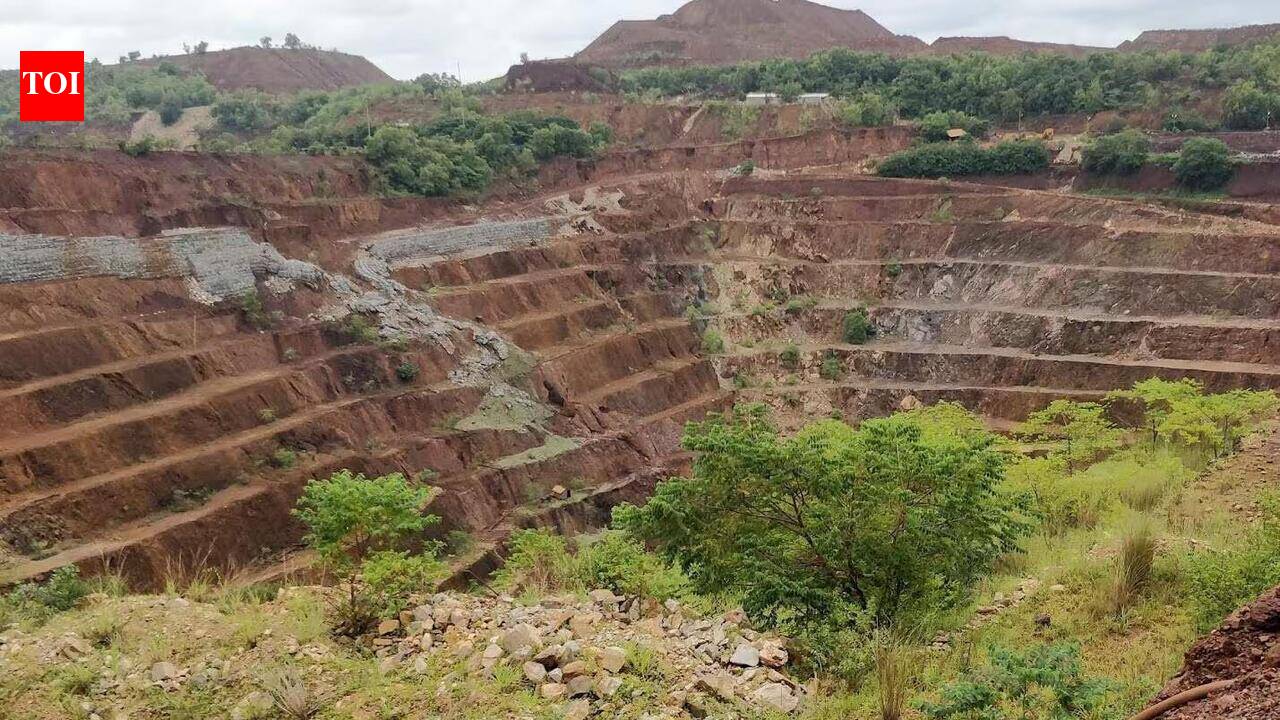
Sukinda chromite mine at Kaliapani in Jajpur
Cuttack: National Green Tribunal (NGT) has asked Odisha State Pollution Control Board (OSPCB) to initiate statutory proceedings against Odisha Mining Corporation (OMC) over alleged pollution at its two chromite mines in Jajpur district. Ahead of that, a joint committee detected hexavalent chromium, a carcinogenic substance linked to serious health risks, in effluent from one of the mines at levels over 100 times the permissible limit. The tribunal’s east zone bench, comprising judicial member Justice Arun Kumar Tyagi and expert members A Senthil Vel and Ishwar Singh, directed OSPCB to issue orders under Section 33A of the Water (Prevention and Control of Pollution) Act, 1974, and Hazardous Waste Management Rules, 2016, fixing specific timelines for compliance. It also asked the board to approach the adjudicating officer appointed under Section 15C of Environment (Protection) Act, 1986, for imposition of penalties under Section 15 if environmental violations are established. Such proceedings must follow principles of natural justice by providing an opportunity of hearing to the applicant and OMC. The tribunal directed OSPCB to submit an action-taken report before the next hearing on Jan 13, 2027. The NGT was hearing a petition filed by Kailash Chandra Nayak, who had alleged that untreated mine runoff was contaminating Damsala Nala and groundwater in the area with carcinogenic hexavalent chromium. “The order passed on Oct 30 was uploaded in website of tribunal on Tuesday (Nov 17),” said petitioner counsel Sankar Prasad Pani. The directions followed scrutiny of a NGT-formed joint committee report on the Sukarangi and South Kaliapani chromite mines in Sukinda tehsil. The committee found that effluent from the overflow of South Kaliapani mine’s tailing pond contained hexavalent chromium at 5.23 mg/l, against the prescribed discharge limit of 0.05 mg/l. It recommended that the mine immediately stop the discharge and ensure there was no unauthorised release of effluents. It also flagged improper storage of hazardous effluent treatment plant sludge and called for its disposal through an authorised treatment, storage and disposal facility.
Join conversation
Share your thoughts in the comments
Be respectful · TOI community guidelines
OMC, however, told the tribunal that there was presently no discharge from the tailing pond overflow and that supernatant water was being routed through a water treatment plant before being recirculated for processing. It also claimed that hazardous sludge was being stored in a designated shed and disposed of through an authorised agency. At Sukarangi mine, the committee asked OMC to expedite construction of a 300-kilolitre-per-hour effluent treatment plant. The corporation informed the bench that the facility would be commissioned by March 2027. OMC also cited steps to strengthen runoff management, including modification of settling ponds, installation of pumps and laying a dedicated pipeline to carry treated water to Damsala Nala.