
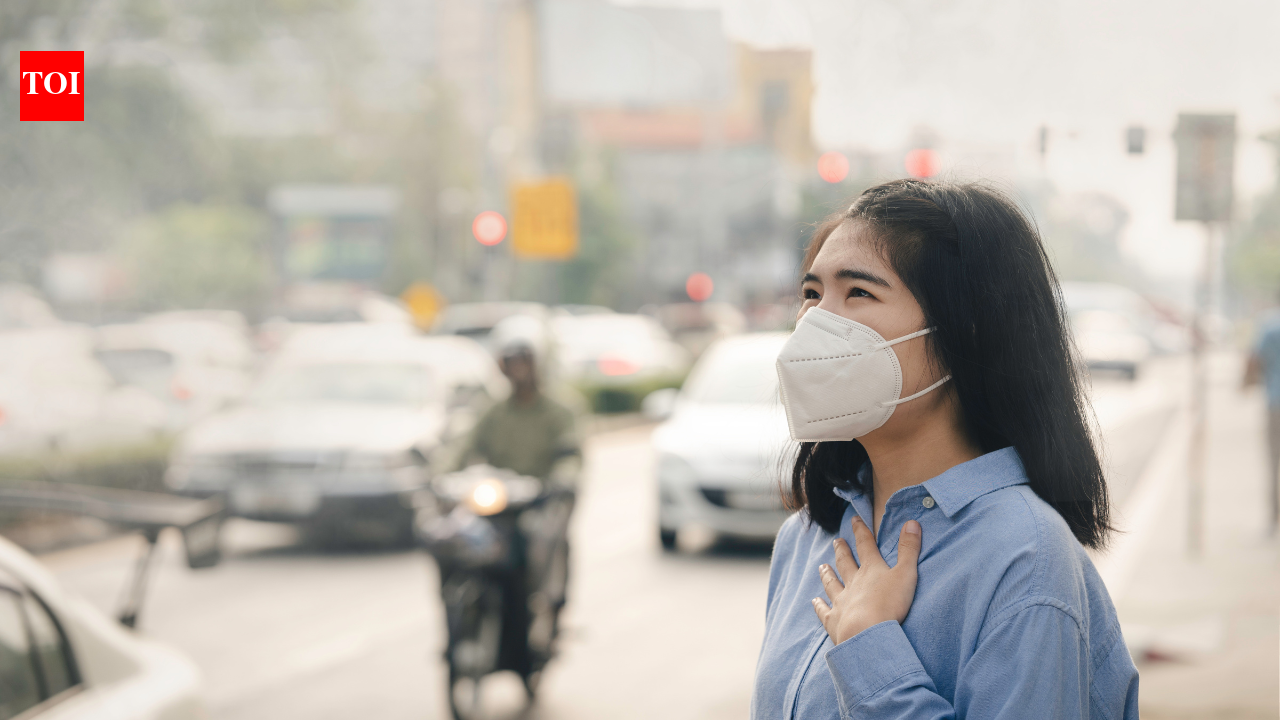
N95 masks filter 95% of airborne particles, but they do not block all toxic gases. Dr Vishakha Goyal said, "An N95 mask is rated to filter 95% or more of a specific particle size." A proper seal is vital, as gaps around the face let in harmful air.
When air quality drops, one of the first things people reach for is an N95 mask. From crowded traffic signals to morning walks, these masks have become a familiar sight in cities struggling with pollution. But wearing one does not automatically mean the lungs are safe.
Air pollution is a mixture of tiny particles and harmful gases. While an N95 mask can filter a significant amount of particulate pollution, it cannot block every pollutant. So, how much protection does it actually offer?
Yes, an appropriately fitted N95 mask can offer meaningful protection against fine particulate matter. These particles, particularly PM2.5, are small enough to travel deep into the lungs.
According to the US National Institute for Occupational Safety and Health (NIOSH), N95 respirators are designed to filter at least 95% of airborne particles under standard testing conditions.
Dr Vishakha Goyal, Senior Consultant, Internal Medicine, Yashoda Medicity, explained, "An N95 mask is rated to filter 95% or more of a specific particle size in a standard testing setting and can provide a meaningful degree of protection against inhaling harmful microscopic particulates such as PM2.5."
This makes it a useful protective measure during periods of heavy pollution.
An N95 mask is only as effective as its seal. If contaminated air enters through gaps around the nose, cheeks or chin, its protection decreases.
Dr Goyal explained that the mask must cover both the nose and mouth completely. The nose clip should be adjusted properly to minimise gaps.
People with facial hair may also struggle to achieve a proper seal. Simply wearing an N95 loosely, like an ordinary face covering, does not provide the same protection.
This is an important limitation that often gets overlooked.
N95 respirators filter airborne particles, but they do not protect against harmful gases such as carbon monoxide, ammonia, nitrogen oxides or ozone.
Therefore, even when someone wears an N95 mask outdoors, they may still inhale certain gaseous pollutants.
An N95 mask is not a complete shield against air pollution. It addresses particulate exposure, not every threat present in polluted air.
An N95 mask should be part of a larger pollution-protection routine. Dr Goyal recommended taking additional precautions, including:
Check the AQI before planning outdoor activities.
Avoid outdoor workouts during periods of severe pollution.
Keep windows shut when outdoor air quality is poor.
Use appropriate air filtration to improve indoor air quality.
Wear a properly fitted N95 mask when outdoor exposure cannot be avoided.
India's Central Pollution Control Board (CPCB) also provides AQI health advice. Its guidelines recommend avoiding outdoor physical activity for everyone when AQI reaches the severe category (301–500).
Not entirely. An N95 mask can reduce exposure to harmful particles, but it cannot make heavily polluted air completely safe.
As Dr Goyal explained, "An N95 mask is one important line of defense, but it is not enough to be protected against air pollution. It is just as critical to lower your exposure and take preventative action for your long term respiratory health."