
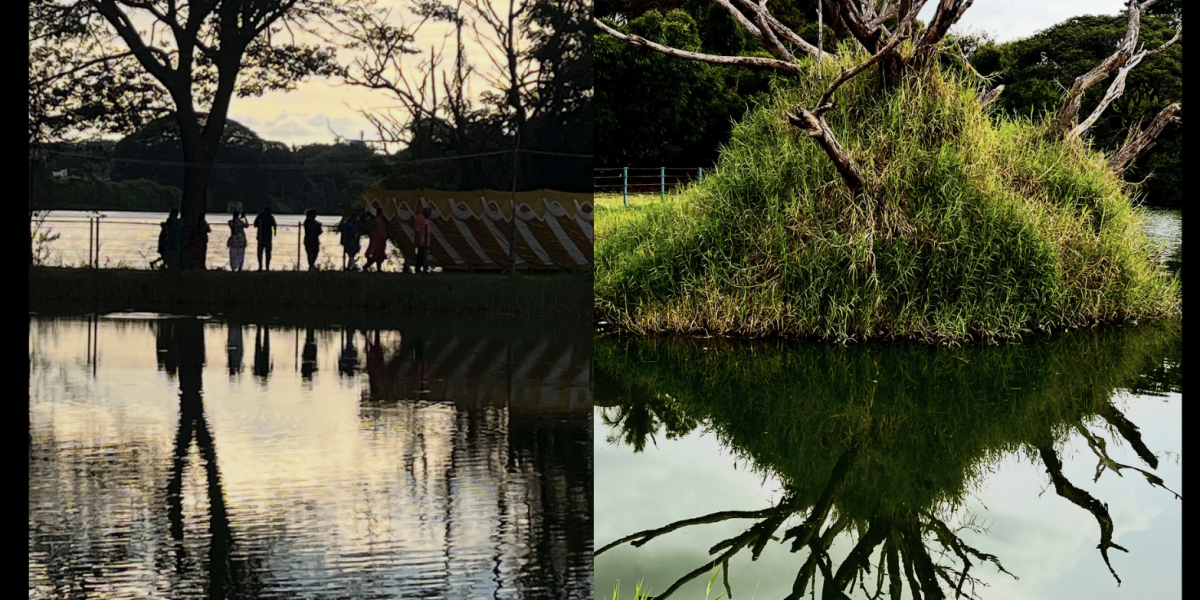
Mysuru is facing record heat as temperatures reached 34.2°C by September 2026. The city, once known for its cool climate, now struggles with rising heat and disappearing lakes. These historic water bodies, built by Wadiyar rulers to manage rain, are vital for the city but are currently under severe threat.
This is my fifth visit to Mysuru in three years, and each time I've stayed about a month or more. I've always fallen for the lush greenery and the gentle weather. For eight or nine months of the year, this city has easily one of the best climates in the country.This time, though, something is off. September and October have been unusually hot, and every conversation in Mysuru, whether with the autorickshaw driver, shop keepers, or the barista and coffee gulpers at cafes or a neighbour, opens with the same refrain: "No proper rain this year, and have you seen the heat?" The locals aren't exaggerating.
Environmentalists point to a powerful Super El Niño earlier this year, which delayed the pre-monsoon showers and trapped intense solar radiation under clear skies. The result was an unprecedented April heatwave, with temperatures touching a gruelling 40°C.The heat didn't back off when the rains were supposed to take over, either. By September 2026, Mysuru had logged an all-time high of 34.2°C, nearly 5°C above the seasonal average.Naturally, this sent me digging. What made this city a paradise for so many, and what is going wrong that could make its future unsustainable?My queries began with the lakes, the city's weather conditioner, and their link to Chamundi Hill.
I learnt that Mysuru sits 770 metres above sea level on the southern Deccan Plateau, and it used to be smugly cooler than the plains around it. To the southeast stands Chamundi Hill, a hulking granite lump of about 1,060 metres. The land rolls gently, the rock below is hard, and the shallow red soil leaks water like a tired bucket. Rain had to be caught, or it was gone.Rain falling on Chamundi Hill ran down its slopes into natural dips. Across those dips, the Wadiyar rulers raised bunds (earthen embankments) to make tanks, then linked the tanks with channels called Raja Kaluves, or King's canals.
Think of it as the city's original plumbing, minus the plumber.When one lake filled, the extra water politely spilled into the next. Kukkarahalli, Karanji, Lingambudhi, Dalvoy, and Hebbal formed a neat, gravity-powered chain that also prevented the city from flooding. No pumps, no tenders, no consultants, just physics and good planning. Today's planners could take notes, preferably before approving the next layout. Lingambudhi was dug in 1828, and Kukkarahalli joined the lineup in 1864 to keep the city's taps running.And the lakes were the ultimate multitaskers. They stored rainwater for the dry months and topped up groundwater so wells and borewells stayed alive.
They soaked up floods, cooled the air by evaporation, and housed birds, fish and plants. The city's lakes provide most democratic public service: walkers circle them to atone for last night's dosas, joggers circle them to prove the walkers wrong, yogis strike their poses at dawn while pretending not to watch the joggers, lovers sit on the parapets and stairs leading to lakes, and bird photographers lurk in with lenses waiting for a Painted Stork and hornbills to pose for their A study of the Mysuru Local Planning District (507 sq km) found that built-up area grew from about 80.71 sq km (15.91%) in 2000 to about 226.72 sq km (44.70%) in 2016.
Over the same period, water bodies shrank from 12.84 sq km (2.53%) to 9.42 sq km (1.86%). Imagine losing a quarter of your wallet and calling it a rounding error. After 2016, the trail goes cold. Google and every AI-powered search engine I tried came up empty. The lakes kept changing and the concrete kept spreading, but the measurements went missing from the public domain.Nobody in Mysuru woke up and announced, "Let us kill the lakes today." It was a slow, well-funded group project with some very enthusiastic contributors. Meet the cast.The encroachment brigade keeps creeping buildings, roads and layouts onto lake beds, shores and old channels, many of which are now blocked, narrowed or lost, though water, being stubborn, still follows its old routes.Mall forecourts, wide roads and the driveways of designer hotels are paved over so completely that rain simply bounces off and races down the nearest drain instead of seeping into the ground, steadily cutting groundwater recharge.
The rain arrives and leaves like a guest who finds the party far too fancy. Sewage, the real killer, sends untreated waste and rubbish into the lakes, because apparently a lake is also a very large bin, and the extra nutrients feed weeds and algae that guzzle oxygen and leave fish and birds gasping. Somewhere, a cafe selling "Save the Planet" tote bags is quite possibly draining into a lake doing the opposite. Finally, silt, the quiet finisher, arrives with construction debris and soil that make the lakes shallower, so a shallow lake floods sooner and dries faster.Put it all together and you get a masterclass in dismantling a century-old water system while enjoying a flat white.Just when the lakes could use a break, climate change shows up.
Rain now comes in short, furious bursts followed by long dry spells. Polite seasonal showers are history. The sky now believes in drama.The bursts hit channels already squeezed by buildings. Bunds and silt traps get damaged. Then the dry spell arrives. Higher temperatures speed up evaporation, little clean water flows in, and what remains turns warm and stagnant. Weeds and algae throw a party, and nobody else is invited. Oxygen drops, a problem pollution had already started. The resident and migratory birds of Kukkarahalli find themselves in a very bad hotel with no vacancy and no oxygen.Birds on a concrete bund at a lake in Mysuru.
Photo: Kishore Kumar Singh.Let's be fair: the lakes cannot change the big regional pattern, like when the monsoon shows up, but they shape the weather you actually feel on your skin. As they fade, the city gets hotter. With less water and greenery, concrete and asphalt trap heat, bringing scorching afternoons, nights that forget to cool down, and an evening breeze that is quietly looking for a new address. Groundwater suffers too.A friend who runs Farmers House, a shop selling farm products, now buys tank water to irrigate his plants because the groundwater has dropped sharply. Less recharge means borewells dig deeper and run dry sooner, and the water tanker becomes the city's most popular visitor.
The air turns drier and dustier as well, since less moisture and greenery mean more dust in the dry season, and your fancy new sofa will thank you for the extra upholstery. And finally, health and nature take a hit. Migratory birds lose their resting places and quietly book elsewhere. During a visit to Kukarahalli this year, the birds seem to be having assembled to find ways to survive in this rain deficient year in Mysore.District-wide, migratory birds have fallen from nearly one lakh to 40,000, says A. Shivaprakash of the Mysuru Nature Group, who has monitored winter arrivals for over two decades.
He blames lake encroachment. Birds now crowd into a few lakes like Hadinaru and Kaggalipura. At Lingambudhi, 22,000 migratory birds gathered in 1995. Altering the sanctuary to suit human needs has since threatened their habitat.Kukkarahalli is the best-documented case. Naturalists report that 40 bird species have stopped visiting. Another 66 are declining or missing. The roll call of absentees includes the Lesser Adjutant, Egyptian Vulture, White-rumped Vulture, Eurasian Curlew, Black-winged Kite and Jungle Bush Quail. Grassland and grain-eating birds like the Red Avadavat vanished as their habitat shrank.
A conservation report found that species richness at the lake fell by 41% between 1998 and 2006-07, a period that included its restoration, suggesting that redevelopment, and not just encroachment, has contributed to the decline.The lakes are the city's air conditioner and water bank rolled into one. We have been treating them like a vacant lot with potential.The fix is not complicated. It is not cheap or glamorous either, which may be why it keeps getting postponed. Clear the channels. Stop the encroachment. Keep sewage out. Let rain soak back into the ground.Do that, and Mysuru will manage to keep its famously pleasant climate, and its bragging rights.
Skip it, and the city will have plenty of malls, cafes and boutique hotels, and nothing cool left to enjoy inside or outside them.Kishore Kumar Singh recently retired from the ILO's Regional Office for Arab States in Beirut after serving several international development organisations.