
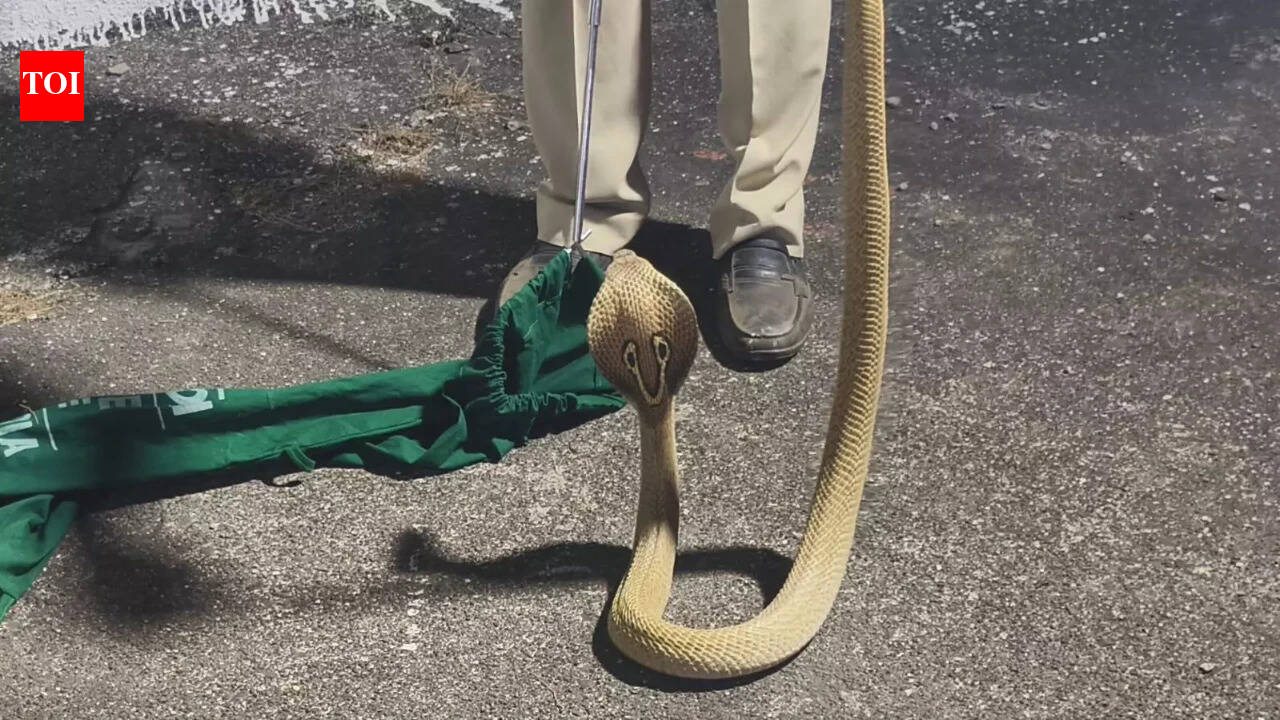
Madhya Pradesh plans to regulate snake rescues by certifying rescuers and launching the SHIVAA app to track reptiles. Only those who pass exams can handle snakes under this new system. The initiative, discussed during a training programme on Wednesday, aims to reduce human-snake conflict and ensure safe animal releases.
BHOPAL: Madhya Pradesh is planning to bring snake rescue operations under a regulated system, with mandatory certification for rescuers, a dedicated mobile application to track reptiles from rescue to release, and transit centres for their temporary care.
Under the proposed system, only individuals who clear written, oral and practical examinations will be authorised to rescue snakes.Their details will be registered on a digital platform, SHIVAA (Snake Human Interface Vigilance Awareness and Action), being developed by the forest department.The initiative aims to curb unauthorised rescue attempts, reduce human-snake conflict and prevent unnecessary deaths of reptiles. It also seeks to establish a network of trained rescuers across the state, with standardised procedures for handling, transporting and releasing snakes into suitable natural habitats.The plan was outlined during a three-day state-level snake rescue training programme inaugurated at Van Bhawan in Bhopal on Wednesday.The November 18-20 programme is being attended by forest personnel, Home Guards, State Disaster Emergency Response Force (SDERF) personnel and members of the public.
The proposed SHIVAA application will allow residents to report snake sightings along with their location. Verified rescuers in the vicinity will receive alerts and respond according to prescribed safety protocols.The application will also record where a rescued snake was released and whether the prescribed procedures were followed, enabling the forest department to monitor the entire operation.The department is simultaneously preparing a standard operating procedure (SOP) covering the complete rescue chain, from receiving an alert and identifying the species to handling, first aid, transportation and release.It will also specify precautions to protect rescuers and residents, prevent unnecessary stress or injury to snakes, manage crowds and maintain records of rescue operations.The forest department is also considering setting up Snake Transit Centres where rescued reptiles can be kept temporarily before being released into suitable habitats. A strategy is being prepared to equip authorised rescuers with rescue kits, transportation facilities and other necessary equipment.The initiative follows a committee meeting held on August 19 under the chairmanship of principal chief conservator of forests (wildlife) and chief wildlife warden Dr Samita Rajora.The committee discussed the selection and training of rescuers, preparation of SOPs, transit centres and development of the SHIVAA application.A broader snake conservation project is also being prepared with the involvement of the Snake Research Institute, Ujjain, and the Wildlife Institute of India (WII), Dehradun.The training programme was inaugurated by principal chief conservator of forests and head of forest force Shubharanjan Sen, Dr Rajora and PCCF (development) Basavrao Annegiri.The first day's sessions included a presentation by Mayank Bagchi, project manager at MANAS and an expert associated with WII, on snake diversity and conservation in Madhya Pradesh.A study titled The Diversity and Population Status of Snakes in Selected Protected Areas of Madhya Pradesh covered selected areas of Gandhi Sagar, Kanha, Satpura and Panna tiger reserves, besides Amarkantak, and identified 91 snake species.The presentation stated that 44 snake species found in Madhya Pradesh are listed under the Wildlife (Protection) Act.Experts stressed that conservation efforts must extend beyond the four major venomous species, commonly known as the Big Four, to include pythons, rat snakes and other non-venomous species.Special attention was recommended for the Shield-tailed Snake (Uropeltis) found in Amarkantak and Salazar's pit viper recorded in the Kanha region.Experts also called for species-wise checklists, photographic documentation and long-term monitoring of rare and endangered species.Around 43 participants attended the first day of the programme.Experts provided training in identifying venomous and non-venomous snakes, understanding their behaviour and habitats, safe handling techniques and precautions during rescue operations.
Sessions also covered cobras, kraits, Russell's vipers and saw-scaled vipers, along with the ecological role of snakes and the need to dispel myths surrounding them.The forest department is also working towards a coordinated response involving the forest and health departments, Home Guards, SDERF and NGOs engaged in snake conservation.The proposed mechanism will define responsibilities during emergencies, including timely medical treatment in snakebite cases and safe rescue operations.Officials said the broader objective was to promote coexistence between humans and wildlife. Untrained attempts to catch snakes without safety equipment or technical knowledge can put both people and reptiles at risk.
The proposed certification and monitoring system is intended to ensure that snake rescue operations are carried out by trained personnel under a uniform and accountable mechanism.