
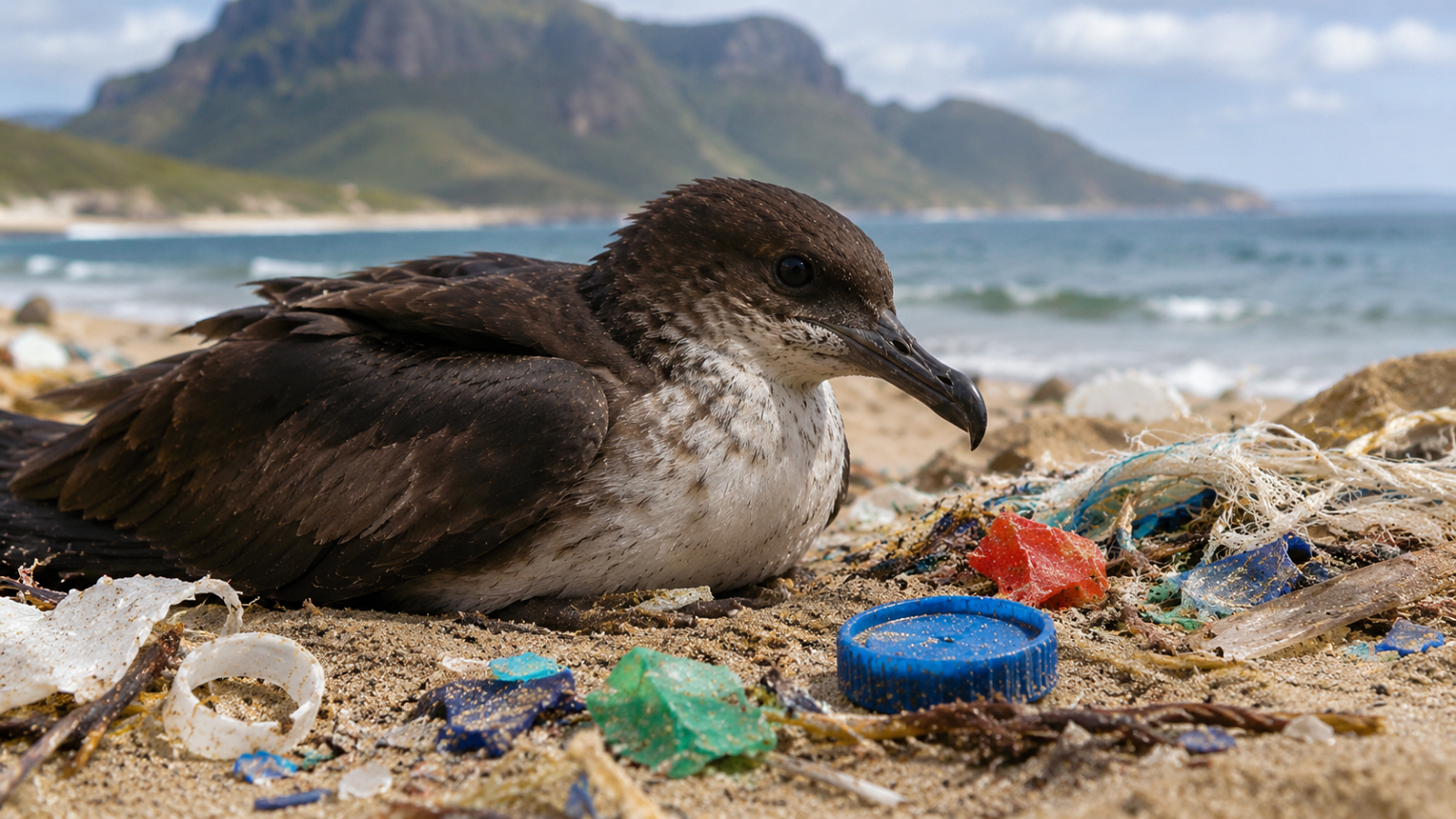
Researchers on Australia's Lord Howe Island found that more than 75 per cent of seabirds have plastic in their stomachs. In 2025, one bird had 894 pieces inside. These birds often mistake waste for food, leaving no room for actual meals. Many are now starving despite having full stomachs.
Researchers studying seabirds on Australia's Lord Howe Island found one bird with 894 pieces of plastic in its body. With stomachs packed with plastic waste, these birds are struggling to find room for actual food.
Imagine being so full that you have no room left to eat, even when you're hungry. This is the disturbing reality for thousands of seabirds living on Australia's Lord Howe Island, where researchers have found birds with stomachs packed with hundreds of pieces of plastic. The problem has become so severe that some are effectively starving to death despite having full stomachs.
According to a recent study published in the journal Earth's Futures, the amount of plastic these seabirds consume has surged in recent years, raising fresh concerns about the growing impact of ocean pollution on marine wildlife.
Seabirds found with hundreds of plastic pieces in their stomachs
The research focused on sable shearwaters, sometimes called flesh-footed shearwaters, found on Australia's Lord Howe Island. Researchers discovered that more than 75 per cent of these birds had plastic in their stomachs.
The numbers are particularly alarming. In 2023, researchers found a bird with 403 pieces of plastic inside its body, the highest number they had recorded at the time. However, the record was broken in 2025, when researchers found another bird with 894 pieces.
The plastic found inside these birds includes everyday waste such as bottle caps, balloon clips, toothbrush heads, plastic straws, food packaging and tiny plastic pellets known as nurdles.
Why are these birds eating so much plastic?
Sable shearwaters spend more than 90 per cent of their lives at sea, where food can be scarce. They primarily feed on small fish and squid and have evolved to eat whatever they can find.
Marine scientist Jennifer Lavers, who coordinates the Adrift Lab and has studied these birds, described them as the opposite of picky eaters. Unfortunately, this feeding behaviour makes them particularly vulnerable in oceans increasingly contaminated with plastic.
With plastic waste entering marine ecosystems, the birds often mistake it for food and swallow it along with their natural diet.
How does plastic pollution cause them to starve?
The problem goes beyond simply having plastic inside their stomachs. Researchers say some birds have so much plastic in their digestive systems that there is barely any room left for actual food.
This can leave them effectively starving, even when their stomachs are full. The plastic buildup can also physically compress their internal organs, displacing structures such as the heart and liver.
The research team has been monitoring these birds for 15 years, examining deceased birds and studying plastic inside living ones to understand the scale of the problem.
Climate change is making matters worse
Plastic pollution isn't the only threat these seabirds face. Rising ocean temperatures are pushing the fish and squid they depend on into deeper waters, making them harder to catch.
Extreme weather events, including flooding, can also carry more plastic into marine environments, worsening the problem.
Although sable shearwaters are globally classified as Near Threatened, researchers warn that the situation on Lord Howe Island is particularly concerning. Scientists believe reducing plastic production and preventing waste from entering oceans will require coordinated action across countries, including better waste management systems.
Explore more captivating stories about pets and animals here, and make us your daily stop for the latest from the animal kingdom.