
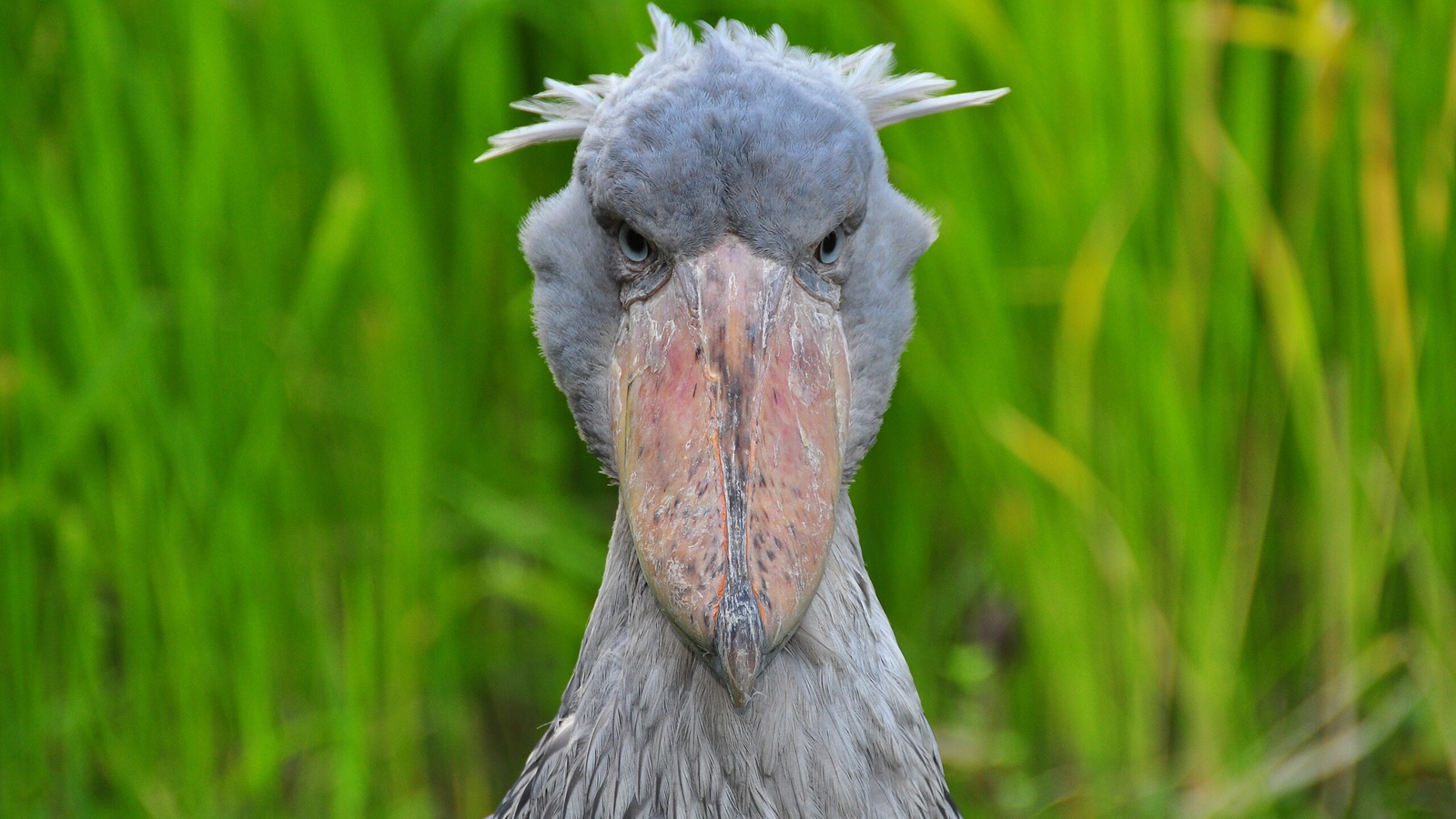
The shoebill is a rare bird that hunts baby crocodiles in African swamps. Standing five feet tall, this prehistoric-looking creature uses its massive bill to catch prey. With fewer than 5,300 individuals left, the IUCN lists them as Vulnerable. These birds face many threats, including habitat loss and illegal trade.
The shoebill isn't just some rare bird tucked away in an African swamp. It's a reminder of how wild, strange, and beautiful nature can be when left alone
Imagine a pelican and a dinosaur had a quiet, moody child. That's the shoebill (Balaeniceps rex) for you. Towering at nearly five feet tall, with a beak that looks carved from driftwood, this bird has something ancient, almost haunting, about it.
The shoebill's most striking feature is, undoubtedly, its massive bill -- broad and curved at the tip like a clog -- and strong enough to grip wriggling catfish and even young crocodiles.
These birds are cloaked in blue-grey feathers, with a kind of regal posture that makes them seem more like swamp guardians than waterbirds. Fully grown, they can span 8 feet from wingtip to wingtip -- almost as wide as a small car.
Where are they found?
Shoebills are notoriously elusive. They dwell in dense freshwater swamps and marshes across South Sudan, Uganda, Rwanda, Zambia, and parts of the Democratic Republic of Congo. These areas are usually hard to reach, which adds to the shoebill's air of mystery.
One of the best-known spots to see them is Mabamba Swamp in Uganda, where eco-tourism has become a lifeline for both locals and shoebill conservation.
How they hunt
Shoebills are slow movers. They stand completely still for minutes -- sometimes longer -- before lunging at their prey with terrifying speed. This method, known as "collapse hunting," often ends with them swallowing large fish whole. Their diet mostly includes lungfish, tilapia, eels, and the occasional baby crocodile or frog.
Love, eggs, and rivalry
Shoebills are usually solitary, but during breeding season, they team up and build massive nests from reeds and grasses. The female typically lays one to three eggs, but often only one chick survives. The older chick may push out the weaker sibling -- an example of "siblicide" that sounds brutal but is fairly common in the bird world.
Their young take about 3 to 4 months to fledge, and shoebills can live for 35 years in the wild, sometimes longer in protected environments.
The IUCN lists shoebills as Vulnerable, with fewer than 5,300 mature individuals left in the wild. Wetland destruction, illegal wildlife trade, and climate change are big threats. Sadly, some are even captured and sold on the black market as exotic pets, fetching tens of thousands of dollars.
Conservationists and local communities are working together -- through awareness programmes, sustainable tourism, and protected reserves -- to give shoebills a fighting chance.
Explore more captivating stories about pets and animals here, and make us your daily stop for the latest from the animal kingdom.