
Migratory birds arrived early at the Ujani backwaters this year due to low rainfall. Researchers said, "Lesser rainfall and a shortage of water in the smaller wetlands around Ujani could be bringing more migratory birds to the backwaters." Many species like the Osprey and Western Marsh Harrier got spotted early.
PUNE: Lesser rainfall in parts of Maharashtra and a shortage of water in smaller wetlands around the Ujani reservoir may have contributed to the early arrival of migratory birds at the Ujani backwaters, located along the border between Pune and Solapur districts; according to researchers. The Ujani reservoir has recorded 82.06% live storage this year as per the water resources department.
Researchers from the Wildlife Research and Conservation Society (WRCS), which has been monitoring the wetland in association with the Maharashtra forest department, have recorded early sightings of several migratory bird species this year at Ujani, which serves as an important habitat for waterbirds travelling to India for the winter. Osprey, Western Marsh Harrier, Common Greenshank and Spotted Redshank are among the species of birds spotted early this year. Researchers have also recorded European Rollers and Blue-cheeked bee-eaters in good numbers; both being passage migrants that stop at suitable habitats while travelling between their breeding and non-breeding grounds.
Prithviraj Sarnobat, research biologist at WRCS, said that the shortage of water in smaller wetlands around Ujani could be drawing more migratory birds to the reservoir. "Lesser rainfall and a shortage of water in the smaller wetlands around Ujani could be bringing more migratory birds to the backwaters. We are observing a similar pattern this year, with several species beginning to arrive early," Sarnobat said.
Jayant Kulkarni, head of WRCS, said that the organisation has been working with the Maharashtra forest department on the Ujani wetland project since 2023. The initiative aims to monitor waterbirds and prepare a proposal for designating Ujani as a Ramsar site or a wetland of international importance. "As part of the project, waterbird monitoring is carried out during every season to document bird activity and changes in the wetland ecosystem," Kulkarni said.
Every winter, millions of migratory birds, including Bar-headed Geese, Northern Pintails, Eurasian Wigeons, Black-tailed Godwits, Ruffs, flamingos, eagles and harriers, fly thousands of kilometres from their breeding grounds in Siberia, central Asia, Mongolia and northern Europe to wetlands across India. Many follow the Central Asian flyway, a major migratory route connecting breeding and wintering grounds across the region. Wetlands such as the Ujani reservoir provide important feeding and resting grounds for these birds. Shallow shorelines and exposed mudflats offer access to fish, aquatic invertebrates and other food sources. Changes in rainfall and water levels can alter the availability of these habitats and influence when these migratory birds congregate.
Years later, White Stork returns to Nandur Madhyameshwar
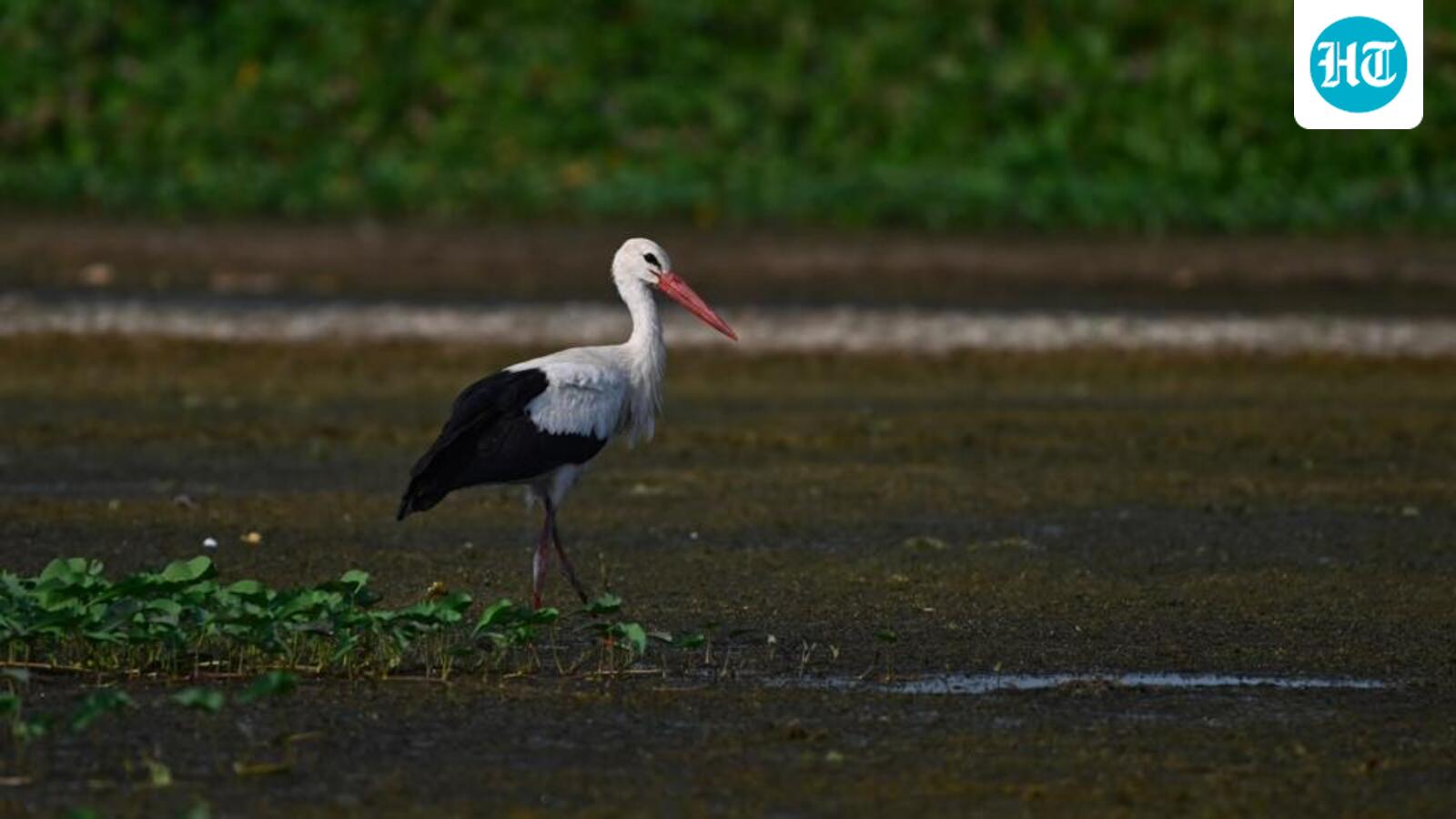
A White Stork (Ciconia ciconia) has arrived at the Nandur Madhyameshwar wildlife sanctuary in Nashik after a gap of several years, according to Hiralal Chaudhary, forest range officer at the sanctuary. The sighting was highlighted on October 10, World Migratory Bird Day, drawing attention to the long-distance journeys undertaken by migratory birds to escape harsh winters at their breeding grounds.
Native to Europe, northern Africa and parts of central Asia, the White Stork flies thousands of kilometres to reach warmer regions. It has a predominantly white body; black wing tips; a long, pointed red bill; and long red legs. The bird can stand about three to four feet tall, with an impressive wingspan. Rather than constantly flapping its wings, the White Stork often relies on rising columns of warm air, known as thermal currents, to gain altitude and glide over long distances while conserving energy. The species is also known for its distinctive style of communication wherein it produces a clattering sound by rapidly snapping its bill (bill-clattering). Its diet includes frogs, small fish, insects and rodents, making it an important part of wetland and agricultural ecosystems. The return of the White Stork to Nandur Madhyameshwar highlights the importance of protecting wetlands that serve as feeding and resting grounds for migratory birds travelling across continents.