
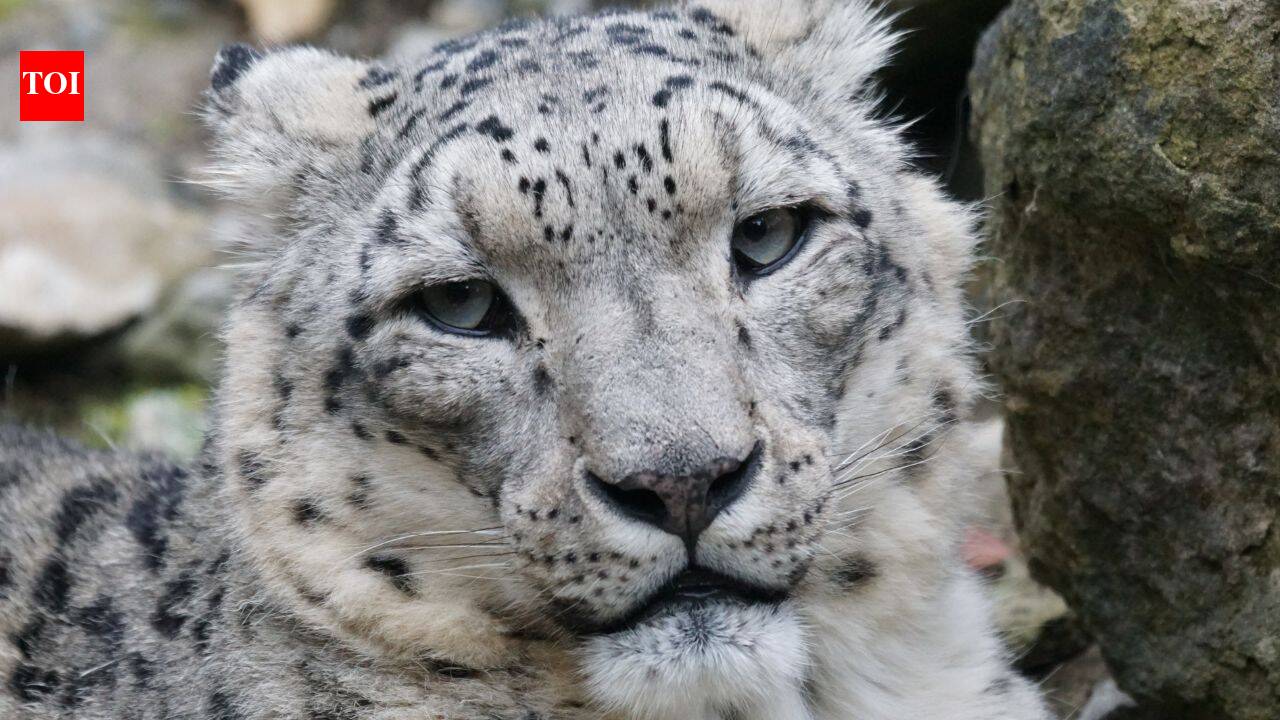
Ladakh's snow leopard safari ranked fourth on the Wildlife Experience Index with 85.5 points. This rare encounter is now gaining global fame for its exclusivity. The government also started India’s first High-Altitude Wildlife Safari in Ladakh to help local communities and protect animals while visitors explore routes in open-back vehicles.
In the cold desert of Ladakh, where greenery struggles to survive and only a few wildlife species have adapted to the harsh conditions, snow leopards adorn the landscape with their grace and magnificence. Among the big cats found in India, snow leopards are the most intriguing. They are also known as the "Ghost of the Mountains" because they are a rare sight to behold. Their elusive nature and the difficulty of spotting them are bringing them international recognition today.
Ladakh's snow leopard safari has been ranked fourth by the Wildlife Experience Index. The index, compiled by luxury travel company Bailey Robinson, ranks 30 of the world's most extraordinary wildlife encounters. Ladakh's snow leopard tracking experience scored 85.5 out of 100 points based on six factors, including remoteness, conservation importance and exclusivity. It ranked behind mountain gorilla trekking in Rwanda and Uganda, emperor penguin expeditions in Antarctica, and saiga antelope tracking in Kazakhstan.Adding to the excitement, the government has launched India's first-ever "High-Altitude Wildlife Safari" in Ladakh, which provides a rare opportunity for people to witness Ladakh's distinctive wildlife.
The initiative aims to partner with local communities to make the experience inclusive and authentic. The scheme also aims to reduce illegal off-roading and minimise disturbance to animals. Initially, the safari is set to operate in identified areas, including Rumbak, Shang and Uley. Visitors can explore designated wildlife routes in specially designed open-back vehicles accompanied by trained local drivers and wildlife guides.
Where to Go for a Snow Leopard Safari in India
* Hemis National Park, Ladakh: Hemis is one of India's best-known spots to witness a snow leopard. Rumbak Valley, within the national park, is especially popular for spotting the majestic big cat in its natural habitat.
* Ulley Valley, Ladakh: The valley is known for its snow leopard tracking camps, where experienced local spotters help travellers get a chance to see these elusive animals. Ulley is another favourite among wildlife photographers.
* Rumbak Valley, Ladakh: Located within Hemis National Park, Rumbak is known for snow leopard safaris that are usually operated by local guides.
* Kibber Wildlife Sanctuary, Spiti Valley, Himachal Pradesh: Kibber is one of India's prominent snow leopard tracking bases outside Ladakh. It is surrounded by dramatic cold-desert landscapes, as Spiti Valley is part of the Trans-Himalayan cold-desert region, like Ladakh.
* Upper Spiti Valley, Himachal Pradesh: Spiti's remote villages offer rare opportunities to track snow leopards. The high-altitude landscape around the valley makes the experience feel otherworldly. The experience is as much about patience and exploration as it is about seeing the big cat.
* Changthang Wildlife Sanctuary, Ladakh: Changthang is home to distinctive Himalayan wildlife, including snow leopards. Other wildlife found in the sanctuary includes the wild yak, Tibetan antelope (chiru), Tibetan argali, bharal (blue sheep) and Tibetan gazelle.
* Pin Valley National Park, Himachal Pradesh: Pin Valley provides snow leopard habitat amid stark mountains and snow-covered terrain. It is set in the rugged Trans-Himalayan region, which forms part of the snow leopard's natural habitat. However, access can be challenging in winter, so travellers should plan with experienced local operators.
More than a snow leopard sighting
Although the snow leopard is the headline attraction, Ladakh's wildlife story is much bigger. According to the Union Territory administration, the region supports more than 38 mammal species, 340 bird species and approximately 1,800 vascular plant species.
The region's ecological importance is reflected in India's first nationwide Snow Leopard Population Assessment, conducted between 2019 and 2023. Released in January 2024, the assessment estimated 718 snow leopards across India. This included 477 in Ladakh, which has the highest estimated population among the surveyed regions.These figures are more than impressive statistics. They highlight why protecting Ladakh's rugged terrain, prey species and fragile mountain ecosystems is so important.
How to plan your snow leopard adventure
If you're considering this experience, winter is the season to research first. November through March is a useful general window for tracking, although exact conditions and sightings vary. Spend time acclimatising to the altitude before heading out, dress in multiple warm layers, and carry suitable footwear, gloves and binoculars.
Choose experienced local guides or authorised safari operators, follow designated routes, and never pressure a guide to approach an animal for a better photograph. Before booking the newly launched safari, confirm current availability, costs, operating dates and any altitude or weather restrictions directly with the relevant authorities or operator.Above all, travel with patience. A snow leopard may reveal itself for only a few seconds, or it may not appear at all. Neither outcome changes the beauty of watching sunlight spill across a Himalayan ridge while the valley slowly wakes up.