
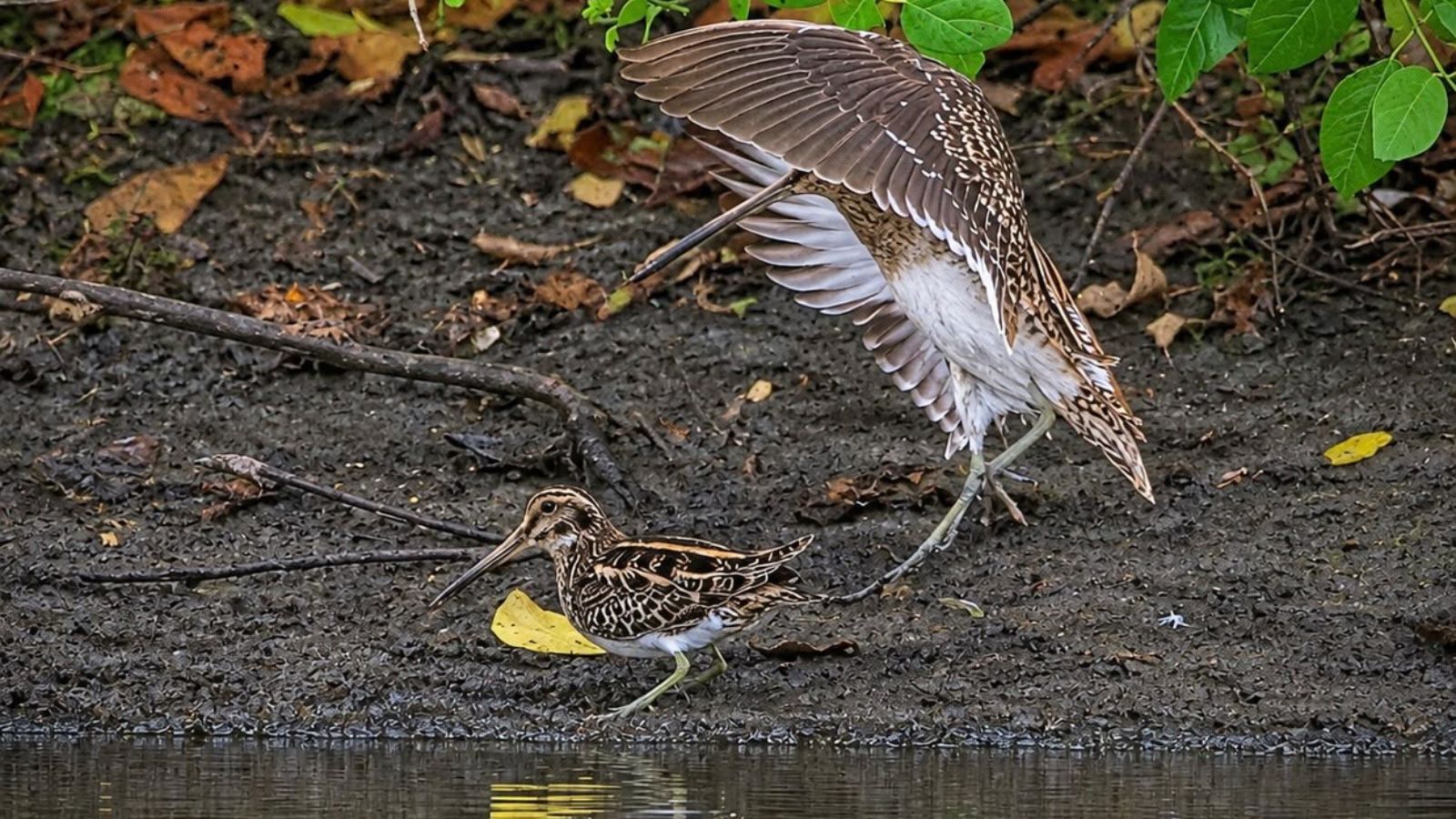
Rare birds like the Jack Snipe and Water Rail are flocking to Mumbai wetlands this season. Experts said low rainfall in Kutch forced these migrants to shift their usual paths southward. "If tny disturbance, the Jack Snipes take cover in the reeds," noted ornithologist Raju Kasambe about them.
Birders spot Jack Snipe, Water Rail, shrikes, and a rare Laggar falcon across MMR wetlands as low Kutch rain shifts migration paths
Migration season has descended upon the Mumbai Metropolitan Region, as flocks of birds swarm over wetlands, saltpans and marshes on the way to their winter destinations. But amid the usual suspects, some have caused the hearts of birders to go aflutter. Word around town -- and in WhatsApp groups -- is that the passage migrants which typically make their fueling stops up in the Rann of Kutch in Gujarat are coming more southward. The MMR is the lucky winner.
The Jack Snipe, a small speckled and stripy bird with a pointy thin bill, shy and great at camouflage, is one of the celebrities. "Gentleman Jack," "Jackie Dada," the bird has been spotted at the Gogte Saltpans in Vasai and TS Chanakya in Navi Mumbai since the beginning of November.
"If there is any disturbance, the Jack Snipes take cover in the reeds," said Raju Kasambe, ornithologist, Maharashtra state coordinator of the Asian Waterbird Census and founder of Mumbai Bird Katta, who spotted them in mid-November and was at TS Chanakya on Sunday to catch another sight, among many birders standing guard.
"Usually, the birds make a stopover for a few days up to a fortnight in the northern drier parts of Gujarat, and then go on to their destinations in Africa. But a possible reason why they're flocking towards the MMR is that there has been very scanty rainfall this year in Kutch," said Kasambe.
He rattled off a list of birds rare in the MMR: the Water Rail, also referred to as a skulking bird, because at the sign of any movement, they retreat into the reeds. While the bird has been spotted a few years before in the MMR, it's only a lone bird that makes the appearance, this time too at TS Chanakya. The difficulty in spotting it makes it all the more popular when someone manages to catch sight of it.
Then there is the Red-backed Shrike and the Red-tailed Shrike. "These are typically dry desert and thorny forest birds, which is not a habitat present much around the MMR. But the lack of availability of food has likely driven them here," he said.
Ramesh Shenai, a regional coordinator for Bird Count India, said, "In September-October, these birds are typically seen in Gujarat. But it's unusual to be seeing them in the MMR, even though they have been sighted on the off chance before too."
Others: the Spotted Flycatcher, the Red-necked Phalarope and White-tailed lapwing spotted at Bhandup Pumping Station for a few days, then gone. An Egyptian Vulture in Malanggad, then seen in Mumbra. The Blue-cheeked bee-eater was spotted in the Viva wetlands, Bhandup Pumping Station, and in Dombivali. The European Rollers, a bird that is coloured in an ombre of blue to brown, seen in many more numbers than usually seen, not only in the MMR but the entire western Maharashtra.
Another birder and freelance naturalist, Vaibhav Haldipur, a freelance naturalist, noted a sighting of the Laggar falcon in Vasai, over 20 years after its previous record in 2001.
In the world of birding, some of these birds are referred to as vagrants. Unlike the expected passage migrants, which are expected visitors on a clockwork every year on their journeys to the north towards warmer places in Africa for the winter, vagrants are out of the ordinary.
"Bhatak gaye (They're stranded)," said Haldipur, while heading to Borivali on Sunday evening for another possible lifer for him, the Scops Owl. But he remarks that this is just the beginning of the winter season, and the next months could hold many more surprises for birders.